1
Feeling Inadequately Insured? 3 Ways To Extend Your Health Insurance Cover Listen to the article
Leader Speak

03 Aug, 2020
When the COVID-19 pandemic struck, the insurance market responded with the introduction of a lot of short-term health insurance policies that are providing coverage for at a relatively lower cost. The maximum sum insured offered in these specialized policies is up to Rs 5 lac, however, they come with a waiting period clause of 15-30 days; and are not a long-term solution to protection for health through insurance.
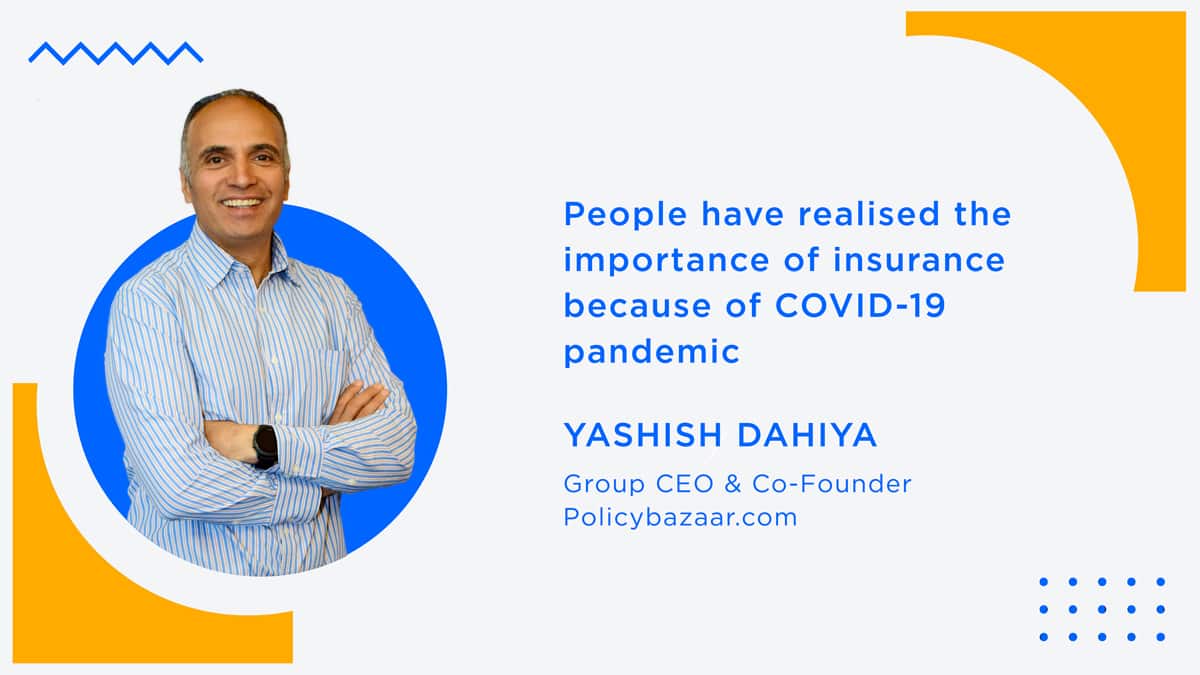
“Catastrophic covers should never be sold after a catastrophe happens. They have to be sold in advance of a catastrophe,” said Yashish Dahiya, Group CEO and Co-Founder, Policybazaar at a webinar organized by PIBM Pune which was a part of their virtual leadership series.
((relatedarticle_1))
Dahiya says it’s only after a catastrophe happens that people tend to realize the importance of insurance. Ideally, this should happen before the incident. The attitude of people towards buying insurance has changed post Covid-19. They are realizing the importance of buying life and health insurance for the right reasons which are building a safety net against the uncertainties of life.
“The actual number of people in the hospital has reduced. Accidents are fewer. Relatively, the number of deaths due to Covid-19 is less. Deaths were happening due to other diseases and age-related ailments,” he adds.
According to a recent World Health Organization Survey, prevention and treatment for non-communicable diseases have been severely disrupted since the Covid-19 pandemic hit. The survey which was conducted for 155 countries, showed that the impact is global and low-income countries are the most impacted.
“There are three kinds of hospitalization. Hospitalization for small diseases, planned hospitalization for big diseases, and unplanned hospitalization for big diseases. You can’t stop unplanned hospitalization for big diseases. For example, if someone has a cardiac arrest, they will go to the hospital. But if it's a planned surgery, people are delaying it. They aren’t going to the hospital nowadays for small diseases because they are afraid of getting infected. So, the actual number of people in hospitals has reduced,” he added.
According to a news report, only 4% of Covid-19 patients in India have health insurance. The life insurance industry reported 100 claims of 6,088 people who died of Coronavirus in India, which is just 2% of total deaths.
“The insurance industry is steady with profits, without Covid-19 specific covers. There is a belief that by November, the number of Covid-19 cases will be 5 million. The problem one sees is as Covid-19 increases, if people buy a lot of insurance cover in this period, and those people get infected, then insurance companies will have losses,” added Dahiya.
Insurance penetration in India was only 3.7% in 2018, one of the lowest across the world, according to IRDAI annual report. However, Covid-19 has accelerated the awareness of people towards buying life and health insurance. Nearly one in three Indians are thinking about buying health insurance, motivated by the fear of Covid-19 this year, according to an annual survey conducted by Policybazaar recently.
“So, it’s an interesting problem. Insurance is a very interesting business from a claims perspective,” he said.
(Article edited by: Sunny Lamba)
((newsletter))


Leading Global Financial Tech Innovator
KPMG

11 Million+
Happy Policybazaar customer

50+ Insurers
Offering over 4000+ plans

24X7 Claim Support
Made stress-free

Unbiased Advise
Keeping customers first


Playstore Ratings


08 Dec, 2023