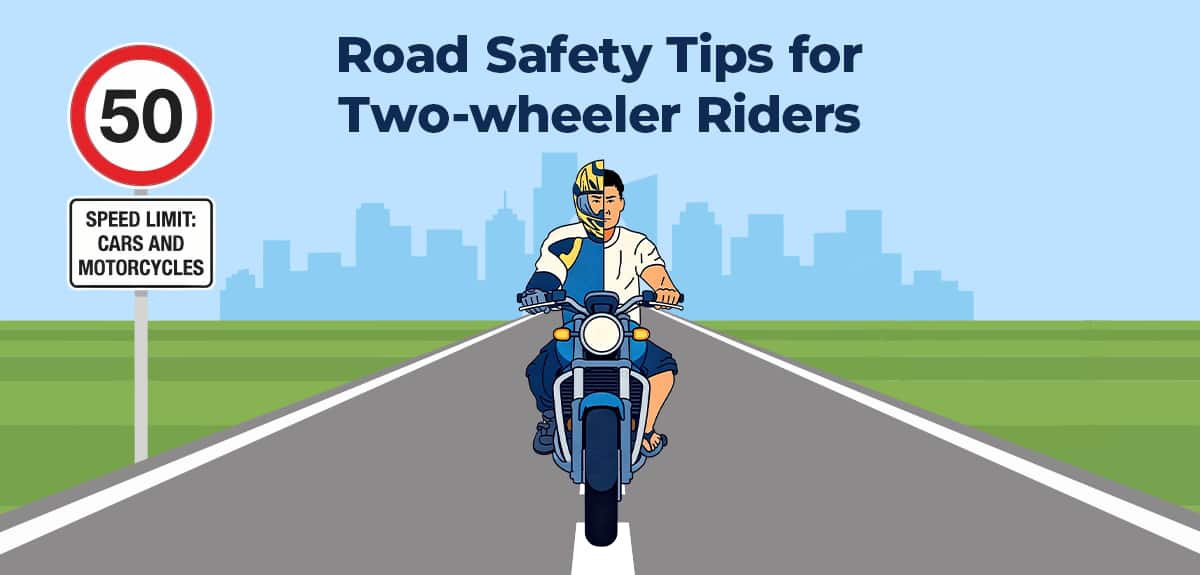
Road Safety Tips for Two-Wheeler Riders in India
- Home

- Motor Insurance
- Bike Insurance
- Articles - TWI
- 9 Road Safety Tips for Two-wheeler Riders
Two-wheelers are convenient for daily commuting, but riders are more exposed to road conditions and surrounding traffic than occupants of enclosed vehicles. Following basic road safety practices can help reduce the risk of accidents and make everyday and long-distance bike rides safer. Wearing a helmet, following traffic rules, maintaining the bike, staying visible, and avoiding distractions are among the most important safety measures for two-wheelers. Here are the important road safety tips for two-wheeler riders in India to follow before and during every ride.
15 Road Safety Tips for Two-Wheeler Riders
Take a look at some essential tips to stay safe while riding a bike on the road:
-
Always Wear a Helmet
Wearing an ISI-marked helmet is one of the most important safety measures for two-wheeler riders. Both the rider and pillion passenger should wear an appropriate helmet while travelling. Make sure the helmet fits properly, is securely fastened and is in good condition. Avoid using damaged helmets or helmets that do not fit correctly.
-
Follow Traffic Rules and Speed Limits
Follow traffic signals, lane markings, speed limits and other applicable road rules. Avoid over speeding, racing or sudden lane changes, particularly on busy roads. Following traffic rules gives you more time to react to vehicles, pedestrians, and unexpected road conditions that might lead to fatal accidents.
-
Keep a Safe Distance From Other Vehicles
Maintain a safe and sufficient distance from the vehicle ahead of you. This gives you more time to brake if the vehicle suddenly slows down or stops. Besides, you must take extra caution while driving at night or on highways. Make sure to avoid blind spots around vehicles, trucks, and other heavy commercial vehicles when riding a bike at night or on highways.
-
Check Your Bike Before Every Ride
A quick inspection can help identify problems before you start riding. Always check the tyre condition & its pressure, brakes, headlights & tail lights, indicators, horn, mirrors, fuel level, engine oil, and chain & sprocket. For a long journey, get the bike inspected and serviced if required before starting the trip.
-
Wear Appropriate Riding Gear
A helmet is essential, but additional protective gear can provide added protection. Depending on the type and duration of your ride, consider wearing riding gloves, a protective jacket, knee & elbow protection, full-length trousers, covered footwear, and reflective or high-visibility clothing. You must choose gears that fit properly and do not restrict your movement or hamper your riding style.
-
Do Not Use Your Mobile Phone While Riding
Using a mobile phone while riding can distract you from traffic and road conditions. It is strictly advised not to use a mobile phone for texting or making calls, or to use it while the bike is moving. If you need to make a call or check directions, stop at a safe location before using your phone.
-
Be Visible to Other Road Users
Make sure other motorists can see you, especially at night, during rain or in low-visibility conditions. Use your lights appropriately, maintain a visible position on the road, and avoid staying in another vehicle's blind spot for extended periods.
-
Be Careful While Overtaking
Overtake only when there is sufficient visibility and space to do so safely. Avoid overtaking from the wrong side or accelerating suddenly around blind corners. Always check the road ahead, mirrors and surrounding traffic before changing position.
-
Avoid Sudden Braking and Slow Down at Turns/Crossings
Sudden braking, acceleration or sharp steering can make a two-wheeler difficult to control. Brake progressively, maintain a suitable speed and slow down before taking a turn, particularly on wet, uneven or unfamiliar roads.
-
Ride Carefully in Rain and on Slippery Roads
Wet roads can reduce tyre grip and increase braking distance. Potholes, road markings, mud, and loose gravel may also become more difficult to identify or navigate around.
During rain, make sure to maintain low speed, increase the distance from the vehicle ahead, avoid sudden braking or acceleration, be cautious while taking turns, check tyre condition regularly, and avoid roads with flooding or uncertain water depth. If visibility becomes too poor to ride safely, stop at a suitable and safe location.
-
ake Extra Precautions While Riding at Night
Night riding can involve reduced visibility, glare from headlights and difficulty spotting road hazards. Before riding at night, check that your headlights, tail lights and indicators are functioning properly. Reduce speed when visibility is poor and remain alert for pedestrians, animals, potholes and vehicles without adequate lighting.
-
Avoid Riding When Tired
Fatigue can reduce concentration and reaction time. If you feel sleepy or exhausted, take a break instead of continuing to ride. This is particularly important during long-distance journeys. Plan regular stops so that you can rest before continuing.
-
Do Not Drink & Ride
Alcohol and drugs can impair judgement, coordination and reaction time. Do not ride after consuming alcohol or any substance that can affect your ability to operate the bike safely. If you have consumed alcohol, use an alternative mode of transport rather than riding.
-
Avoid Stunts and Risky Riding
Wheelies, racing, weaving through traffic and other risky riding practices can increase the likelihood of losing control or colliding with another road user. Ride according to the road and traffic conditions instead of attempting to save time through unsafe manoeuvres.
-
Follow Safe Riding Practices With a Pillion
If you are carrying a passenger, make sure the pillion has a suitable helmet and sits properly on the bike. The rider should account for the additional weight while accelerating, braking and turning. The pillion should avoid sudden movements and should hold on securely.
Two-Wheeler Safety Checklist Before Every Ride
A few minutes of inspection before riding can help you identify common problems early. Here are some useful safety checklist that you must follow before taking your bike on ride:
-
Check the Tyres
Look for visible damage and check whether the tyres have adequate pressure. Worn or damaged tyres can affect grip and handling.
-
Check the Brakes
Test the front and rear brakes before starting the ride. If the brakes feel unusual or less responsive, get them checked before riding.
-
Check Lights and Indicators
Make sure the headlights, brake lights, tail lights, and turn indicators are working properly.
-
Check the Chain and Engine Oil
For bikes that require chain maintenance, check the chain condition and lubrication. Also, check the engine oil level according to the manufacturer's recommendations.
-
Check Mirrors and Horn
Adjust both mirrors for a clear view and make sure the horn is functioning properly.
What Should You Carry in a Bike Safety Kit?
A basic bike safety kit can be useful for dealing with minor problems during a journey. The contents can vary depending on the type and duration of the ride.
-
Essential Bike Documents
Carry the documents applicable to your bike and journey, such as:
- Driving licence
- Registration Certificate (RC)
- Valid bike insurance policy
- Valid PUC for bike, where applicable
Digital versions may be accepted for certain documents through authorised government platforms during traffic police checks.
-
Basic Tool and Repair Kit
A basic tool and repair kit must include these items:
- Manufacturer-provided tool kit
- Puncture repair kit
- Portable tyre inflator
- Basic spare items appropriate for the bike
-
First-Aid Kit
A basic first-aid kit can include commonly needed supplies such as:
- Adhesive bandages
- Gauze
- Antiseptic supplies
- Basic wound-care items
For any serious injury, seek professional medical assistance rather than relying on a personal first-aid kit.
-
Phone and Emergency Essentials
Consider carrying the following essential emergency items with you:
- Fully charged mobile phone
- Charging cable or power bank
- Emergency contact details
- Drinking water
- Rain protection, depending on weather conditions
Essential Safety Tips for Long-Distance Bike Riding
Long-distance rides require additional preparation because the rider and bike are exposed to road conditions for longer periods.
-
Service and Inspect the Bike Before the Trip
Check the tyres, brakes, lights, chain, engine oil and other important components before starting the journey. Address any known mechanical issues before leaving.
-
Plan Your Route
Check the route, road conditions, fuel stations and suitable stopping points in advance. Keep an alternative route in mind if the journey involves unfamiliar roads.
-
Carry Essential Documents
Keep your driving licence, RC, two-wheeler insurance and other applicable documents accessible during the journey.
-
Take Regular Breaks
Stop periodically to rest, stretch and regain concentration. Avoid continuing to ride when you are physically or mentally fatigued.
-
Stay Hydrated
Carry sufficient drinking water and take regular breaks, particularly when riding in hot weather.
-
Be Careful During Night Rides
Avoid unnecessary night riding where possible. If you must ride at night, ensure the bike's lights work properly, use appropriate visibility gear and reduce your speed when visibility is limited.
-
Check the Weather
Check the weather forecast before beginning a long journey. Rain, strong winds, extreme heat and poor visibility can make riding more challenging.
How to Stay Safe While Riding in Traffic?
City traffic can change quickly, particularly around intersections, buses, pedestrians and parked vehicles. Follow these practices to stay safe while riding in traffic:
- Stay alert at intersections.
- Check mirrors regularly.
- Signal before changing lanes or turning.
- Avoid weaving through traffic.
- Maintain a safe distance.
- Watch for vehicles emerging from side roads.
- Be cautious around parked vehicles where doors may open unexpectedly.
- Give pedestrians adequate space.
How to Prevent and Control a Bike Skid?
A motorcycle can skid when the tyres lose traction with the road. Wet surfaces, loose gravel, excessive speed and sudden braking or steering can increase the risk. To reduce the risk, you must follow these tips:
- Maintain appropriate speed.
- Avoid sudden braking.
- Keep tyres in good condition.
- Be particularly careful on wet or loose surfaces.
- Slow down before turns.
- Avoid abrupt steering movements.
If the bike starts to skid, avoid making sudden movements. Stay as calm as possible, reduce actions that may worsen traction loss, and regain control gradually.
What Safety Precautions Should Teenagers Follow While Riding a Bike?
Young riders should follow the same road-safety principles as other riders and comply with applicable licensing and age requirements. Here are the most important precautions:
- Ride only when legally permitted and properly licensed.
- Wear a suitable helmet.
- Learn and practise basic riding skills.
- Follow speed limits and traffic signals.
- Never use a mobile phone while riding.
- Never ride under the influence of alcohol or drugs.
- Avoid racing and stunts.
- Understand the bike's controls before riding in heavy traffic.
Parents or guardians should also ensure that young riders understand basic traffic rules and responsible riding practices.
Is Bike Insurance Important for Two-Wheeler Safety?
Bike insurance does not prevent accidents, but maintaining valid insurance can provide financial protection against certain losses arising from accidents and other covered events.
Third-party two-wheeler insurance is mandatory for vehicles used on public roads in India. Depending on the policy, comprehensive insurance can also cover damage to the insured bike, subject to the policy's terms, conditions, and exclusions. Before starting a long journey, you must conduct a bike insurance check.
What to Do If You Have a Bike Accident?
If you are involved in an accident, prioritise safety and medical assistance. Move to a safe location if it is possible to do so without putting yourself or others at further risk. Seek medical attention for injuries and inform the relevant authorities when required.
If you need to make a bike insurance claim, document the accident scene and damage where it is safe to do so, and inform your insurer as soon as reasonably possible. Follow the insurer's claim process and provide the required documents.
Common Bike Safety Mistakes to Avoid
Some common mistakes can increase the risk of accidents:
- Riding without a helmet
- Overspeeding
- Using a phone while riding
- Riding under the influence
- Ignoring worn tyres or faulty brakes
- Riding when tired or sleepy
- Sudden lane changes
- Tailgating
- Taking unnecessary risks in the rain
- Riding without adequate visibility at night
- Performing stunts on public roads
- Carrying more passengers than permitted
Conclusion
Following basic road safety practices can make riding a two-wheeler safer for both the rider and other road users. Always wear a helmet, follow traffic rules, maintain your bike and stay alert to changing road conditions. For long-distance rides, plan your route, take regular breaks and carry essential documents and safety equipment. Keeping these habits in place can help reduce avoidable risks and make everyday and longer bike journeys safer.
FAQs - Two-Wheeler Road Safety
-
Q. What are the most important road safety tips for two-wheeler riders?
Ans: Always wear a suitable helmet, follow traffic rules and speed limits, maintain a safe distance, keep the bike in good condition, avoid distractions and ride according to weather and road conditions. -
Q. What should I check before riding a bike?
Ans: Check the tyres, brakes, lights, indicators, horn, mirrors, fuel level and other important components before starting the ride. -
Q. What should be included in a bike safety kit?
Ans: A basic bike safety kit can include a tool kit, a puncture repair kit, a tyre inflator, a torch, first-aid supplies, a mobile phone, charging equipment, and essential vehicle documents. -
Q. What documents should I carry while riding a two-wheeler?
Ans: Carry your driving licence, Registration Certificate, valid bike insurance and PUC certificate where applicable, along with any other documents required for your vehicle or journey. -
Q. How can I stay safe during a long-distance bike ride?
Ans: Inspect the bike before the journey, plan your route, carry essential documents and emergency supplies, stay hydrated, take regular breaks and avoid riding when tired. -
Q. How can I ride a bike safely in the rain?
Ans: Reduce speed, maintain a greater following distance, avoid sudden braking and acceleration, take turns carefully and ensure that the tyres have adequate tread and are in good condition. -
Q. Is it safe to ride a bike at night?
Ans: Night riding requires additional caution because visibility can be reduced. Ensure the bike's lights work properly, remain visible to other road users, reduce speed when necessary and watch for road hazards. -
Q. How can I prevent my bike from skidding?
Ans: Maintain an appropriate speed, avoid sudden braking or steering, keep the tyres in good condition, and slow down on wet, gravel-covered, or otherwise slippery surfaces. -
Q. What should a pillion passenger do to stay safe?
Ans: The pillion should wear a suitable helmet, sit properly, hold on securely and avoid sudden movements while the bike is accelerating, braking or turning. -
Q. Is bike insurance mandatory in India?
Ans: Third-party insurance is mandatory for two-wheelers used on public roads in India. Other types of bike insurance, such as comprehensive cover, provide additional protection subject to the policy terms and conditions.