

What is Electric Bike Insurance
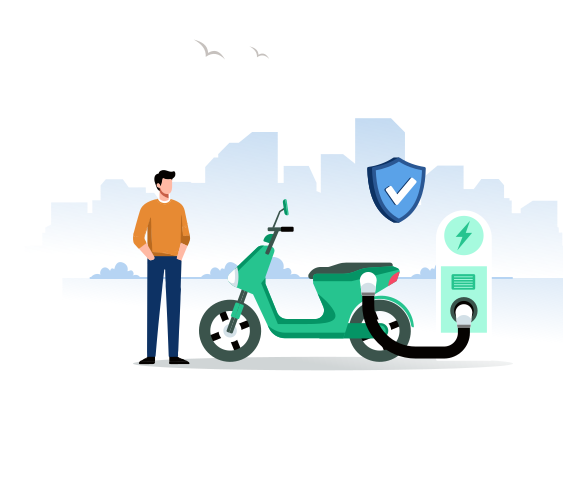
As electric two-wheelers gain popularity for their eco-friendliness, low running costs, and everyday convenience, protecting them with the right insurance has become more important than ever. Just like petrol bikes, electric scooters must have valid insurance before being driven on Indian roads, as it’s a legal requirement.
An e-bike insurance policy safeguards your electric bike against accidents, theft, fire, and damage caused by natural or man-made disasters. Since EVs utilise advanced technology and costly components, such as batteries and motors, the right insurance helps you avoid heavy repair or replacement expenses, ensuring complete peace of mind while you ride.
Benefits of Purchasing Electric Bike Insurance
Owning an electric bike or scooter is a smart step toward sustainable mobility, but protecting it with the right insurance is equally crucial. Here are few major benefits of buying or purchasing electric bike insurance policy:

Financial Protection for High-Value EV Components

Enhanced Coverage with EV-Specific Add-Ons

Legal Compliance on Public Roads

Worry-Free Riding Experience
Types of Electric Bike Insurance Plans
Electric two wheeler insurance in India is broadly available in three types, each offering different levels of protection. Here’s what they include and when they are most useful:

Third-Party (TP) E-Bike Insurance

Standalone Own-Damage (OD) E-Bike Insurance

Comprehensive (Comp) E-Bike Insurance
What is Covered Under an e-Bike Insurance Policy?
Inclusions
Exclusions
E-Bike Insurance Add-ons
When you insure your electric two-wheeler, opting for add-ons can dramatically broaden your coverage, often at a modest additional premium. Below are some of the most valuable and recommended add-ons for e-bike/e-scooter owners:
EV Shield Cover
- Electrical failures, wiring faults, or short circuits
- External impacts that damage vital EV components
- Other EV-specific risks that a regular two-wheeler policy may not cover
Recommended for: Owners who want added security for their e-bike's unique electrical and electronic systems.
EV Battery Protection Cover
- Accidental damage (e.g., from a fall or collision)
- Fire or explosion
- Water ingress (e.g., rain, floods)
- Electrical surges or overcharging events
In some cases, protection against battery performance degradation (within the limits specified in policy)
EV Electric Motor Protection Cover
- Accidents
- Overheating or burnout
- Short circuits or electrical faults
- Water exposure (e.g., rain, floods, moisture)
Recommended for: Frequent riders, or those using their e-bike in challenging weather or terrain conditions.
EV Charger & Accessories Cover
- Physical damage to charger/charging cable
- Electrical faults caused by power surges or voltage fluctuations
- Theft or loss of charging accessories
Recommended for: Owners who rely heavily on portable chargers or whose chargers are exposed to external risks (shared parking, public chargers, etc.).
Special Covers
Some insurers offer additional EV-focused add-ons under specific labels, such as:
Electric Surge Secure
Battery Depreciation Allowance
*Note: The above two add-ons Electric Surge Secure (Add-on TA27) and Battery Depreciation Allowance (Add-on TA28) are specifically offered by few insurers under special covers.
What Influences the Cost of an E-Bike Insurance Policy?
Your e-bike insurance premium specifically for own-damage coverage or comprehensive coverage depends on several factors:
- Make and model of the e-bike: Expensive or premium bikes cost more to insure.
- Age of the bike: Brand-new bikes draw higher premiums; older bikes often have lower premiums.
- Insured Declared Value (IDV): A higher IDV means a higher premium; IDV reflects the current market value of the e-bike.
- Type of coverage: Third-party liability only is the cheapest, standalone OD slightly higher, while comprehensive with add-ons is the costliest.
- Add-ons selected: EV battery protection cover, EV motor protection cover, EV charger & accessories cover, etc., are popular add-ons which can raise the overall premium.
- Location/RTO region: e-Bikes or e-scooters registered in metro cities generally have higher premiums than those in smaller towns.
Third-Party Premium Rates in India
As per the IRDAI guidelines, the third-party electric bike insurance premium rates are given below for single and multi-year policies. The price of third-party electric bike insurance is decided based on the battery capacity of the two-wheeler:


How to Buy/Renew an e-Bike Insurance Policy Online?
The e-bike insurance plan comes with a tenure of 1 year or 3 years. After this period, the insurance policy for the electric two-wheeler lapses. To continue with the policy benefits, you must renew it before its expiry. Here is how you can renew your electric bike insurance online:
-
Visit the official website of Policybazaar Insurance Brokers Pvt. Ltd.
-
Visit the e-Bike Insurance page.
-
Enter your registered electronic bike's number and click ‘View Prices.' If you have a brand-new e-scooter/bike, click on ‘Bought New Bike’ & select the required details.
-
Get e-bike insurance plans from various insurers and choose the most suitable one.
-
Include the add-ons as per your requirement and check the final premium price.
-
Pay the premium for e-bike insurance using UPI, credit/debit card, net banking, etc.
-
Once you make the payment, you will receive a confirmation email for your e-bike insurance renewal.

KYC Documents Required to Buy/Renew Electric Two Wheeler Insurance Online
The IRDAI has introduced the Master Guidelines on Anti-Money Laundering (AML) and Counter-Financing of Terrorism (CFT), making KYC mandatory for all two wheeler insurance companies to follow strict customer identification and verification procedures.
Here is a list of those mandatory documents that you have to submit in order to buy or renew your e-bike insurance policy in India:
Documents Required for Proof of Identity/Address
- Aadhar Card
- Passport
- Driving License (DL)
- PAN Card
- Voter ID Card issued by the Election Commission of India
- Ration Card with the photo of the applicant
How to File an Electric Bike Insurance Claim Online?
If your electric two-wheeler is damaged in an accident, stolen, or suffers a battery/motor issue due to a covered peril, you can file an e-bike insurance claim. Remember, a third-party electric bike insurance covers only damages caused to another person or property. Own-damage or comprehensive e-bike insurance covers your e-bike, including battery, motor, and charger protection (if add-ons are purchased)
In India, there are two types of claim processes, namely cashless and reimbursement. Both are explained below.
Steps to File an Electric Bike Insurance Claim
-
Report the incident immediately to your insurer/app, or helpline.
-
A surveyor or digital inspection will assess the damage to EV components, such as the battery, charger, motor, and wiring.
-
Submit the online claim form along with the required documents.
-
Share all supporting reports (service centre assessment, photos, video evidence, if any).
-
Approval is granted based on policy coverage and assessment.
-
If cashless:
Take your e-bike to the nearest authorised EV garage.
Repairs are done using approved EV parts & procedures.
The insurer pays the garage directly (you only pay excess or uncovered charges). -
If reimbursement:
Pay the repair bill yourself.
Submit receipts and proofs to claim the reimbursable amount.
What Insurers Do During an EV Claim?
During an electric two-wheeler claim assessment, the insurer may:
- Test battery health and diagnose internal faults.
- Inspect damage to the motor, controller & wiring due to short circuit/accident.
- Verify whether the charger/accessories used were manufacturer-approved.
- Check for compliance with proper charging practices.
- Validate that high-value EV parts are included in IDV or covered under add-ons.
This ensures that the damage is genuine, accident-related, and within the policy's coverage.
Documents Required for an E-Bike Insurance Claim
As an e-bike/scooter owner, you need to keep the following documents handy to raise claims:
Conditions to Maintain Valid EV Coverage
To keep your insurance valid and ensure EV-specific claims are honoured:
- Always use manufacturer-approved batteries, chargers, and accessories.
- Follow the manufacturer’s instructions for charging and avoid using incorrect adapters or improper charging methods.
- Ensure the battery is declared in your policy’s IDV (Insured Declared Value) or added via an appropriate endorsement, so battery or EV-component claims will be valid.
Things You Should Keep in Mind While Choosing the Right e-Bike Insurance Policy
Here are a few things that need to be taken care of while choosing a policy:
-
Frequency of use: If you ride daily and over long distances, comprehensive insurance with add-ons is a wise option.
-
E-bike value & parts cost: For higher-end e-bikes or those with expensive batteries or motors, opt for robust coverage, including EV-specific add-ons.
-
Budget vs risk: Comprehensive two wheeler insurance plans cost more, but they protect you against big losses. Basic covers are cheaper, but they leave gaps, especially for EV-specific risks.
-
Choose add-ons carefully: Only pick add-ons relevant to your needs; unnecessary add-ons increase the premium without much benefit.
-
Renew e-Bike insurance timely: To avoid losing discounts (e.g., No-Claim Bonus) and avoid legal complications.
-
Read the fine print: Some plans may exclude electrical/mechanical breakdown, battery wear & tear, or misuse. Hence, read the fine print of the policy to get an insight into your policy exclusions.
FAQs- e-Bike Insurance
-
Q. Do e-bikes need insurance in India?
Ans: Yes. All electric bikes that require registration and a driving licence must have at least third-party bike insurance to ride legally on roads. -
Q. Do low-speed electric scooters need insurance?
Ans: Yes. Even non-RTO EVs (speed under 25 km/h) are now required to have a basic insurance plan for liability coverage. -
Q. Do electric bikes need RTO registration and licence?
Ans: Yes, if the top speed exceeds 25 km/h or the motor power exceeds 250W, an e-bike must be registered with the RTO. -
Q. Is helmet compulsory for electric scooters?
Ans: Yes, it is compulsory for registered EVs. Low-speed non-RTO EV riders are still strongly advised to wear helmets for safety. -
Q. Are all electric bikes road-legal?
Ans: Only electric bikes that are registered and meet Indian road safety standards can be operated legally on the road.
Two Wheeler Insurance Articles
- Recent Article
- Popular Articles
The Future of Usage-Based Insurance for Bikes and...
A two-wheeler insurance policy has been a widespread product for
Read more
Difference Between Bike Insurance and E-Bike...
With electric two-wheelers rapidly gaining popularity in India
Read more
How Safe Riding Habits Can Lower Your Bike...
Many things affect bike insurance premiums in India, such as
Read more
E-Bike Battery Short Circuits: Causes, Symptoms...
Electric bikes are a convenient and eco-friendly way to get
Read more
Increase in Bike Insurance Claims from Distracted...
Two-wheelers play a crucial role in India’s transportation
Read more