Looking for New Car Insurance?
Don't rely on dealer insurance only!
Compare prices with us first & save up to ₹40,000 on premium
View plans instantly
Complete protection with Zero Dep
Car health checkup worth ₹2,000
Flat tyre? 24x7 roadside assistance
Dedicated claim support till settlement
  • City & RTO
  • Registration Year
  • Car Brand
  • Car Model
  • Car Fuel Type
  • Car Variant
Plan Starting From ₹2,094/year#
Compare & Save Upto 91%+ on Car Insurance
Processing
    Other models
    Other variants
    Secure
    We don’t spam
    View Prices
    Please wait..
    By clicking on “View Prices”, you agree to receive assistance and agree to our Privacy Policy & Terms of Use
    Please wait ...

    How to Fix Car Rust?

    Car rust is a common issue for all car owners. It can damage the car's body and structure over time by spreading and compromising crucial parts of the vehicle, including the frame. While rust damage might seem severe, not every situation calls for extensive repairs or replacements. It is important to know how to repair car rust and some common tips to prevent your vehicle from rust.

    Read more

    Car Rust and Its Impact

    Here are the different types of car rust and how they impact your vehicle:

    Type of Rust Description Impact on the Car
    Surface Rust Affects only the top paint layer Cosmetic damage
    Scale Rust Causes flaking and mild metal damage Weakens the surface slightly
    Penetrating Rust Creates holes and deep corrosion Affects structural strength

    What are the Different Types of Car Rust?

    Before repairing rust on your vehicle, it is crucial to understand the different types of rust that can occur. Here are the common types of car rust:

    • Outer Surface Car Rust: This is the initial stage of rust, which occurs when the paint or clear coat (protective layer) of the body is scratched or compromised. It usually appears in the form of tiny dots or bubbles on the car's outer surface. In this case, the underlying metal is not harmed by rust. You can avoid the damage by keeping your car clean.
    • Scale Rust: At this point, rust begins to corrode the metal surface, leading to flaking. The rust penetrates deeper into the car's metal body. This causes "scale" or removes flakes of iron oxide from the surface, eventually creating a rough, pitted texture which thins the metal. If these issues aren't resolved quickly, it could cause serious structural damage.
    • Penetrating Rust: This type of rust forms holes in the metal, compromising the car's structural integrity. If the car is constantly exposed to moisture, this type of rust begins to form. The affected areas can become quite fragile, posing potential safety risks. To tackle this kind of rust, you need to get some welding or even replace the damaged parts.

    Can a Rusted Car Frame Be Repaired?

    In some situations, you might be able to repair car frame rust depending upon the damage. If it is just on the outer surface, you can easily repair the frame. However, if the corrosion is deep or has spread widely, trying to fix it could be highly unsafe and expensive. Therefore, it is important to check the condition of the car frame and decide if you can repair car rust.

    When is it Possible to Repair Car Rust?

    • If the rust is only on the outer surface or if they are small spots, it can be repaired without much difficulty. Usually, mechanics can remove the rust and reinforce the area to restore durability.
    • If the car frame is strong and has not weakened due to rust. If the metal is still solid underneath the rust, it can be restored without affecting the car’s safety.
    • If the rust is not in critical areas such as load-bearing joints or suspension mounts, the car can be repaired without affecting the vehicle’s performance or stability.

    When is it not Possible to Repair Car Rust?

    • If the rust has infiltrated significant areas of the car frame, repairing it becomes challenging and more expensive. In those circumstances, it is better to not repair car rust.
    • If there is rust which has compromised the frame and affected the vehicle’s integrity, repairs could be unsafe. A compromised frame can fail under stress, particularly when navigating bumpy roads or travelling at high speeds.
    • If you spot any visible holes, serious rust, or cracks in the frame, that's a clear sign of major damage. These problems can be tough to fix properly and might just keep getting worse over time.

    In the most adverse situations, replacing the car frame, or possibly the entire vehicle, could be the safest and most logical option.

    How to Repair Rust Underneath a Car?

    Rust on the underside of your car is pretty common because this area is constantly exposed to water, dirt, and debris. If you're looking for ways to repair this issue, adhere to the steps listed here:

    • Safely lift the car using a jack and stands.
    • Clean the underside to remove dirt and grease.
    • Take some sandpaper or a wire brush to scrub away the rust.
    • Use a rust converter to prevent any further corrosion.
    • Finish up by coating the area with primer and a protective paint. For better protection, you can also apply an underbody sealant.

    How to Repair a Very Rusty Car?

    Repairing a very rusty car requires additional effort and expert assistance. Here's how it can be done:

    • Step 1: Check the entire vehicle to assess the extent of rust.
    • Step 2: Remove sections that have severe rust, if necessary.
    • Step 3: Install new metal patches over the damaged sections.
    • Step 4: Sand the affected area properly. Apply a primer before repainting the section for best results.
    • Step 5: Apply an anti-rust treatment to prevent rust.

    If rust is too widespread, restoration may not be cost-effective, and you may have to consider replacement of the affected parts.

    Tools and Materials Needed for Rust Repair

    You must use the following tools if you want to repair the rust on your car on your own:

    • Sandpaper or a wire brush
    • Rust converter or remover
    • Primer and paint
    • Protective gloves and mask
    • Body filler (for small holes)

    Using the right tools ensures better results and long-lasting protection.

    Is it Possible to Repair Car Rust?

    Yes, if you see any signs of rust on your car, you must resolve it quickly to prevent serious damage. Ignoring rust can lead to the following issues:

    • Higher Repair Costs: It is easy to hide small rust spots. It does not cost a fortune and is inexpensive to repair. However, they can spread over time, if not addressed and can escalate into an expensive task requiring part changes or significant bodywork.
    • Reduced vehicle value: Rust can really drag down your car's resale value as it gives the impression that the vehicle is poorly maintained. A majority of buyers avoid choosing cars with visible signs of rust. This makes it tougher to sell your car for the price you want.
    • Safety Risk: In severe cases, rust can weaken the frame or suspension mounting points. This weakens the vehicle's overall strength and safety, especially in rough driving conditions.

    Tips to Prevent Rust on Your Car

    Avoiding rust is significantly simpler and less expensive than fixing it afterwards. Here are ways to safeguard your vehicle:

    • Dirt and mud can cling to your car's surface and accelerate rust development over time. Regularly washing your car helps wash away these harmful substances and keeps the metal safe.
    • Moisture is one of the main causes of rust, especially when it remains on surfaces for extended periods. You must dry your car after it gets wet due to a car wash or rain to reduce the chance of rust formation.
    • Wax your car at regular intervals to protect it from moisture. Waxing forms a shield and prevents rust formation.
    • Tiny paint flakes or abrasions reveal the underlying metal to air and moisture. Addressing them promptly with touch-up paint can prevent rust from forming.
    • The underside of your car is exposed to water, dirt, and mud, making it particularly susceptible to rust. To protect this area, you must get an anti-rust coating.
    • You must regularly check your car for early signs of rust. This can help you take quick action before it spreads.
    • You must keep your car covered or park it in a garage to protect it from rain, humidity, and harsh weather conditions. This reduces prolonged exposure to moisture, which can lead to rust.
    • You must avoid driving on waterlogged roads to prevent damage to your car. Moisture in different parts of the car can lead to rust.

    Frequently Asked Questions (FAQs)

    You can fix minor issues related to the car starter yourself by replacing loose or broken wiring, cleaning and changing the battery terminals, and replacing faulty components. However, professional help is recommended for major repairs.

    Yes, the acid in the vinegar works well in removing surface rust. However, it is not strong enough to remove deep, structural rust on a chassis.

    You must check where the rust is located before deciding whether to buy the car. If the car has surface rust on the doors or hood, it can be repaired easily. But if you see rust on the car's frame, you should avoid buying it, as it is a safety hazard and can be costly to repair.

    Look for scaling, which is when the metal starts to flake off. If you see actual holes or if the metal feels soft when you poke it with a screwdriver, the damage is severe. Rust on the suspension or frame rails is a major red flag.

    No, if you paint over rust, it will keep spreading underneath where you can't see it. Eventually, the paint will bubble and pop off. You must grind away the rust and apply a primer before applying a final coat of paint.

    New Cars Articles

    • Recent Article
    • Popular Articles
    05 Nov 2026

    How to Fix a Car Suspension?

    The suspension of a car is the system of springs, shock absorbers

    Read more
    19 Oct 2026

    How to Repair a Car Roof?

    You must repair the car roof if it has a dent, is leaking, or has

    Read more
    09 Oct 2026

    How to Repair a Car Starter?

    When you turn the key or press the start button, the starter turns

    Read more
    06 Oct 2026

    How to Repair a Car Clutch?

    In cars with manual transmissions, the clutch connects and

    Read more
    21 Sep 2026

    Top Road Scams in India and How to Avoid Them?

    The road scams that occur in India are probably more frequent than

    Read more

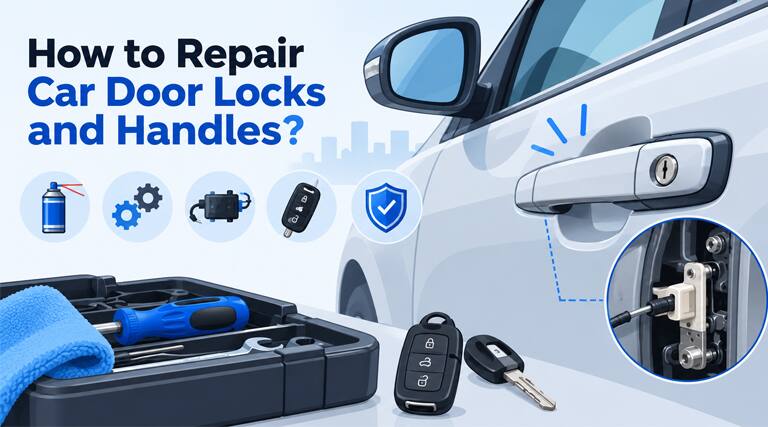
    How to Repair Car Door Locks and Handles?

    Car doors should open, close, and lock smoothly to ensure safe and convenient entry and exit. However, if the lock

    Read more

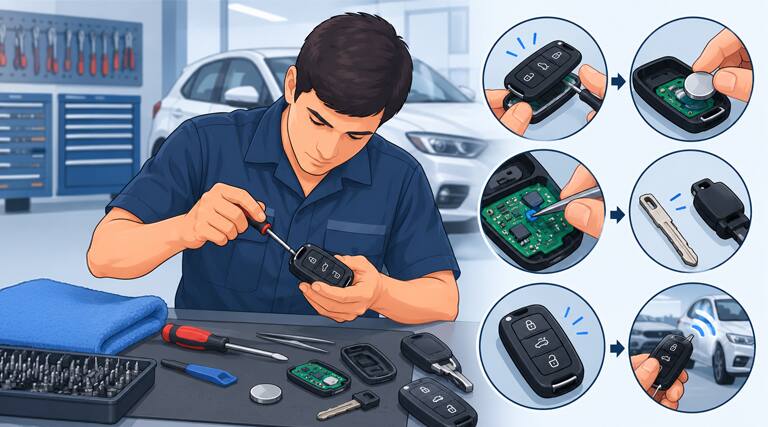
    How to Repair Car Keys?

    If your car key breaks or is lost, you may be unable to lock, unlock, or start your vehicle, causing delays and

    Read more

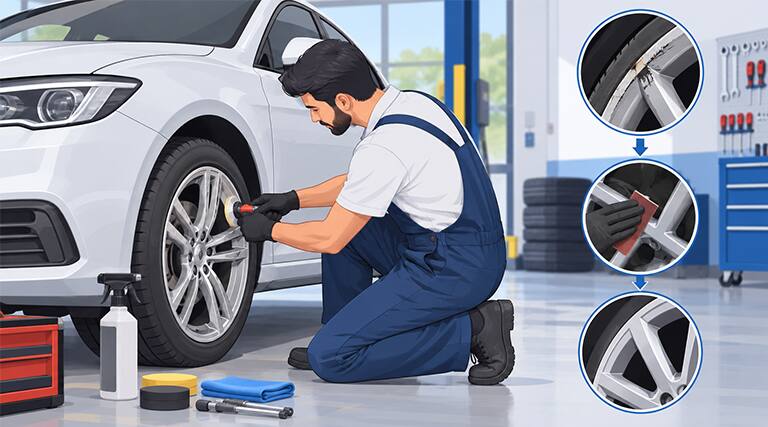
    How to Repair Car Wheel Rims?

    Car wheel rims are the outer metal parts of the wheel. They hold the car's tyres in place and support the vehicle's

    Read more

    How Driver Fatigue Impacts Road Safety?

    Driver fatigue is a growing concern in India. Prolonged driving hours and insufficient rest significantly impair a

    Read more

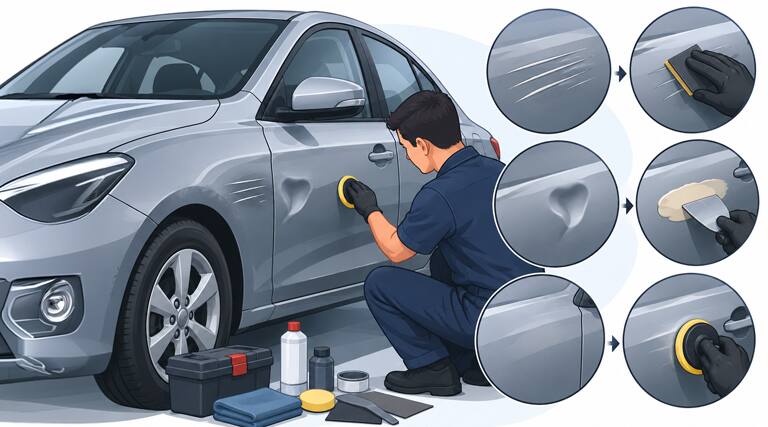
    How to Repair Scratches and Dents on a Car?

    If you have noticed any dents, scratches, or other body damage on your car, you do not need to panic. Whether it is
    Read more
    Claude
    top
    Close
    Download the Policybazaar app
    to manage all your insurance needs.
    INSTALL