Processing


Car doors should open, close, and lock smoothly to ensure safe and convenient entry and exit. However, if the lock does not respond properly, the handle is broken, or other issues arise, it can become frustrating and unsafe to use daily. Therefore, it is very important to know how to repair car door locks and handles and understand the common reasons for the issues arising.
Check out the most common problems that may occur with car door locks and handles below:
| Issues | Description and Causes |
| Jammed car door lock | Lock failure caused by worn components, dirt buildup, or key damage |
| Central locking system failure | Doors not locking/unlocking due to electrical faults, blown fuse, or actuator issues |
| Broken door handle | Door not opening or functioning properly due to a damaged or broken handle |
Once you identify whether the issue lies with the lock itself, its components, or the central locking system, you can choose the appropriate fix. Some problems can be resolved at home with basic tools, while others may require professional assistance. You must use the following ways to repair car door locks:
The lock may be jammed due to rust or grime stuck inside it. If you are unable to insert the key into the keyhole, it may indicate that the lock has jammed. In many cases, a simple lubricant can work wonders for jammed car doors. Check the steps to clean your door:
If lubricating does not solve the issue, you need to examine and repair the internal locking mechanism. You can do it yourself or take help from a professional. Here's the complete method:
If your car door lock is not functioning, the issue may be due to a faulty latch cable or a damaged door lock actuator. After opening the door panel, inspect the latch cable to looseness or damage. If so, replace it to ensure the handle operates the latch properly. If the cable appears intact, the problem may lie with the actuator; in that case, replacing the door lock actuator is usually the most effective solution.
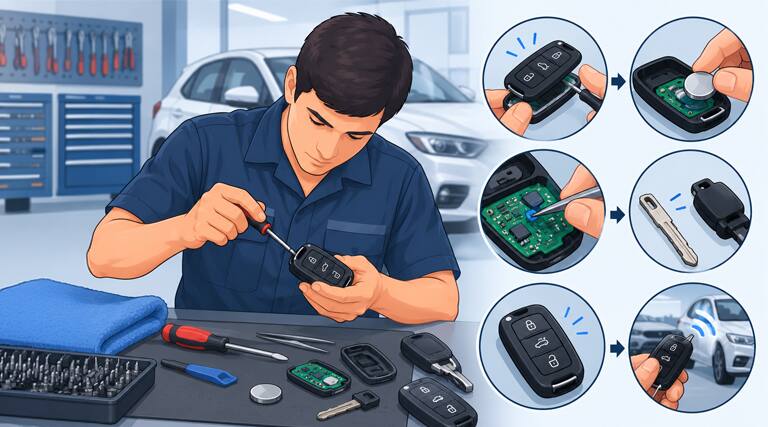
If the central locking system stops working, you may notice unresponsive doors, delayed locking, or intermittent operation. A weak or dead key fob battery can prevent the signal from reaching your car. If you have to press the button multiple times or stand very close for it to work, replacing the key fob battery is usually a quick and effective fix.
ECU is a small computer or a central control unit that controls the automatic locking of car doors. If the unit develops a problem, it fails to send the right signals to the car doors when you press the fob. Take your car to a garage to have the ECU examined with a specialised scanner tool. The mechanic will repair or replace the unit as needed.
If the key or key fob is damaged or not properly programmed, it may fail to operate the system. In such cases, try using a spare key. If that doesn't work, you may need to get a new key or have it reprogrammed at an authorised service centre.
Car door handles can break due to internal damage or wear, making the door difficult to open. Here's how they can be repaired:
Your car insurance may cover damage to your car's doors and handles, but coverage depends on your policy type and the cause of the damage. A comprehensive car insurance policy usually covers damage from accidents, crashes, natural disasters, fire, and even vandalism. This generally includes repairing or replacing doors and handles.
Additionally, a key replacement add-on can help cover expenses related to lost or damaged keys. However, a third-party insurance policy does not cover damage to your own vehicle; it only provides protection against liabilities arising from damage caused to others.
It is also important to note that coverage is subject to the policy's terms, deductibles, and exclusions. For instance, normal wear and tear, mechanical failures, or intentional damage are usually not covered.
Deciding whether to file a car insurance claim for door or handle repairs depends on the severity of the damage and the cost of repairs. If the problem is serious, a claim under a comprehensive policy could be the way to go. However, for minor repairs, covering the costs yourself might be the more sensible choice.
For example, replacing a door handle is usually a simple, relatively inexpensive repair, so it's unnecessary to involve your insurer. Additionally, consider your deductible and the potential impact on your no-claim bonus before deciding.
If dirt, debris, or rust is preventing the lock from opening, spray a lubricant such as WD-40 into the keyhole. Insert the key and turn it gently to help loosen the mechanism. Reapply the lubricant if needed to ensure proper distribution. If the lock still does not work, inspect the internal components or wiring for possible issues, or consider seeking professional assistance.
Locks that are stuck are usually caused by dirt, dust, rust, or not enough lubrication inside the mechanism. The lock can also become stiff or unresponsive due to worn-out components or moisture buildup.
If the lock actuator is broken, it usually needs to be replaced. A professional mechanic should perform the process, which includes removing the door panel, disconnecting the wiring, and installing a new actuator.
The price of replacing the lock actuator depends on the type of lock system and the model of the car. In India, it can cost anywhere from ₹800 to ₹2,500 or more to replace a car door lock actuator. This does not include the cost of any extra work that may be needed.


The road scams that occur in India are probably more frequent than
Read more
To avoid costly repair bills and to ensure your car's optimal
Read more
The tyres of your car are one of its most critical components, as
Read more
Roads facilitate the movement of millions of citizens in India
Read more
Driving requires constant focus, precision, and quick
Read moreInsurance
Calculators
Payment Methods


Secured With

Follow us on