

 We don't spam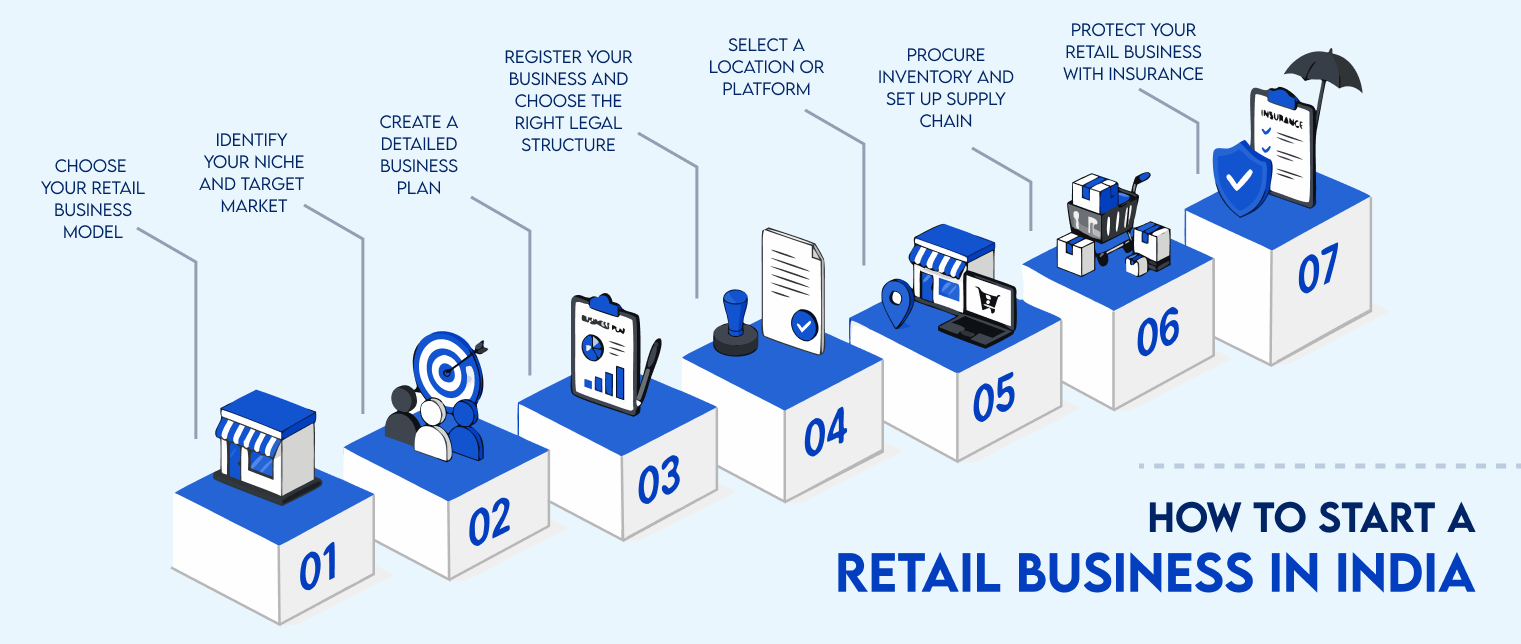
 Expert advice made easy


Download the Policybazaar app
to manage all your insurance needs.
If you want to start a retail business in India, the present Indian retail scenario looks promising. India stands at the 63rd position in the World Bank's Ease of Doing Business (EoDB) index (2023). Kearney Research predicts a CAGR of 9% from 2019 to 2030, growing from US$ 779 billion in 2019 to more than US$ 1.8 trillion by 2030. The sector offers extensive opportunities for new businesses to tap into online and offline channels and capitalize on this expanding market. However, while the opportunities are immense, retail businesses also face risks such as theft, fire, liability claims, and operational disruptions. This makes business insurance an essential part of planning, helping safeguard your investment and ensure long-term sustainability.

When choosing a business model to start a retail business in India, make sure to consider things like your target market, the type of products you sell, and your budget.
Business Models:
Regardless of the model you choose, evaluating the risk exposure and insurance needs (online vs offline vs hybrid) is important to protect your inventory, customer data, and operations.
Conduct market research by analyzing trends, gaps, and competitors and gathering demographic data (age, occupation, location, etc.) to understand your potential customers.
Also, study customer preferences and purchasing behaviour. Understanding their needs, desires, pain points, and buying habits will help enhance engagement and tailor your retail business ideas.
This stage is also a good time to evaluate potential risks in your niche (e.g., perishable goods, high-value inventory) and plan for relevant insurance coverage early on.
Here are the components of a well-structured business plan:
Also, account for insurance costs in your pricing strategy, as coverage for inventory, transit, and shop premises can impact overall margins.
If sourcing high-value goods, consider insurance for goods in transit.
Retailers relying on logistics partners should check coverage or opt for transit insurance independently.
Insurance-backed risk protection ensures disruptions don’t halt operations.
Include a risk management and insurance plan covering property, liability, employees, and business interruption.
Business Types:
If your business exceeds INR 20 lakhs in turnover, GST registration is mandatory.
Additionally, certain types of insurance, such as employee or liability coverage, may be required depending on your business scale. Insurance also enhances compliance and business credibility.
Choose based on budget and goals.
Consider visibility, foot traffic, and rent. Higher visibility = higher risk → property insurance becomes crucial.
Marketplaces offer reach but limited control. Your own website gives control but requires investment.
Build strong supplier relationships and implement inventory systems.
Ensure your inventory is adequately insured, especially if you deal in high-value goods.
Hire skilled employees and provide training.
Also consider workers’ compensation insurance to protect both employees and the business.
Use both offline and online marketing strategies like SEO, ads, and influencer collaborations.
Maintain records, file taxes, and follow labor laws.
Having adequate business insurance reduces financial risks and enhances credibility.
Retail businesses face risks like fire, theft, and liability claims. A comprehensive shop insurance policy helps protect your shop and finances.
You can opt for:
The right coverage ensures business continuity even after unexpected losses.
Track KPIs like sales and customer satisfaction.
As your business grows, regularly review and upgrade your insurance coverage.
Retail businesses face multiple risks, from fire and theft to customer injury claims and employee incidents. A single unforeseen event can cause major financial losses.
A Shopkeepers Insurance Policy typically covers:
It acts as a financial safety net, helping businesses recover quickly and continue operations smoothly.
Explore comprehensive shop insurance plans to protect your retail business from day one.
To start a retail business in India successfully, choose the right model, understand your customers, and ensure compliance with regulations.
Equally important is protecting your business against risks. From safeguarding inventory to covering liabilities, insurance plays a crucial role in long-term success.
Visit Policybazaar for Business to explore tailored insurance solutions for retail businesses.







Insurance
Calculators
Payment Methods


Secured With

Follow us on


