SIP Calculator
- ₹ 500
- ₹ 2L
- 1
- 2
- 3
- 4
- 6
- 7
- 8
- 9
- 11
- 12
- 13
- 14
- 16
- 17
- 18
- 19
- 21
- 22
- 23
- 24
- 26
- 27
- 28
- 29
- 31
- 32
- 33
- 34
- 36
- 37
- 38
- 39
- 40
- 1
- 2
- 3
- 4
- 6
- 7
- 8
- 9
- 11
- 12
- 13
- 14
- 16
- 17
- 18
- 19
- 21
- 22
- 23
- 24
- 26
- 27
- 28
- 30
Annual Step-Up
Increase SIP every year to grow wealth faster- 1
- 2
- 3
- 4
- 6
- 7
- 8
- 9
- 11
- 12
- 13
- 14
- 16
- 17
- 18
- 19
- 20
- 21
- 23
- 24
- 25
- 26
- 27
- 29
- 30
- 31
- 32
- 34
- 35
- 36
- 37
- 38
- 40
- 41
- 42
- 43
- 44
- 46
- 47
- 48
- 49
- 50
- ₹ 10000
- ₹ 5CR
- 1
- 2
- 3
- 4
- 6
- 7
- 8
- 9
- 11
- 12
- 13
- 14
- 16
- 17
- 18
- 19
- 21
- 22
- 23
- 24
- 26
- 27
- 28
- 29
- 31
- 32
- 33
- 34
- 36
- 37
- 38
- 39
- 40
- 1
- 2
- 3
- 4
- 6
- 7
- 8
- 9
- 11
- 12
- 13
- 14
- 16
- 17
- 18
- 19
- 21
- 22
- 23
- 24
- 26
- 27
- 28
- 30
-
Home

-
SIP Investment
- SIP Calculator
What is an SIP Calculator?
An SIP calculator is a financial tool for estimating the returns you can get by investing in mutual funds. It helps in multiple ways, including providing accurate calculations, selecting the most suitable plan, and empowering you to achieve financial independence as an investor.
By using an SIP calculator, you can choose which are the best SIP plans for your short- or long-term goals. With numerous options available in the market, making informed decisions ensures you maximize the benefits of your investments.
- Video
- information
SIP Calculator: Calculate Your Wealth Growth Easily!
Why Simple Math Gives You the Wrong SIP Return Estimate
A common mistake investors make is thinking their investments grow in a straight line, meaning that they grow at the same rate every year or using simple interest (Simple Division) to estimate final wealth, which completely misses how compounding actually works.
Simple division ignores compounding, market volatility, and the timing of individual SIP instalments. When you invest via SIP, every instalment is committed on a different date, which means every instalment grows for a different amount period. For example, If you start an SIP for 4 years, your 1st month’s SIP instalment compounds over the entire tenure, while your 35th month's instalment compounds for a much shorter duration.
Simple division treats all cash inflows as if they were deposited at Day 1, leading to wrong return projections. To accurately evaluate different date SIP cash flows, metrics like XIRR (Extended Internal Rate of Return) are required. XIRR calculates your actual yearly returns by factoring in both the amount and the exact date of every SIP investment you make.
How Does the Mutual Fund SIP Calculator Work?
M = P × ( ( [1 + i]n − 1 ) / i ) × (1 + i)
- Amount invested at regular intervals
- Sum you will get upon maturity
- Number of times payments made
- Interest rate
Rohit, a young professional, wants to invest ₹10,000 monthly for 30 years at a 12% interest rate. The monthly interest rate is calculated as 12% / 12 = 1% or 0.01 in decimal.
- is the monthly investment amount (₹10,000)
- is the total number of payments (30 years * 12 months/year = 360 months)
- is the periodic interest rate (12% per year, compounded monthly, so 12%/12 = 1% per month or 0.01)
Future Value = 10000 × ( ( (1 + 0.01)360 − 1 ) / 0.01 ) × (1 + 0.01)
Therefore, Rohit's investment of ₹10,000 per month for 30 years at a 12% annual interest rate will grow to approximately ₹3.08 Cr.
Taxes and redemption fees directly affect your total returns. Knowing how they apply to different mutual fund categories ensures better financial planning:
1. Equity Mutual Funds
Short-Term Capital Gains (STCG): Applicable if equity mutual fund units are redeemed within 1 year and are taxed at 20%.
Long-Term Capital Gains (LTCG): Applicable if equity mutual fund units are held for more than 1 year. Profits/gains up to ₹1.25 Lakh in a financial year are tax-exempt. Gains/profits exceeding ₹1.25 Lakh are taxed at 12.5% without indexation benefits.
2. Debt Mutual Funds
Taxation Rate: Capital gains from debt mutual funds (regardless of holding duration for investments made on or after April 1, 2023) are added directly to the investor's taxable income and taxed according to their applicable Income Tax Slab Rates.
3. Expense Ratio and Exit Load
Expense Ratio: The annual fee charged by Asset Management Companies (AMCs) to manage the fund. A higher expense ratio directly reduces your compounding NAV over time.
Exit Load: A fee charged if units are redeemed within a specified lock-in period (usually 1% if redeemed within 1 year).
Impact on Returns: Both Expense Ratios and Exit Loads reduce your net capital gains, which indirectly changes your total taxable income upon redemption.
Beat Inflation with SIP Calculator
-
Child's Age
1 year -
Monthly SIP
₹8,235 -
Investment Duration
17 years -
Total Investment
₹16.8 Lakh -
Estimated Returns
₹38.2 Lakh -
Target Corpus
₹55 Lakh
-
Child's Age
5 years -
Monthly SIP
₹14,630 -
Investment Duration
13 years -
Total Investment
₹22.82 Lakh -
Estimated Returns
₹32.18 Lakh -
Target Corpus
₹55 Lakh
-
Child's Age
10 years -
Monthly SIP
₹34,050 -
Investment Duration
8 years -
Total Investment
₹32.69 Lakh -
Estimated Returns
₹22.31 Lakh -
Target Corpus
₹55 Lakh
When Child is 18 (Higher Education Starts)
₹55 Lakh (Target Achieved!)
- Every YEAR you delay = Your child’s dream is at risk!
- You’ll have to invest DOUBLE later!
SIP vs Lumpsum
- Regular fixed payments
- No market timing needed
- Lower risk
- Starts with ₹500
- Regular income earners
- One-time payment
- One-time payment
- Higher capital risk
- Large amount needed
- Investors with a large corpus
Types of SIP Calculators


Stories
Get Tax Free Maturity with Market Linked Insurance Plans

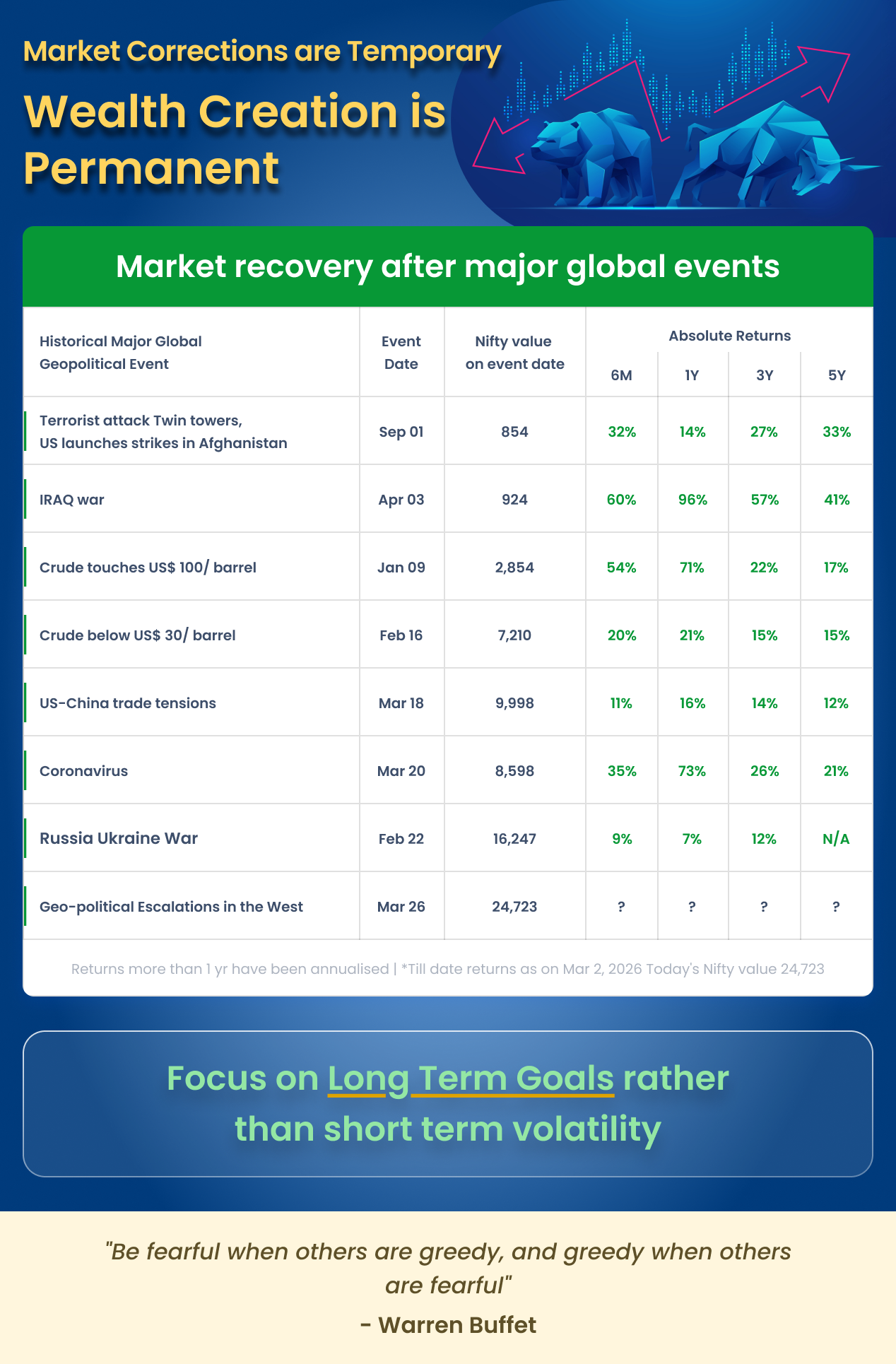
India’s Market Resilience A History of Bouncing Back

Get Tax Free Maturity with Market Linked Insurance Plans
*All savings are provided by the insurer as per the IRDAI approved
insurance
plan.
++Source - Google Review Rating available on:- http://bit.ly/3J20bXZ
^Section 80C allows annual deductions of up to ₹1.5 lacs from the taxable income. Section 10(10D) provides tax-free maturity benefits for investments of up to ₹2.5 Lacs/ year, on policies bought after 1 Feb 2021. Tax benefits and savings are subject to changes in tax laws.
¶Long-term capital gains (LTCG) tax (12.5%) is exempted on annual premiums up to 2.5 lacs.
^^The information relating to mutual funds presented in this article is for educational purpose only and is not meant for sale. Investment is subject to market risks and the risk is borne by the investor. Please consult your financial advisor before planning your investments.


