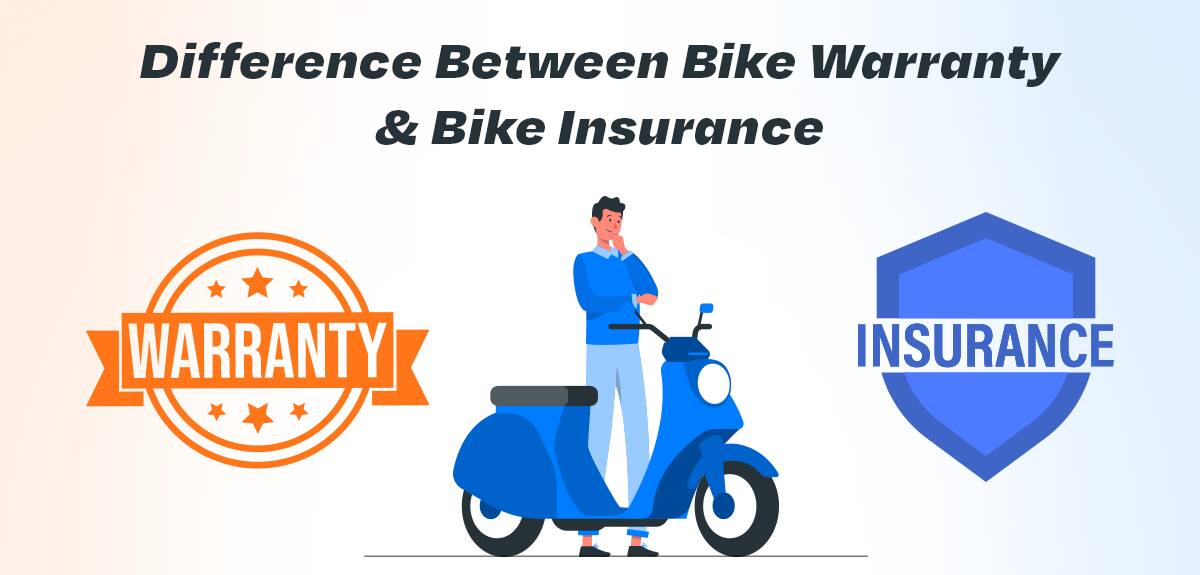
Difference Between Bike Warranty & Bike Insurance
- Home

- Motor Insurance
- Bike Insurance
- Articles - TWI
- Differentiating Bike Warranty & Bike Insurance
When you purchase a new bike, you usually receive two types of financial protection, one is bike warranty from the manufacturer and another one is bike insurance from an insurance company. While both protect you from certain expenses, they serve very different purposes. Understanding the difference between these two is important for every bike owner. This guide explains bike warranty details, coverage, warranty period, and how it differs from bike insurance so you can make better ownership decisions.
How Does Bike Warranty Keep Your Savings Intact?
-
What is Bike Warranty?
A bike warranty is a guarantee provided by the motorcycle manufacturer stating that certain parts of the bike will be repaired or replaced if they fail due to manufacturing defects within a specified period.
The warranty usually comes with a new bike warranty when you purchase the vehicle from the dealer. If a covered part stops functioning due to a factory defect, the manufacturer will repair or replace it without charging for the part.
However, the warranty is limited to specific components and conditions.
-
Significance of Bike Warranty
Under the bike warranty, the manufacturer commits to replace the defective part of the bike within the specified period. The best part about the bike warranty is it works without paying additional costs to the manufacturer.
-
Key Bike Warranty Details
Some important bike warranty details every owner should know include:
- It is offered by the bike manufacturer, not the insurance company.
- It covers manufacturing defects and faulty parts.
- The warranty is valid for a fixed time or kilometer limit.
- Repairs are usually done at authorized service centers only.
- Damage caused by accidents or external factors is not covered.
Bike Warranty Period
The bike warranty period differs from manufacturer to manufacturer. In most cases, the standard warranty offered with a new motorcycle ranges between:
- 3 years or 30,000 km, whichever comes first
- 5 years for premium bikes in some brands
The warranty becomes invalid if the bike crosses either the time limit or kilometer limit.
-
Factors Affecting Bike Warranty Period
The following factors usually determine how long the warranty remains valid:
- Manufacturer’s policy
- Bike category (commuter, sports, premium)
- Kilometers driven
- Regular servicing at authorized centers
Always check the official two-wheeler warranty terms in the owner's manual or dealership documents.
-
What Does Bike Warranty Cover?
Here are the things covered under the bike warranty:
- Mechanical parts such as gearbox, engine, etc.
- Safety equipment such as ABS, ride-by-wire, etc.
- Electrical parts such as CDI unit, ignition coil, etc.
-
What Is Not Covered Under Bike Warranty?
Several things are not covered under the bike warranty, such as-
- Labour cost
- Consumables (plastics, rubber, washers, nuts & bolts, engine oil, lubricants, etc.)
- Regular wear and tear
- Modifications or alterations in the bike
- Illegal racing led to damages
- Negligent riding led to damages
How Does Bike Insurance Protect Your Pocket?
-
Meaning of Bike Insurance
Two-wheeler insurance (commonly known as bike insurance) shields vehicle owners from several unforeseen occurrences that cause damage to their own vehicle or any third party. In India, purchasing third-party bike insurance is mandatory as per the Motor Vehicle Act whereas buying own-damage cover depends on the bike owner.
-
Types of Bike Insurance
Bike owners can choose from the following bike insurance policies:
- Third-Party Bike Insurance
Mandatory coverage that protects against third-party injury, death, or property damage. - Comprehensive Bike Insurance
Provides broader coverage including:
- Own damage protection
- Theft protection
- Natural disasters
- Fire and explosions
- Third-party liability
Comprehensive bike insurance offers maximum financial security for bike owners.
- Third-Party Bike Insurance
-
Significance of Bike Insurance
A two-wheeler insurance policy offers all-rounder protection to the bike owner against damages from several unpredicted circumstances. It offers financial coverage to the insured vehicle and protects you from spending several expenses that you would have to pay from your own pocket to repair those damages.
Bike Warranty vs. Bike Insurance
The difference between the bike warranty and bike insurance is mentioned in the table below:
| Coverage | Bike Insurance Details | Bike Warranty Details |
| Third-party liability | Insurance covers third-party liabilities such as vehicle damage or injury during an accident. | Does not provide cover for third-party damages. |
| Damage to the insured bike | Accidental damage is covered. | Does not provide cover for damage caused to the bike in an accident. |
| Faulty bike parts | Does not cover or pay for faulty bike parts. | Does provide cover for the faulty bike parts and replaces them without paying an additional cost. |
| Customization | The policyholder can get this purchase add-on cover to customize their policy. | Does not provide cover for customization. However, you can extend the bike warranty if you can want. |
| Is it mandatory? | Third-party liability is mandatory whereas own damage cover is optional. | The manufacturer offers a bike warranty at the time of purchasing a new bike for a specified period. |
| Bike theft | Bike theft is covered under a comprehensive bike insurance plan. | Bike theft is not covered. |
| Total loss | The comprehensive plan covers the total loss. Total loss means if the bike is damaged to such an extent that it cannot be repaired. | Does not provide cover for total loss. |
| Personal Accident (PA) cover | It is a mandatory cover that the bike owner must purchase separately. | There is no option to buy this cover. |
| Wear & Tear | Not covered | Not covered |
| Electrical/Mechanical failure | Not covered | Covers electrical/mechanical failure within the warranty period provided by the company. |
| Natural disaster cover/Manmade disaster cover | Provides cover for manmade and natural calamity damage. | Does not provide cover for manmade or natural disaster damages. |
| Fire/Explosion | It is covered under the insurance plan. | No coverage is provided. |
With the help of the above table, it is understood that both the bike warranty and bike insurance provide a sense of financial protection against several losses or damages caused to the bike. However, the difference between these two is this- a bike warranty comes along with the purchase of the new bike whereas third-party bike insurance is mandatory to purchase. However, it is recommended to purchase a comprehensive insurance plan to get coverage for your own damages as well as purchase personal accident coverage separately.
Types of Bike Warranty
When you purchase a bike, the bike company provides a warranty for a specified period. There are two types of warranty provided by the bike company-
-
New Warranty
A new bike warranty is included when you purchase a motorcycle. It covers manufacturing defects for a predefined period or mileage limit. This warranty ensures that defective components are replaced without extra charges for parts.
-
Extended Warranty
Once the standard warranty expires, manufacturers often provide an option to purchase an extended bike warranty. This extends the coverage for a few more years but may include slightly different terms and conditions. Extended warranties can be useful if you plan to keep the bike for a longer duration.
How to Do a Bike Warranty Check?
Many bike owners are unaware of their warranty status. Doing a bike warranty check helps you know whether your motorcycle is still under warranty.
Ways to Check Bike Warranty
You can check your warranty status through:
- Authorized service center
- Manufacturer’s website
- Owner’s manual and warranty booklet
- Customer support of the brand
Keeping track of your warranty helps you avoid paying for repairs that could otherwise be covered.
Pros & Cons of Bike Warranty
Here are the pros and cons of a bike warranty-
-
Pros
- No need to worry about faulty parts of your bike.
- You can include an extended warranty.
- No additional cost is required for a new bike warranty.
-
Cons
- No coverage is provided for accidental damage.
- No coverage for the tyres and brake pads.
- You cannot include any add-on cover.
- No coverage is provided for third-party liabilities.
- You cannot include personal accident coverage.
- You cannot customize the bike warranty.
Why You Need Both Bike Warranty and Bike Insurance?
Bike warranty and bike insurance complement each other.
- Bike warranty protects against manufacturing defects.
- Bike insurance protects against accidents, theft, and liabilities.
For complete financial protection, it is advisable to:
- Maintain the manufacturer’s warranty
- Purchase comprehensive bike insurance
Together, they ensure that you are covered against both internal defects and external risks.
When Does a Bike Warranty Become Void?
Manufacturers may reject warranty claims under certain circumstances, such as:
- Missing scheduled servicing intervals
- Servicing the bike at unauthorized workshops
- Installing non-approved accessories or modifying the bike
- Using the bike for racing or commercial purposes, where prohibited
- Damage caused by accidents or negligence
- Tampering with the odometer
Conclusion
Bike warranty and bike insurance are complementary rather than competing forms of protection. While a warranty covers manufacturing defects for a limited period, bike insurance safeguards you against financial losses arising from accidents, theft, natural disasters, fire, and third-party liabilities. Having both ensures broader protection throughout your bike ownership journey and helps you avoid unexpected repair expenses.
FAQs- Bike Warranty Vs Bike Insurance
-
Are warranty and insurance the same?
Ans: No, warranty and insurance are different. A bike warranty covers manufacturing defects in parts, while bike insurance covers financial losses caused by accidents, theft, natural disasters, or third-party liabilities. -
What is covered in a bike warranty?
Ans: A bike warranty typically covers manufacturing defects in mechanical and electrical parts, such as the engine, gearbox, fuel system, and electronic components, during the specified warranty period. -
Does warranty mean free repair?
Ans: Yes, warranty usually provides free repair or replacement of defective parts caused by manufacturing faults. However, labour charges or consumables may not always be included. -
Do I need insurance if I have a warranty?
Ans: Yes, you still need insurance. A warranty does not cover accidents or theft, while bike insurance protects against those risks and third-party liabilities. -
What is not covered in warranty?
Ans: Bike warranty generally does not cover wear and tear, accident damage, tyres, brake pads, modifications, consumables, or damages caused by negligent riding. -
What are two reasons not to buy an extended warranty?
Ans: Two common reasons are:- The bike may already be very reliable with low repair risk.
- Extended warranties may have limited coverage or many exclusions.
-
What are the three types of warranty?
Ans: The two common types of warranty are:- Manufacturer (standard) warranty
- Extended warranty
-
What is the cost of warranty?
Ans: A new bike warranty is usually included in the purchase price, while an extended warranty may cost a small additional fee depending on the bike model and coverage period. -
Does a warranty cover accidental damage?
Ans: No, warranties generally do not cover accidental damage. Such damages are usually covered under a comprehensive bike insurance policy. -
Is accidental damage covered by warranty?
Ans: No, accidental damage is not covered under a bike warranty because it is not related to manufacturing defects. -
What does a 3 month warranty mean?
Ans: A 3-month warranty means the manufacturer will repair or replace defective parts within three months from the purchase date if the issue is caused by a manufacturing defect. -
Why is physical damage not covered under warranty?
Ans: Physical damage usually occurs due to accidents, misuse, or external factors, which are not manufacturing defects. Hence, they are covered by insurance instead of warranty. -
Which is not covered in insurance?
Ans: Insurance generally does not cover normal wear and tear, mechanical breakdown, illegal use of the vehicle, or damages caused by drunk driving. -
What are the three contents of a warranty?
Ans: A warranty typically includes:- Coverage details (what parts are covered)
- Warranty period (time or mileage limit)
- Terms and conditions for repair or replacement.
-
Can I negotiate the price of a warranty?
Ans: Yes, in many cases you can negotiate the price of an extended warranty with the dealer, especially when purchasing a new bike or bundled service packages. -
Is bike insurance compulsory if my bike is under warranty?
Ans: Yes. A manufacturer's warranty does not replace bike insurance. As per Indian law, at least third-party bike insurance is mandatory for every registered bike. -
Does a bike warranty cover accident damage?
Ans: No. A bike warranty only covers manufacturing defects. Damages caused by accidents are covered under bike insurance, subject to the policy's terms and conditions. -
Can I claim both bike warranty and bike insurance?
Ans: Yes. Warranty claims apply to manufacturing defects, whereas bike insurance covers accidental losses and other insured events. However, you cannot claim both for the same damage. -
Is an extended bike warranty worth buying?
Ans: An extended warranty can be beneficial if you plan to keep your bike for several years after the standard warranty expires, especially if it has expensive mechanical or electrical components. -
What are red flags in extended warranties?
Ans: Common red flags include limited coverage, hidden exclusions, high service conditions, and restrictions on repair locations. -
What happens after my bike warranty expires?
Ans: Once the warranty expires, repairs due to eligible mechanical failures become your responsibility unless you purchase an extended warranty. However, your bike insurance remains active as long as you renew the policy on time.