Processing


Driving requires constant focus, precision, and quick decision-making. While most people feel more comfortable driving during the day, night driving comes with its own set of challenges that demand extra caution. Reduced visibility, driver fatigue, and other factors can make nighttime journeys more risky if proper care is not taken.
Human vision is naturally optimised for daylight hours, helping us drive our vehicles effectively during those hours. It becomes difficult for us to see properly as it gets darker at night. While artificial lights help compensate for daylight, they are not as effective as daylight itself. This lack of visibility results in several severe road accidents.
In addition, factors such as poorly lit roads, glare from oncoming vehicles, driver fatigue, stray animals, and increased movement of heavy commercial vehicles further make night driving more hazardous. Even though new cars have LED head and tail lamps to help with night driving, there may still be certain challenges of driving at night.
Night driving comes with several unique challenges that can affect your safety and control on the road. Here are some of the key difficulties drivers need to be aware of:
Visibility becomes significantly compromised at night. Your field of vision is limited to the range of your headlights, leaving you with less time to identify and react to obstacles, especially at higher speeds. Dirty windshields can make it even worse due to scattered light, and misaligned headlights can create blind spots.
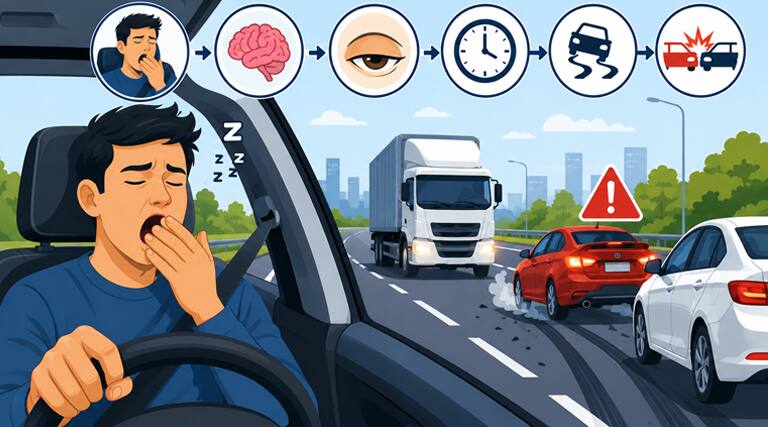
Lack of sleep leads to fatigue and reduces alertness. This tiredness affects your driving and slows down your reaction time, resulting in decreased awareness and impaired judgment. Drivers may doze off without realising it, which can further lead to devastating accidents.
The risk of encountering drunk drivers increases during late-night hours. Intoxicated driving often leads to unsafe behaviours such as swerving, sudden braking, or driving without proper lights. Being alert to these signs and maintaining a safe distance from such vehicles is essential for staying safe on the road.
Getting help during a vehicle breakdown is much easier during the day. At night, many repair shops are closed and roadside assistance may take longer to arrive, thus increasing the risk of theft and other incidents.
Personal security is a valid concern at night. Breaking down in an isolated or poorly lit area can leave you vulnerable to crime. Furthermore, in the event of an accident, there are fewer witnesses and fewer passers-by to offer immediate assistance or call emergency services.
Animals like deer or stray cattle in urban areas can jump into your path unexpectedly. These sudden animal movements can lead to extremely dangerous road accidents at night.
While highways are well-lit, there can be stretches, rural roads, or suburban streets that might offer less visibility on roads during night time. Relying solely on your vehicle's headlights makes driving at night even more dangerous, as you have limited sight of things.
Here are the most effective safe night driving guidelines and tips to keep you and other passengers safe:
Try to sleep during the afternoon if you know you have a long night's journey ahead. Do not try to replace sleep with caffeine or loud music, as there is no proper replacement for sleep. These are just temporary fixes. If you feel drowsy during the trip, pull over at a well-lit rest stop or petrol pump and take a power nap.
Avoid heavy meals before long night drives. Digestion requires energy, which can leave you feeling lethargic. Instead, choose light, protein-rich snacks that help maintain steady energy levels without making you feel sleepy.
Check the lights of your vehicle properly through the given steps before leaving for a night trip:
Lock your vehicle doors properly as soon as you enter. Most modern cars have automatic locking features, but get into the habit of locking it manually. This prevents theft at red lights and ensures no one can barge in during an unforeseen event.
You must stick to well-lit, familiar roads at night. Unknown roads may have unexpected sharp turns, potholes, or construction zones that are difficult to spot in the dark. If using a new route is necessary, keep your GPS voice guidance volume high so you can listen to directions without taking your eyes off the road to look at a screen.
Keeping the cabin lights on while driving at night can reduce your ability to see clearly outside. Bright light inside the car creates a contrast with the dark surroundings, making it harder for your eyes to adjust to the road ahead. This can lead to poor visibility and slower reactions. Once you've settled in, switch off cabin lights to maintain proper night vision.
Bright headlights from vehicles in front can cause temporary glare and affect your vision. Looking directly at them can temporarily impair your vision and make it difficult to judge the road. Instead, focus slightly towards the left side of your lane or follow road markings to stay on track without straining your eyes.
Driving at night is generally not advisable due to significantly higher fatality rates. While roads are less busy, the combination of compromised visibility, glare from headlights, and a higher prevalence of fatigued or impaired drivers increases risk. Ensure your vehicle's lighting is optimal and you are physically alert to handle reduced visibility while driving at night.
The most common night driving mistakes include keeping high beams turned on as it hampers the vision of vehicles ahead, driving with dirty windshields and ORVMs, and driving when tired or drowsy. Such situations increase the risk of severe road accidents.
Yes, it is safer to drive slower at night as your reaction time is limited. At high speeds, you may not have enough time to react to obstacles. Slower speeds provide the necessary buffer to spot hazards like animals or other obstacles that only become visible at the last second.
Take breaks every two hours to stretch and rest. Keep the temperature of your vehicle's cabin cool to avoid drowsiness, and listen to engaging audio such as podcasts or talk shows. You must also avoid eating heavy meals before departure and pull over immediately at a well-lit rest stop for a short power nap if you experience heavy eyelids.
To drive safely at night, keep your headlights, tail lights, and fog lamps clean, functional, and correctly aligned to reduce glare. Avoid looking directly at oncoming headlights. Instead, focus on the edge of the road to reduce eye strain and maintain better visibility.


The road scams that occur in India are probably more frequent than
Read more
To avoid costly repair bills and to ensure your car's optimal
Read more
The tyres of your car are one of its most critical components, as
Read more
Roads facilitate the movement of millions of citizens in India
Read more
While fog in winter is common, it can be quite problematic for
Read moreInsurance
Calculators
Payment Methods


Secured With

Follow us on