Looking for New Car Insurance?
Don't rely on dealer insurance only!
Compare prices with us first & save up to ₹40,000 on premium
View plans instantly
Complete protection with Zero Dep
Car health checkup worth ₹2,000
Flat tyre? 24x7 roadside assistance
Dedicated claim support till settlement
  • City & RTO
  • Registration Year
  • Car Brand
  • Car Model
  • Car Fuel Type
  • Car Variant
Plan Starting From ₹2,094/year#
Compare & Save Upto 91%+ on Car Insurance
Processing
    Other models
    Other variants
    Secure
    We don’t spam
    View Prices
    Please wait..
    By clicking on “View Prices”, you agree to receive assistance and agree to our Privacy Policy & Terms of Use
    Please wait ...

    Turbocharging & Engine Upgrades

    If you are looking to get more power from your car, turbocharging is one of the most effective ways to do it. A turbocharger can really boost up your engine's horsepower and torque without the need for engine replacement. However, installing a turbocharger is not something to rush into, as it requires some careful planning. If it is not done right, you could end up with engine damage and some pretty hefty repair bills. Read on to know more about turbocharging before deciding to enhance your vehicle.

    Read more

    What is Turbocharging?

    A turbocharger uses exhaust fumes from the engine to rotate a small turbine. The turbine compresses incoming air, increasing the amount of oxygen available for combustion. As a result, the engine consumes more fuel and generates more power. This enhances acceleration and overall engine and fuel efficiency while reclaiming energy that would typically be lost in the exhaust.

    Many new cars come with factory-fitted turbochargers. However, if you want to install a turbocharger in your vehicle, you need to ensure accurate engine tuning for safe and dependable operation.

    7 Reasons to Consider Turbocharging

    Turbocharging is frequently used to enhance a vehicle's performance and increase driving responsiveness. Here are several typical reasons why drivers opt for it:

    • Higher Horsepower and Torque: Turbocharging allows an engine to produce more power without increasing its size. As a result, you get higher horsepower along with stronger torque, especially at lower speeds, making the vehicle feel more responsive and efficient.
    • Quicker Acceleration and Smooth Driving: A turbo engine provides faster acceleration when you press the accelerator. This allows a smooth drive, especially for car owners who frequently drive on highways.
    • Enhanced Overall Performance: Turbochargers improve the efficiency of fuel and air combustion in the engine. This improves the car's overall performance compared to non-turbo engines. Car owners often report better mileage.
    • Better Driving Experience: Turbocharged vehicles are often more dynamic and responsive. This can enhance daily driving pleasure, particularly for those who favour a sporty sensation.
    • Boosts Power Even in Smaller Engines: Turbocharging allows smaller engines to perform like larger ones by increasing air intake. This concept, known as engine downsizing, helps reduce weight while maintaining power. It also offers better fuel efficiency and strong performance.
    • Improves Fuel Efficiency: Turbochargers take exhaust gases that would usually go to waste and use them to give your engine a serious performance boost. Turbochargers boost fuel combustion, allowing engines to run more efficiently to give better mileage.
    • Suitable for Driving on both City Streets and Hilly Roads: Modern turbochargers provide low-end power that is essential for smooth driving on city roads and for climbing steep, hilly roads. They even provide high torque at lower RPM, which makes driving on straight and winding roads easy.

    Things to Keep in Mind Before Turbocharging Your Car

    Before enhancing your vehicle's performance with a turbocharger, you need to understand its impact on your engine. Here are various key aspects you may want to consider before opting for turbocharging:

    • Selecting the Appropriate Turbo: When fitting a turbocharger in your vehicle, it is crucial to ensure that its size and type match your engine. Choosing the appropriate turbocharger type is crucial for attaining smooth power delivery and enhanced efficiency.
    • Enhancing the Fuel System: Turbocharged engines require an improved fuel system to ensure sufficient combustion. To accomplish this, you might have to replace your fuel injectors and fuel pump to ensure proper fuel delivery to the engine. By neglecting these upgrades, the engine performance and reliability may suffer.
    • Need for an Intercooler: Turbochargers often raise the air temperature within the engine. But if you have an intercooler, it will cool the air before it enters the engine. This helps to enhance the engine's performance. Without adequate cooling, you could run into issues with engine efficiency and safety.
    • Engine Strength and Components: Not all engines are designed to handle the extra power from a turbo. Internal parts like pistons, crankshaft, and connecting rods must be strong enough. You need to inspect and replace weak components to avoid engine damage or failure.
    • Modification of Compression Ratio: Turbocharging increases pressure inside the engine. To resolve this, the compression ratio often needs to be lowered. Inadequate adjustment may result in overheating or engine knocking.
    • Tuning the Electronic Control Unit (ECU): After you install a turbocharger, you must update the car's computer, known as the ECU. This step is vital because it teaches the engine how to balance the new influx of air and fuel. If you skip this vital step, your car's motor may get damaged.
    • Lubrication and Cooling System: Turbochargers generate extreme heat. To keep things running safely, you need to set up dedicated oil and coolant lines to keep the components from overheating or seizing up. You also need to use proper engine oil to ensure lubrication and avoid engine damage.

    Drawbacks of Turbocharging

    A few drawbacks of turbocharging that every car owner should consider are as follows:

    • Increased Expense: Installing a turbocharger typically costs more than servicing a naturally aspirated engine. A turbo setup requires several additional components, such as an upgraded fuel system, stronger engine parts, and improved cooling solutions. Along with specialised installation, turbocharging is a significant investment.
    • Enhanced Maintenance: Turbocharged engines are more complex than conventional engines and require more frequent, more careful maintenance. Key components such as the turbocharger, intercooler, and oil lines require regular inspection and maintenance to ensure they operate properly. Overlooking these elements can lead to costly repairs or possibly engine damage.
    • Potential Performance Issues: Turbocharged engines may experience a slight delay in power delivery, known as turbo lag. This happens because the turbo takes time to build pressure using exhaust gases. As a result, acceleration may feel less immediate at lower speeds.
    • Temperature Control Concerns: Turbochargers generate significant heat as they use exhaust gases to spin at extremely high speeds. This additional heat can cause strain on the engine and its parts. You can add additional cooling systems, such as intercoolers and radiators to prevent overheating.

    Tips for Safe Turbocharging

    You can follow these handy tips to keep your turbocharged engine in good condition and steer clear of any potential issues:

    • Try not to turn off the engine right after a long drive or after navigating through heavy traffic. Let it idle for 1-2 minutes so the turbo can cool down. This practice prevents oil thickening.
    • Turbochargers operate at extremely high temperatures and require adequate lubrication. Use high-quality synthetic oil and change it more frequently, especially in dusty conditions.
    • Refrain from accelerating quickly right after turning on the engine. Let the engine idle for about 30 to 60 seconds. This will help make sure the oil circulates properly.
    • Keep your air filter clean and change it out regularly. A fresh filter ensures great airflow and protects the turbo from damage.
    • Inspect the turbo area regularly for oil or exhaust leaks. Identifying leaks early on can save you from performance problems and expensive repairs down the line.
    • In India, aftermarket turbocharging is not permitted for private vehicles. If you overlook this regulation, you could face fines and legal troubles.

    Frequently Asked Questions (FAQs)

    Car engine tuning is legal in India as long as it complies with emission, noise, and safety regulations. Any tuning that violates these norms or changes the vehicle beyond approved limits can be considered illegal. In many cases, such modifications may also attract fines or legal action.

    Yes, engine replacement is allowed in India, but it must be done after obtaining the necessary permission from the RTO. The modified engine must meet emission and safety standards and indicate this on the vehicle's registration document.

    In India, any modification that changes the car's original design or specifications is prohibited. This includes modifications to the chassis, illegal lighting, and excessively dark windows.

    To keep your turbo engine in top shape, make sure to use high-quality engine oil and have your car serviced regularly. Allow the engine to warm up before pushing it hard, and let it idle for a short time after long drives so the turbo can cool down gradually. Keeping the air filters clean also helps maintain efficient airflow and overall engine health.

    A short idling period is advantageous for turbo engines, especially after long or high-speed drives. It helps cool the turbo and safeguards against damage from high temperatures. However, excessive or unnecessary idling should be prevented.

    New Cars Articles

    • Recent Article
    • Popular Articles
    21 Sep 2026

    Top Road Scams in India and How to Avoid Them?

    The road scams that occur in India are probably more frequent than

    Read more
    16 Sep 2026

    Car Repair and Maintenance Tips

    To avoid costly repair bills and to ensure your car's optimal

    Read more
    08 Sep 2026

    Right Car Tyres for Better Control and Safety

    The tyres of your car are one of its most critical components, as

    Read more
    04 Sep 2026

    General Road Safety Tips in India

    Roads facilitate the movement of millions of citizens in India

    Read more
    01 Sep 2026

    Road Safety Tips for Night Driving

    Driving requires constant focus, precision, and quick

    Read more

    How to Repair Car Door Locks and Handles?

    Car doors should open, close, and lock smoothly to ensure safe and convenient entry and exit. However, if the lock

    Read more

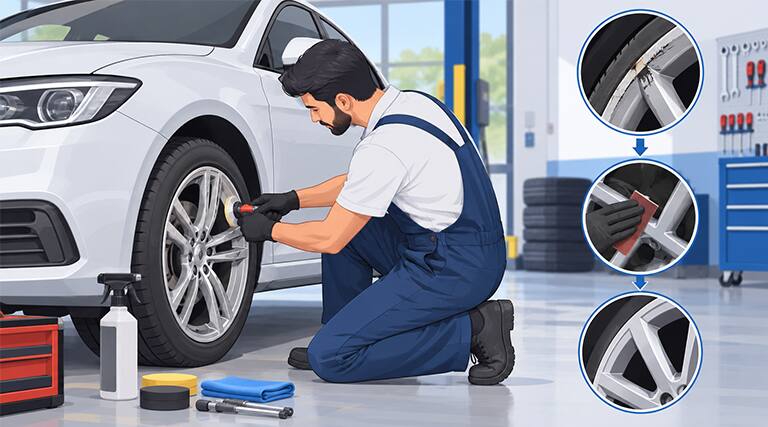
    How to Repair Car Wheel Rims?

    Car wheel rims are the outer metal parts of the wheel. They hold the car's tyres in place and support the vehicle's

    Read more

    How Driver Fatigue Impacts Road Safety?

    Driver fatigue is a growing concern in India. Prolonged driving hours and insufficient rest significantly impair a

    Read more

    How to Repair Car Keys?

    If your car key breaks or is lost, you may be unable to lock, unlock, or start your vehicle, causing delays and

    Read more

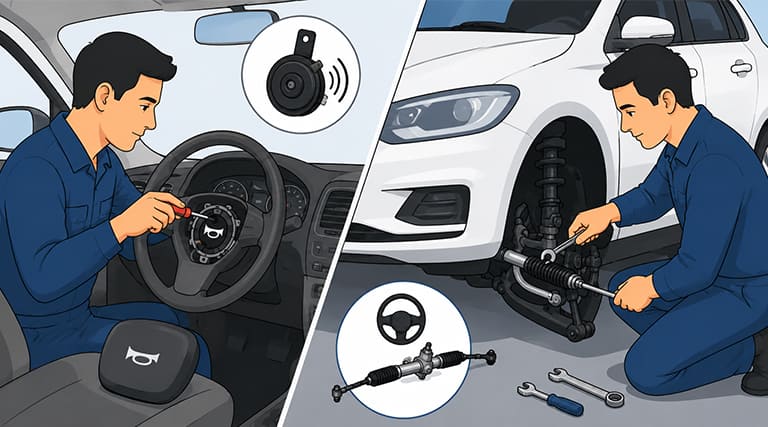
    How to Repair the Horn and Steering of a Car?

    A well-functioning horn and smooth steering are essential for safe and comfortable driving. If your horn stops

    Read more
    Claude
    top
    Close
    Download the Policybazaar app
    to manage all your insurance needs.
    INSTALL