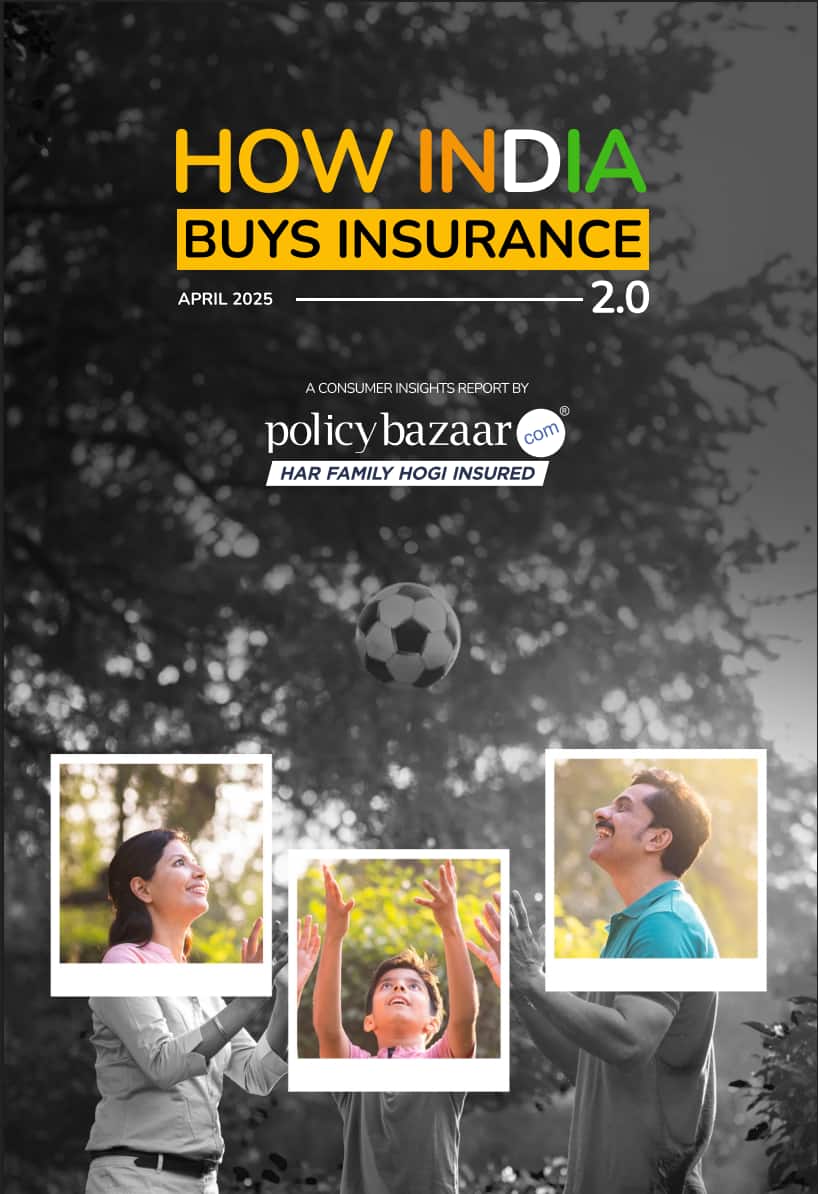
Report cover: How India Buys Insurance

CONSUMER INSIGHTS REPORT

How India Buys Insurance 2.0

A landmark study decoding India’s health and term insurance landscape—what drives purchase, what holds consumers back, and where the industry must evolve

Get report on email
  • 3955 Listing Interviews
  • 2013 Main Interviews
  • 27 Cities
  • Jul-Sep 2024 Fieldwork period

Key highlights

  • 87%

    of Term insurance non-buyers underestimate their family’s real needs

  • ~50%

    of Health insurance buyers hold cover that won’t cover a crisis

  • 3+

    sources, on average, used to research for term and health insurance.

Executive summary

India’s insurance landscape in 2025 reveals a defining paradox: awareness is rising sharply, but ownership remains critically low – and the gap is not apathy, it is guidance. While health insurance awareness stands at 82.8%, only 18.7% own a policy; term insurance fares worse at 52.4% awareness and just 9.6% ownership. Purchase decisions are driven by trusted experiences – peer recommendations, claims witnessed, and platforms that make comparison feel safe – with consumers consulting 3+ sources before deciding.

The imperative for the industry is clear: embed financial literacy, reframe sales around real needs, make every claim a visible act of trust, and build distribution that works across the full hybrid consumer journey.

Key Insights

Finding 1

Indians Massively Underestimate Risk

87% of term insurance non-buyers underestimate their family’s financial needs. A household earning ₹5-7.5L/year believes ₹57L is sufficient cover; experts recommend ₹93.75L.

While, Health insurance awareness is relatively high, but the gap between awareness and adequate coverage is alarming. Buyers are underinsured; non-buyers are unprepared. 48% of health insurance buyers have cover of ₹5L or less – dangerously below real treatment costs.
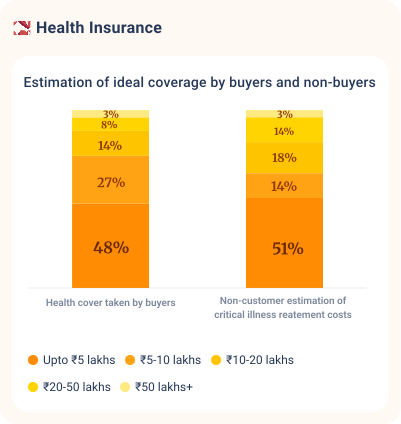
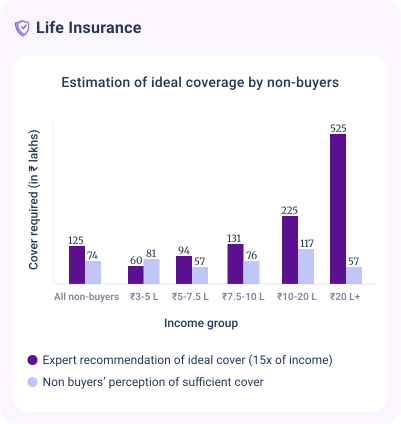
Chart 1
Chart 1

Finding 2

Digital Channels Now Match Word-of-Mouth

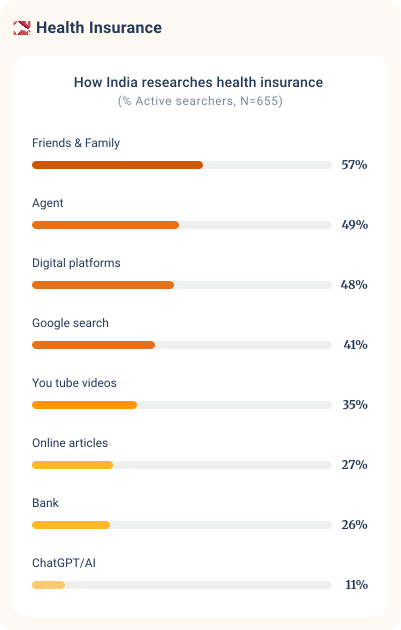
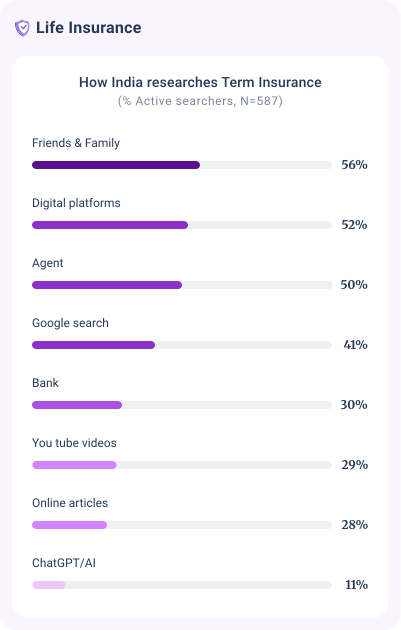
Indians research insurance actively and across multiple channels. 62% of term seekers and 61% of health seekers seek information before buying – blending offline trust with online transparency. Family & friends remain the top information source at 56–57%, but digital platforms (48-52%) now rival traditional agents (~50%) in insurance research.

Chart 1
Chart 1

Finding 3

How Non-Buyers Plan for Crisis and Unforeseen Circumstances

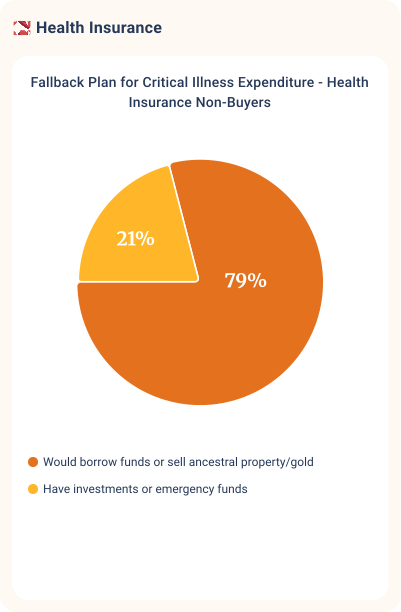
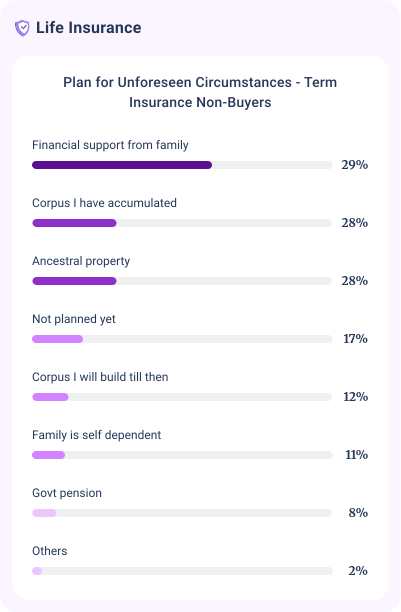
When faced with a critical illness or the sudden loss of a breadwinner, the majority of uninsured Indians fall back on informal, fragile, and finite safety nets. What the data reveals goes far deeper than an awareness problem–it is an active financial vulnerability, quietly accepted as normal.

Chart 1
Chart 1

About this research

Methodology

This study was designed to give a 360-degree view of Indian consumers; awareness, attitudes, and behaviour across health and life insurance categories.

Objective

To understand the insurance landscape with a focus on Health and Term Insurance

Methodology

Quantitative face-to-face interviews with structured questionnaire (2 modules: listing + main). Supplemented by qualitative discussions.

Target group

Financial decision-makers, purchased health/ term insurance in 2022 or later, aged 23-65 years, male and female, NCCS AB classification. Mix of current buyers and non- buyers who considered purchase.

Coverage

Pan-India study spanning 27 cities across metro, Tier 1, Tier 2, and Tier 3 geographies.

For more insights,

Get the report on Email

Claims Experience
Purchase behaviour
Claims experience
Investment behaviour
Purchase behaviour

Industry speaks

Overall pleasurable experience. Pay a little first and Pay a little during the development of the app as milestones are achieved, which made me feel very confident and comfortable. Seamless and Easy process.

Claude
top