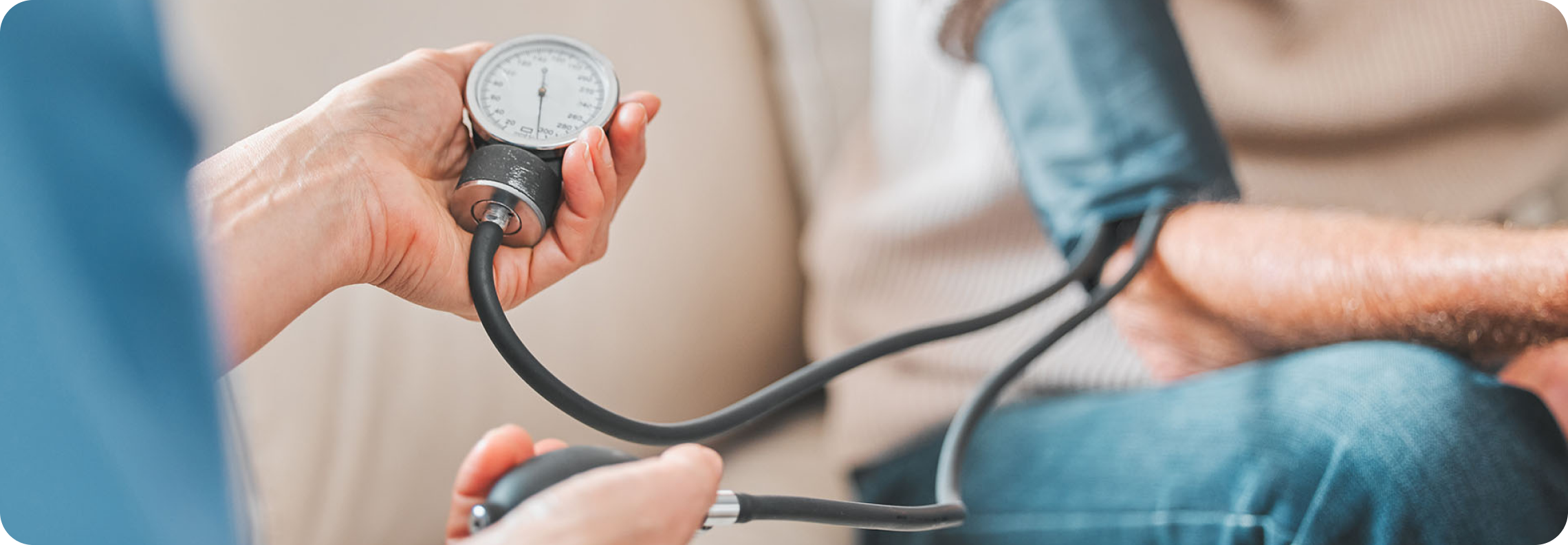
What Is High Blood Pressure?
High blood pressure, or hypertension, is a medical condition affecting the functioning of the arteries. Think of your arteries as valves that perform various functions, such as handling the high pressure of blood exerted by the heart and pumping oxygen-rich blood to the entire body. The pressure exerted on the walls of arteries becomes so high that it strains your blood vessels, leading to several health complications.
Knowing Your Blood Pressure Readings:
1
Systolic (First Number)It indicates the pressure in your blood vessels whenever your heart contracts, beats, or pumps blood. The normal range for adults is less than 120 mm Hg.
2
Diastolic (Bottom Number)It indicates the pressure in your blood vessels when your heart rests between beats. The normal range for adults is less than 80 mm Hg.
For Example: A 30-year-old male has a blood pressure reading of 119/80 mm Hg; his systolic reading is 119 mm Hg, and his diastolic reading is 80 mm Hg, which is under the normal range.
Take care of your health with comprehensive insurance.
Customise your ideal coverage now
How Does Hypertension Affect Your Body?
It is crucial to know how hypertension can affect your body, as it usually progresses with no symptoms, and certain physiological traits and lifestyle habits can increase the risk of its progression. With timely intervention and lifestyle modifications, you can manage hypertension by taking preventive steps that can help you mitigate the risks.
Organs affected by hypertension:
Heart
Kidneys
Brain
Eyesight
Reproductive organs
Stay on track with a sustainable approach to health and wellness.
Find flexible coverage now
How Can Hypertension Affect Your Arteries?
Arteries are a flexible type of blood vessels that allow the free flow of oxygen-rich blood from the heart to all other parts of the body. They are a crucial component of your cardiovascular system as they carry rich oxygenated blood and nutrients to the vital organs. Hypertension leads to increased strain on the walls of the arteries, which can limit them from performing their function properly, thus resulting in several health complications.
Hypertension can lead to:
1
Damaged arteriesIn this condition, the inner walls of the arteries get disrupted by the high pressure of blood, and excess fat accumulates in those damaged walls. It reduces blood flow to the body, as they become stiff and rigid.
2
AneurysmIn this condition, due to consistently high blood pressure in the arteries, the walls get weakened and bulge as a result. This bulge in the artery can burst at times, causing internal bleeding.
Take care of your health with comprehensive insurance.
Get covered today
What Are The Effects Of Hypertension On Your Heart Health?
Your heart health is correlated to the functioning of your arteries. If your arteries are not functioning properly, this can affect your heart's functioning and blocked arteries reduce the blood flow, which causes the heart to work twice as hard to pump the blood.
Hypertension can lead to heart conditions like:
1
Coronary artery disease
Excessive blood pressure causes the walls of arteries to shrink, which reduces blood flow to the heart. It results in restricted blood flow, leading to arrhythmias (irregular heartbeats) and stroke.
Signs of coronary artery disease are:
Shortness of breath
Chest pain (Angina)
Fatigue
2
Heart Failure
Heart failure happens when the heart muscles become stiff and weakened, and the heart has to work twice as hard to pump blood. This excess strain leads to heart failure.
Signs of heart failure:
Shortness of breath
Swelling in ankles, legs, and hands.
Fatigue
3
Enlarged left heart
In this condition, the heart's left chamber enlarges and swells due to increased blood pressure. When the heart stops pumping blood, it leads to a heart attack, and when the heart stops beating, it leads to cardiac arrest.
Signs of having an enlarged left heart:
Shortness of breath, especially while lying flat
Waking up short of breath
Irregular heart rhythm (arrhythmia)
Swelling (oedema) in the belly or the legs
Hypertension risks are real, but so is the power of prevention.
Secure your health
How Can Hypertension Affect The Functioning Of Your Brain?
High blood pressure plays a crucial role in cognitive response, as blood vessels in the nervous system are responsible for reacting to stimuli and brain functioning. High BP reduces the blood flow in the brain, leading to confusion.
Hypertension can lead to:
1
StrokeStroke happens when the brain fails to get rich, oxygenated blood and nutrients, and if there is internal bleeding inside or around the brain. The clots in the heart block the flow of blood to the brain, causing a stroke.
2
DementiaDementia happens due to single or multiple strokes because of restricted blood flow to the brain and narrowed arteries, and is known as vascular dementia.
3
Transient ischemic attack (TIA)TIA can happen due to restricted blood supply, caused by high blood pressure or blood clots. It is known as a mini-stroke, and its occurrence directly indicates that one might be at risk of having a full-blown stroke.
4
Mild cognitive impairmentHigh blood pressure can cause temporary changes in your memory, speech, or other cognitive tasks.
Taking care of your health is as crucial as getting the ideal coverage.
Get the ideal coverage
How Can Hypertension Affect Your Eyesight?
The tiny blood vessels in the eyes experience excessive strain due to high blood pressure. This strain disrupts the blood flow to the eyes, or in severe cases, the blood vessels can burst. It becomes crucial to be aware of any vision changes.
Hypertension can lead to:
1
RetinopathyIn this condition, the blood vessels in the retina ge damaged. The retina is the light-sensing cells in the eye, and damage to the vessels can lead to internal bleeding, blurry vision, and permanent vision loss in some cases.
2
ChoroidopathyIt occurs due to excess fluid retention in the retina and can result in blurry vision.
3
NeuropathyIt happens due to restricted blood flow to the eyes, which in turn interferes with their functions and can lead to internal bleeding in the eyes or vision loss.
Hypertension comes in many forms, but the ideal health coverage will Keep you protected.
Protect your health today
What Is The Impact Of Hypertension On Your Reproductive Health?
High blood pressure affects your body in different ways, one of which is your sexual health. High blood pressure restricts the blood flow, making it more difficult for the body to perform its vital functions.
Here is how hypertension can affect:
1
MenHigh blood pressure in men can lead to erectile dysfunction and is more common in men above 50 years. It happens as the blood flow gets restricted before reaching the penis, even if it goes it is not enough to support an erection.
2
WomenIn women, high blood pressure limits the blood flow to the vagina, due to which they can experience loss of sexual desire and dryness in the vagina.
Managing high blood pressure should not take a toll on your finances.
Get insured now
What Happens To Your Blood Vessels In Hypertension?
Your blood vessels carry rich, oxygenated blood from the heart to other body parts. Hypertension impacts the functioning of these blood vessels, which leads to several health conditions.
Damage to the blood vessels can lead to:
1
Cardiovascular Conditions
2
Organ Failure
3
Vascular diseases
Do not wait for the symptoms to appear, take preventive steps, and get insured.
Find top plans for you
Can Hypertension Affect Your Sleep And Energy Levels?
Yes, sleep and energy levels are correlated to your blood pressure levels. With hypertension, you may experience reduced sleep hours. Its symptoms often get neglected until they become severe; thus, understanding how hypertension can affect your sleep cycle and energy levels can help you make informed decisions to improve it.
1
Sleep
In terms of hypertension, insomnia or lack of sleep is common, so getting 7 - 8 hours of quality sleep is crucial to keep your blood pressure levels steady. Quality sleep is essential for hormone secretion, fast metabolism, muscle recovery, and memory.
Here are common sleep disorders associated with hypertension:
1. Insomnia
2. Restless leg syndrome
3. Sleep Apnea
2
Energy Levels
High blood pressure damages the tiny blood vessels in the kidneys, so experiencing fatigue or tiredness even after getting enough sleep is common. Assessing the cause behind constant fatigue is essential to understanding and working on its root cause.
1. Kidney-related problems
2. Sleep disorders (Insomnia, Sleep Apnea)
3. Other underlying causes are thyroid, heart disease, and autoimmune diseases.
Taking care of your health is as important as getting insured.
Find a plan that suits you
How Does Hypertension Affect Your Gut Health?
Gut health is crucial for the proper breakdown of the food you consume and for turning it into energy. The ability to digest food gets affected as high blood pressure restricts the free flow of blood to the digestive organs. It leads to slow digestion of food, leading to slower metabolism, and could lead to gastrointestinal issues.
Factors that can affect hypertension and your gut:
1
Restricted blood flow
Due to high blood pressure, digestive organs fail to receive the blood they need for smooth functioning.
It can also lead to gastrointestinal bleeding, nausea, and indigestion.
2
Stress
Stress leads to an increase in the blood pressure level, as it also weakens the digestive system, due to which one may experience bloating, indigestion, and IBS (Irritable Bowel Syndrome).
Keep hypertension in check with care and coverage.
Get started today
What Are The Silent Damages Of Long-Term Complications Of Hypertension?
Hypertension is known as a silent killer, as it slowly destroys the body before showing any visible symptoms. In the longer run, it can lead to several health conditions. Several underlying health conditions, such as Diabetes and thyroid conditions, can lead to the progression of hypertension in many cases.
Hypertension can cause long-term complications such as:
1
Plaque formationHaving high blood pressure consistently results in tiny tears in the artery walls. To repair these tears, our body sends special cells that get deposited in them. Over time, with these special cells, cholesterol also deposits in these tears and leads to plaque formation, called atherosclerosis. The plaque accumulation restricts the free flow of blood by narrowing down the arteries, increasing the risk of a heart attack and stroke.
2
Metabolic Syndrome
Metabolic syndrome is a cluster of cardiovascular conditions that increases the risk of having a stroke, diabetes, and heart-related diseases. Having metabolic syndrome means one has three or more of the health conditions, such as:
High glucose levels (Diabetes)
Low levels of HDL cholesterol (the good cholesterol)
High levels of triglycerides
High blood pressure
Excess fat in the abdominal area
Eat healthy and stay healthy with the ideal coverage.
Safeguard your health
What Is Hypertensive Crisis?
A hypertensive crisis is a state in which the blood pressure reading exceeds 180/120 mm Hg, which indicates the possibility of a heart attack, stroke, or other life-threatening conditions. In such cases, the heart cannot pump blood, requiring immediate medical attention.
There are two types of hypertensive crisis:
1
Urgent hypertensive crisisIt is the state where blood pressure is 180/120 mm Hg or greater with no signs of organ damage.
2
Emergency hypertensive crisisIt is the state in which blood pressure is 180/120 mm Hg or greater, and there is life-threatening damage to the body's organs.
You can manage hypertension with timely intervention and health insurance.
Choose the ideal coverage

FAQs

  • Q1. How much BP is normal for my age?

    Ans: A typical range for adults is less than 120/80 mm Hg, where 120 is the systolic reading and 80 is the diastolic reading.
  • Q2. What is considered low blood pressure?

    Ans: Low blood pressure is when the reading is less than 90/60 mm Hg, where 90 is the systolic reading and 60 is the diastolic reading.
  • Q3. Why are there fluctuations in my blood pressure?

    Ans: Frequent fluctuations in blood pressure could be due to several factors, such as stress, certain medications, and underlying health conditions.
  • Q4. Can excess sugar intake raise blood pressure?

    Ans: Yes, excessive sugar intake leads to weight gain and diabetes, and both of them are major contributors to high blood pressure.
  • Q5. When should I check my blood pressure for accurate results?

    Ans: It is advised to check blood pressure in the morning and evening, as it may help you know an accurate pattern without any hindrance.
  • Q6. Can I lower my blood pressure levels by drinking lots of water?

    Ans: Drinking water and keeping yourself hydrated may help you lower your blood pressure.
  • Q7. How can I manage my blood pressure naturally?

    Ans: To manage your blood pressure naturally, following a low-sodium DASH diet is important, exercise 5 times a week, and manage your stress effectively.
  • Q8. Can stress increase my blood pressure?

    Ans: Yes, stress can lead to increased blood pressure. But these changes are temporary, as anxiety can increase the heart rate.
  • Q9. Can walking reduce my blood pressure levels?

    Ans: Yes, walking can reduce your blood pressure. Any form of exercise is beneficial for weight loss and managing blood pressure.
  • Q10. What should be avoided in high blood pressure?

    Ans: It is advised to avoid high-sodium, oily, and sugary food items. Diet is as important as medicines and exercise to manage high blood pressure.