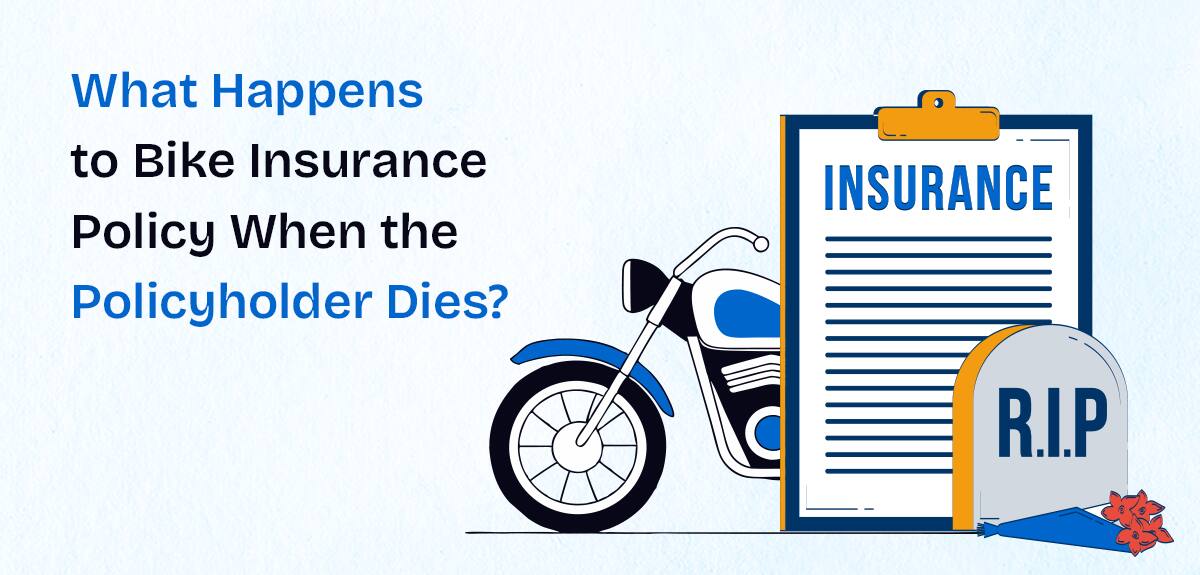
What Happens to Bike Insurance Policy When the Policyholder Dies?
- Home

- Motor Insurance
- Bike Insurance
- Articles - TWI
- What Happens to Bike Insurance Policy When the Policyholder Dies?
In India, having at least a third-party bike insurance policy is mandatory for every two-wheeler owner. But in an unfortunate situation like the death of the policyholder, many families are unsure about what happens next, especially when it comes to the bike and its insurance. While this can be an emotionally difficult time, understanding the process of transferring the bike insurance policy can help avoid legal and financial complications later. Let us understand what happens and what needs to be done step by step in this article.
What Happens After the Policyholder's Death?
Life is unpredictable, and dealing with the death of a loved one is emotionally challenging. Once the family is ready to handle the paperwork, sorting out the bike insurance becomes crucial.
After the demise of the policyholder, the ownership of the two-wheeler is legally passed on to the nominee or legal heir. Since bike insurance is linked to the vehicle owner, the 2-wheeler insurance policy must also be transferred to the new owner's name.
If the policy is still active, it can be transferred to the legal heir. However, if it has expired, the legal heir must renew the policy or purchase a new one either third-party or comprehensive bike insurance.
this is important:
Riding a bike without valid insurance is illegal and can result in penalties. Also, any claim made without proper ownership transfer may get rejected.
Key Entities Involved in Bike Insurance Transfer
Several entities involved while transferring the bike insurance after the policyholder's death are explained below:
-
Insurance Provider
The insurance company must be informed about the policyholder's death as soon as possible. This helps them to update policy details, issue a new bike insurance policy document to the legal heir, and make the necessary modifications (if needed).
-
Nominee or Legal Heir
The next important entity is the nominee or legal heir of the policyholder. Usually, it is specified when purchasing a policy so that the insurance company can directly transfer the policy to their name. If no nominee is mentioned, the legal heir of the policyholder can carry out the transfer procedure.
-
Regional Transport Office (RTO)
Before initiating the insurance transfer process, the nominee must visit the RTO for the RC (Registration Certificate) transfer. Additionally, if the two-wheeler has an active loan, an NOC (No Objection Certificate) needs to be issued from the bank.
Documents Required for RC Transfer
To transfer the RC of the bike at the RTO, the legal heir needs to submit the following documents:
- Registration Certificate
- Pollution Under Control (PUC) Certificate
- Two-wheeler's chassis imprint
- Two-wheeler insurance policy documents
- NOC from the bank (in case of an active loan)
- Legal heir's identity and address proof (Aadhaar Card, Voter ID, Ration Card, Passport, etc.)
- Death Certificate of the policyholder
- Details of the two-wheeler, along with the sales certificate
- Succession Certificate
- Application for transfer of ownership (Form 31)
- Form 29 and Form 30 (if required)
People also read Bike Ownership & Bike Insurance Transfer Process
Natural Succession of Bike Insurance Transfer After Policyholder's Death
In the case of a policyholder's death, there are two common scenarios of natural succession:
-
Spouse as Legal Heir
In case the policyholder's demise, their spouse becomes the legal heir. According to the rule of natural succession, policy is transferred to their name. Even in most cases, the policyholder mentions their spouse's name in the nominee column while buying a bike insurance policy. Remember, the process is smoother if the nominee and legal heir are the same. Contact the insurance company to check the nominee details if there is any confusion.
-
Child as Legal Heir
The policy can be transferred to the child when the deceased policyholder is a single parent. The legal heir is determined through due process, when the policyholder has more than one kid. The transfer process becomes smoother if the child's name is already mentioned as the nominee during the purchase process.
Note: If the deceased policyholder is single/unmarried, the policy can transferred to the specified nominee or the legal heir mentioned while they purchased the policy.
Mandatory Documents Required for Transferring Bike Insurance Policy After Policyholder's Death
The legal heir of the deceased policyholder has to submit the following documents to transfer the policy to their name:
- Registration Certificate (RC)
- Policyholder's Death Certificate
- Active Two-wheeler insurance policy document
- RTO forms for transferring policy
- PUC Certificate
- NOC from the bank (if there's an active loan)
- An affidavit attested by a Notary mentioning the bike insurance can be transferred to the legal heir's name
- Succession Certificate
- Marriage Certificate (if the spouse is the legal heir)
- Self-attested PAN card or Aadhaar card copy
Things to Keep in Mind While Transferring Bike Insurance Policy After Policyholder's Death
Keep these essential points in mind during the bike insurance transfer process:
- Determine the legal heir without conflict.
- Contact the insurance company promptly for the name change in the policy document.
- Visit RTO for the Registration Certificate (RC) transfer as soon as possible.
- Keep all the mandatory documents handy.
- Avoid riding the two-wheeler if the bike insurance policy has lapsed or expired.
- If you want to buy/renew bike insurance online, compare plans first, and then buy. For this, you can visit Policybazaar.com to compare and choose a plan offered by 17+ insurers per your budget and needs.
- If needed you can buy bike insurance add-ons to enhance your policy coverage.
- Seek help from a professional lawyer if needed.
What Happens If the Two-Wheeler Insurance Policy is Not Transferred?
If the two-wheeler insurance policy is not transferred to the legal heir:
- Bike insurance claims may be rejected
- Ownership disputes may arise
- Riding the bike may become legally risky
Hence, completing the transfer process on time is essential.
Final Words!
Transferring a bike insurance policy after the policyholder's death is convenient if you have all the required documents. The nominee or legal heir should complete the necessary formalities immediately. Avoid riding the two-wheeler before the insurance transfer to avoid penalties. Dealing with such situations can be challenging, but understanding the process can make it more manageable.
FAQs – What Happens to Bike Insurance Policy When the Policyholder Dies?
-
Does bike insurance cover death?
Bike insurance includes a personal accident cover for the owner-rider, which provides compensation in case of death due to an accident. However, it does not function like life insurance. -
What happens to an insurance policy if the holder dies?
The policy does not automatically become invalid. It must be transferred to the legal heir after ownership transfer of the bike. -
How long after death can you claim bike insurance?
Bike insurance claims should be initiated as soon as possible after the incident. However, policy transfer must be completed to avoid complications in claim settlement. -
What if the bike owner dies?
The bike ownership and two-wheeler insurance policy must be transferred to the legal heir. Until then, the bike should not be used if the policy is expired or unclear.