New Traffic Rules and Challans in India 2026
- Home

- Motor Insurance
- Bike Insurance
- Articles - TWI
- New Traffic Rules & Challans in India 2026
Traffic rules in India are designed to regulate road use, improve safety and reduce traffic violations. Motor vehicle offences can attract fines, licence-related action, vehicle-related penalties, or court proceedings, depending on the nature of the violation and applicable state rules. The Motor Vehicles (Amendment) Act, 2019, introduced stricter penalties for several offences, including driving without a licence, dangerous driving, drunk driving, helmet violations, overloading and driving without insurance. However, the actual challan amount can vary by state or city, as state governments have the authority to modify penalties under the Motor Vehicles Act.
List of Different Traffic Rules 2026 & Traffic Fine
The following table covers some of the common traffic violations relevant to two-wheeler riders. The applicable fine may vary depending on the state, city, offence and circumstances.
| Traffic Violation | Motor Vehicles Act | Delhi Penalty* |
| Triple riding on a two-wheeler | Section 194C | ₹1,000 |
| Riding without a helmet | Section 194D | ₹1,000 |
| Riding without a properly fastened helmet strap | Section 194D | ₹1,000 |
| Using a defective/non-BIS-compliant helmet | Section 194D | ₹1,000 |
| Driving without a valid licence | Section 3/181 | ₹5,000 |
| Driving without valid insurance | Sections 146/196 | ₹2,000 for first offence; ₹4,000 for subsequent offence |
| Using a handheld communication device while driving | Section 184 | ₹5,000 for first offence; ₹10,000 for subsequent offence |
| Not giving way to an emergency vehicle | Section 194E | ₹10,000 |
| Driving against the authorised flow of traffic | Section 184 | *Court challan |
| Dangerous driving | Section 184 | *Court challan |
| Drunken driving | Section 185 | *Court challan |
| Jumping a red light | Section 184 | *Court challan |
| Wrong passing or overtaking | Section 184 | *Court challan |
| Violation of stop sign | Section 184 | *Court challan |
| Violation of mandatory signs, such as one-way/no-right-turn restrictions | Section 119/177 | ₹500 for first offence; ₹1,500 for subsequent offence |
| Violation of stop line | Section 113(1)/177 | ₹500 for first offence; ₹1,500 for subsequent offence |
| Improper or obstructive parking | Section 122/177 | ₹500 for first offence; ₹1,500 for subsequent offence |
| Riding without a valid PUCC | Section 115 CMVR/190(2) | ₹10,000 |
| RC-related violation | Sections 39/192 | ₹5,000 for first offence; ₹10,000 for subsequent offence |
| Defective, fancy or improperly displayed number plate | Sections 50, 51 CMVR/39/192 | ₹5,000 for first offence; ₹10,000 for subsequent offence |
| Disobeying lawful directions | Section 179 | ₹2,000 |
| Using a high beam where prohibited | Section 112(4)(C)/177 | ₹500 for first offence; ₹1,500 for subsequent offence |
| Using a horn in a no-honking/silence zone | Section 194F | ₹1,000 for first offence; ₹2,000 for subsequent offence |
Disclaimer: Challan amounts and traffic penalties may vary by state and are subject to change based on applicable laws and court orders. The penalties mentioned above are as listed by the Delhi Traffic Police and should not be considered uniform penalties applicable across India. For court challans, the final amount is subject to the court’s decision. Always refer to official government sources for the latest and most accurate information.
Last Updated: October 2026
Important Terms
- CMVR: Central Motor Vehicles Rules.
- Court Challan (*): The court determines the fine amount.
Important Note on Traffic Challan Amounts
There is no single traffic challan amount applicable to every state and city in India. The applicable penalty may depend on the offence, vehicle type, location, and the provisions enforced by the relevant state or city traffic authority.
For example, the Delhi Traffic Police currently lists ₹1,000 for helmet violations and triple riding, ₹2,000 for a first offence of riding without two-wheeler insurance, and ₹5,000 for driving without a licence. It also lists offences such as drunken driving, dangerous driving, red-light jumping and driving against the authorised flow of traffic as court challans.
Therefore, before relying on a specific fine amount, check the official website of the traffic police or transport authority for the state or city where the violation occurred.
Important Traffic Rules for Two-Wheeler Riders
Two-wheeler riders should follow these rules while riding on public roads:
-
Wear a Helmet
The rider and pillion passenger should wear helmets as required under applicable traffic rules. The helmet should comply with the applicable safety standards and be properly fastened.
-
Carry a Valid Driving Licence and PUCC
A rider must have a valid driving licence for the type of vehicle they are riding and a valid PUCC where required. Riding without the required documents can result in a challan and other legal consequences.
-
Keep Two-Wheeler Insurance Valid
A valid third-party bike insurance policy is mandatory for two-wheelers used on public roads in India. Riding without the required two-wheeler insurance policy can attract a penalty under Section 196 of the Motor Vehicles Act. Additionally, always check your bike insurance policy expiry date to avoid future hassle while settling your claims.
-
Do Not Do Tripling
A two-wheeler is generally meant for the rider and one pillion passenger. Carrying more passengers can result in a challan under the applicable provisions.
-
Follow Traffic Signals
Stop at red lights, follow stop lines and obey mandatory traffic signs. Signal violations can result in a challan and, depending on the offence, further action.
-
Follow Speed Limits
Do not exceed the speed limit prescribed for the road or vehicle category. Overspeeding is an offence under Section 183 of the Motor Vehicles Act.
-
Do Not Use a Handheld Mobile Phone While Riding
Using a handheld mobile phone while riding can distract the rider and attract a traffic penalty.
-
Do Not Ride Under the Influence of Alcohol
Driving or riding under the influence of alcohol is an offence under Section 185. The law also provides for action against the rider, including a fine and other legal proceedings, depending on the circumstances.
-
Give Way to Emergency Vehicles
Drivers and riders must give way to emergency vehicles such as ambulances and fire services when required. Failure to do so is specifically covered under Section 194E.
-
Follow Lane and Road-Marking Rules
Riders should follow designated traffic lanes, road markings, one-way restrictions and other traffic-control instructions. Driving against the designated flow of traffic can result in a challan.
In case you have violated a traffic rule and a bike challan is issued against you, you have to pay the e-challan within 60 days from the date of issuance. You can check bike e-challan status online and pay it online.
What Happens If You Do Not Follow Traffic Rules?
Depending on the offence, violating traffic rules can result in:
- A traffic challan or fine
- Court proceedings for certain offences
- Driving licence suspension or disqualification
- Vehicle-related action
- Additional penalties for repeat offences
- Other legal consequences prescribed under the applicable law
The Motor Vehicles Act also gives authorised officers powers relating to driving licences in connection with specified serious offences.
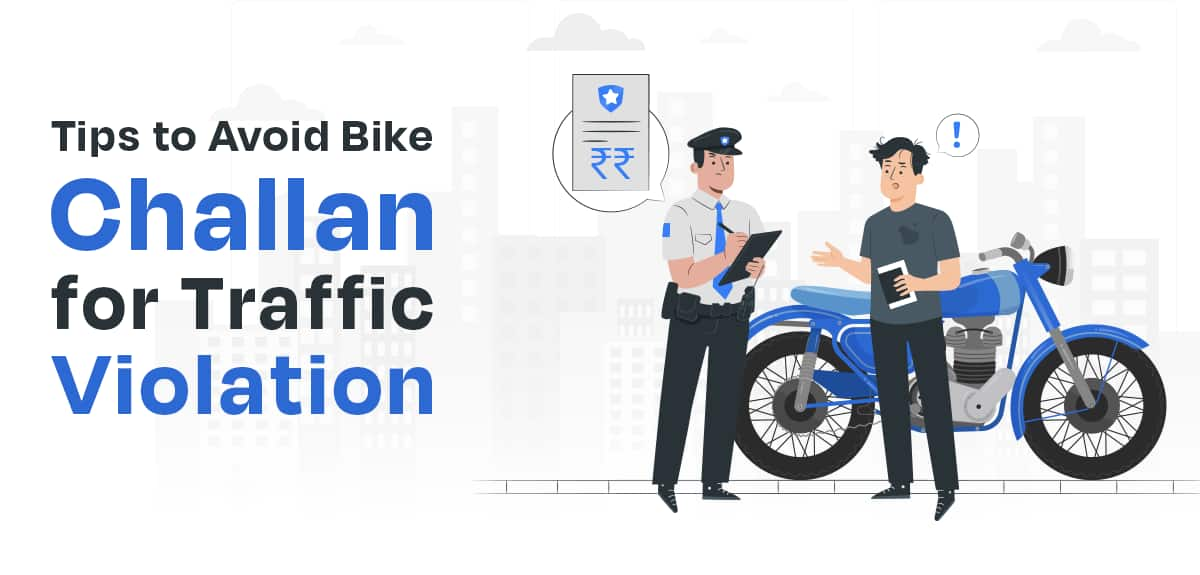
Tips to Avoid Bike Challans
You can reduce the risk of traffic violations by following these basic practices:
- Wear a helmet and ensure it is properly fastened.
- Keep your driving licence, mandatory third-party bike insurance and other required documents valid.
- Follow speed limits.
- Do not use a mobile phone while riding.
- Never drink and ride.
- Follow traffic signals and road signs.
- Avoid triple riding.
- Follow lane discipline and one-way restrictions.
- Give way to ambulances and other emergency vehicles.
- Check your vehicle's PUCC validity, where applicable.
- Park only in permitted areas.
- Check and pay any issued e-challan through an official portal.
New Traffic Rules: The Road Ahead!
There are mixed reactions about the new traffic penalties. Nevertheless, one thing is for sure: the dramatic spike in the penalty amount will ensure disciplined driving. As a responsible citizen, follow all the steps outlined in the article above to avoid hefty fines.
FAQs - New Traffic Rules & Challan Rates 2026 (India / RTO)
-
What are the new traffic rules in India in 2026?
Traffic rules continue to require compliance with requirements such as a valid driving licence, vehicle registration, mandatory third-party insurance, helmet use, speed limits, traffic signals and other road-safety rules. Penalties can vary by state and city. -
What is the fine for riding without a helmet?
The central Motor Vehicles Act provides a penalty under Section 194D for helmet-related violations. The amount applicable to a particular rider should be checked with the relevant state or city traffic authority. -
Is third-party insurance mandatory for bikes?
Yes, a valid third-party bike insurance policy is mandatory for two-wheelers used on public roads in India. -
What is the fine for triple riding on a bike?
Triple riding is a traffic offence. The central framework provides a penalty of ₹1,000 in New Delhi under Section 194C, while the applicable challan amount can vary by state or city. -
Can traffic fines differ from one state to another?
Yes, state governments can prescribe modified penalties under the Motor Vehicles Act. Therefore, the challan amount for the same offence may differ between states or cities. -
How can I check my bike challan online?
You can use the official e-Challan/Parivahan services or the relevant state traffic police portal to check pending challans using the required vehicle or challan details. -
What documents should I carry while riding a bike?
You should have the documents required under applicable motor vehicle rules, including a valid driving licence, registration and valid two-wheeler insurance. A valid PUCC for a bike is also required. -
What happens if I ride without bike insurance?
Riding without the mandatory two-wheeler insurance can attract a penalty of ₹2,000 for a first offence under Section 196 of the Motor Vehicles Act.