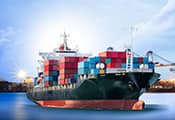
Common Risks During Domestic & International Transit

Every day, millions of shipments move from factories to warehouses, ports to distribution centres, and sellers to customers. For businesses, transporting goods is a routine activity. Butroutine does not mean risk-free. Whether goods are moving within a country or across continents, transit is one of the most vulnerable stages of the supply chain. A single incident, damage, delay, theft, or natural disaster can turn a profitable order into a financial loss. Understanding these risks is the first step toward managing them effectively. This article explores the most common risks businesses face during domestic and international transit and how they can be minimised.

Read more
₹10 Lakh cover at only ₹591/transit+
Protect your goods with
single transit cover
We don't spam
Check premium now
By clicking on "Check premium now" you agree to receive assistance and agree to our Privacy Policy and Terms Of Use
Continue Journey
By clicking on "Continue Journey" you agree to receive assistance and agree to our Privacy Policy & Terms Of Use
  • Wallet-friendly plans
  • 24/7 claim support
  • IRDAI-certified advisors

We don't spam

We don't spam

Why is transit the Most Vulnerable Stage?

Once goods leave a warehouse, they pass through multiple hands and environments:

  • Trucks and highways
  • Ports and airports
  • Ships, planes, and trains
  • Customs checkpoints
  • Warehouses and distribution hubs

Each touchpoint introduces new uncertainties. Unlike goods sitting safely in a warehouse, cargo in transit is exposed to external factors beyond the direct control of the buyer or seller.


That’s why transit risk management is a critical part of every supply chain.

Major Risks During Domestic Transit

Domestic shipments may seem simpler than international ones, but they still face significant challenges.


1. Physical Damage to Goods

One of the most common transit risks is damage.


Goods can be harmed due to:

  • Poor road conditions
  • Rough handling
  • Improper loading and unloading
  • Inadequate packaging
  • Vehicle accidents

Fragile products like electronics, glassware, or machinery parts are especially vulnerable.


Even sturdy items can suffer dents, scratches, or breakage if not packed and handled correctly.


2. Theft and Pilferage

Cargo theft is a serious problem in domestic logistics.


High-value goods such as:

  • Mobile phones
  • Apparel
  • Pharmaceuticals
  • Consumer electronics

They are frequent targets.


Theft can occur at multiple points:

  • From parked vehicles
  • During transit
  • At warehouses
  • While loading and unloading

Even small pilferage, missing pieces from a larger shipment, can lead to disputes and financial loss.


3. Delays in Delivery

Delays are one of the most underestimated transit risks.


They can be caused by:

  • Traffic congestion
  • Vehicle breakdowns
  • Driver shortages
  • Poor route planning
  • Weather disruptions

For businesses operating on tight deadlines, late deliveries can result in:

  • Production stoppages
  • Lost sales
  • Penalty charges
  • Dissatisfied customers

In many industries, time is just as valuable as the goods themselves.


4. Accidents and Vehicle Breakdowns

Trucks carrying cargo are constantly exposed to road risks.


Accidents, mechanical failures, or tyre bursts can lead to:

  • Damage to goods
  • Increased transit time
  • Additional handling costs

In severe cases, entire consignments can be destroyed.


5. Improper Handling

Domestic shipments often pass through multiple intermediaries - transporters, loaders, and warehouse staff.


Careless handling can result in:

  • Mishandling of fragile items
  • Incorrect stacking
  • Exposure to moisture or heat
  • Misplacement of packages

Human error remains a major risk factor in domestic logistics.

Additional Risks in International Transit

When shipments cross borders, the complexity and the risks, multiply.


6. Customs and Regulatory Risks

International shipments must comply with the laws of multiple countries.


Risks include:

  • Incorrect documentation
  • Wrong product classification
  • Missing permits
  • Non-compliance with import regulations

Any of these can result in:

  • Customs holds
  • Heavy penalties
  • Rejection of goods
  • Confiscation of cargo

A simple paperwork mistake can stop an entire shipment at the border.


7. Damage During Long-Distance Transport

International shipments travel long distances and face varied conditions:

  • Rough sea weather
  • Turbulence in air transport
  • Humidity and temperature changes
  • Multiple loading and unloading points

Goods may remain in containers for weeks, increasing the chances of damage due to:

  • Moisture
  • Heat
  • Poor ventilation
  • Rough handling at ports

8. Natural Disasters and Weather Events

Unlike domestic transit, international cargo often passes through unpredictable environments.


Risks include:

  • Storms and cyclones at sea
  • Floods
  • Earthquakes
  • Extreme temperatures
  • Heavy rainfall or snow

Such events can lead to:

  • Ship diversions
  • Port closures
  • Cargo damage
  • Major delivery delays

These factors are completely outside the control of exporters and importers.


9. Political and Geopolitical Risks

Global trade is heavily influenced by international politics.


Shipments can be affected by:

  • Strikes at ports
  • Trade restrictions
  • Sanctions
  • Civil unrest
  • Sudden policy changes

A container stuck at a politically unstable port can create huge financial and operational problems.


10. Payment and Financial Risks

International transit also carries financial uncertainties.


For example:

  • Buyers may refuse to accept goods
  • Exchange rate fluctuations may reduce profits
  • Payment delays may affect cash flow
  • Disputes over damaged shipments may block payments

Unlike domestic trade, recovering losses internationally is often complicated and expensive.


11. Port Congestion and Storage Risks

Global ports frequently face congestion due to:

  • High cargo volumes
  • Labor shortages
  • Equipment unavailability

When containers remain stuck at ports for long periods, businesses incur:

  • Demurrage charges
  • Detention fees
  • Storage costs

Extended storage also increases the risk of theft or damage.


12. Temperature and Environmental Risks

Certain products require controlled conditions during transit:

  • Pharmaceuticals
  • Food items
  • Chemicals
  • Perishable goods

If temperature control fails even for a few hours, the entire shipment can become unusable.


Cold-chain failures are among the most expensive transit risks in international trade.

=

How Businesses Can Reduce Transit Risks?

While risks cannot be eliminated entirely, they can be significantly minimised with the right approach.


A. Proper Packaging

Strong, export-grade packaging is the first line of defence.


Businesses should:

  • Use sturdy materials
  • Protect goods from moisture
  • Cushion fragile items
  • Label packages clearly

Good packaging prevents a large percentage of transit damage.


B. Choosing Reliable Logistics Partners

Not all transporters are equal.


Working with experienced freight forwarders and carriers ensures:

  • Better handling
  • Safer routes
  • Professional documentation
  • Faster problem resolution

The cheapest logistics option is rarely the safest one.


C. Accurate Documentation

For international shipments, proper paperwork is critical.


Ensuring:

  • Correct invoices
  • Accurate HS codes
  • Proper certificates
  • Clear shipping instructions

can prevent customs delays and legal issues.


D. Real-Time Tracking

Technology has made risk management easier.


GPS tracking, IoT sensors, and shipment monitoring help businesses:

  • Track location
  • Monitor temperature
  • Detect delays early
  • Respond quickly to disruptions

Visibility reduces uncertainty.


E. Transit Insurance - The Most Important Safety Net

Even with all precautions, unexpected events can still occur.


That’s where transit insurance plays a vital role.


Marine and transit insurance protects businesses against:

  • Damage
  • Theft
  • Natural disasters
  • Accidents
  • Loss in transit

Insurance ensures that a single unfortunate event does not become a business-threatening loss.

Domestic vs International Transit: Risk Comparison

Factor Domestic Transit International Transit
Distance Shorter Longer
Complexity Lower Higher
Customs Risk None Significant
Weather Exposure Limited High
Handling Points Fewer Multiple
Political Risk Low Possible
Delivery Time Faster Slower

International transit clearly involves more layers of risk and requires greater planning.

Final Thoughts


Moving goods from one place to another may look simple, but the journey is full of potential pitfalls.


From damaged packages and theft to customs delays and natural disasters, transit exposes businesses to a wide range of risks in both domestic and international markets. The key to successful logistics is not hoping that nothing will go wrong - but preparing for what might.


By:

  • Understanding common transit risks
  • Choosing reliable partners
  • Using proper packaging
  • Maintaining accurate documentation
  • Securing adequate insurance

Businesses can protect their shipments, profits, and reputation.


In today’s interconnected world, smart risk management is just as important as smart selling. Because in logistics, reaching the destination safely is the real definition of success.

Learn more about Marine Insurance
We don't spam
View plans
By clicking on "" you agree to receive assistance and agree to our Privacy Policy and Terms Of Use
Get quick help
Marine Insurance Articles
In addition to the basic carrier policy, a Freight insurance policy will provide additional protection for your...Read more
18 Mar 2019 by Policybazaar 29311 Views
When moving to a new home, safeguarding your household articles during transit is crucial. Transit insurance...Read more
27 Oct 2020 by Policybazaar 22284 Views
The principles of marine insurance are essential for maintaining fairness and consistency in the delivery of...Read more
10 Feb 2020 by Policybazaar 19685 Views
Marine insurance is not a one-size-fits-all product. Businesses moving goods through road, rail, air, se or...Read more
15 Mar 2018 by Policybazaar 19409 Views
Marine insurance coverage is divided into two types. One is International Cargo Clause (ICC) and the second is the...Read more
13 Aug 2022 by Policybazaar 16643 Views
Any shipment moving from one country to another requires customs clearance. Apart from international laws and...Read more
22 Nov 2022 by Policybazaar 16406 Views
In the shipping business, different types of losses can happen. Marine insurance helps manage these risks by...Read more
23 Nov 2022 by Policybazaar 16004 Views
Marine insurance and its advantages cannot be ignored if you are in a shipping business or your business needs...Read more
19 Aug 2022 by Policybazaar 14031 Views
Traders who export or import their goods across distant lands are aware of the risks during transit. While there...Read more
23 Feb 2022 by Policybazaar 13954 Views
Technology is growing evermore, but transport business still remains as risky as it was earlier. However, the...Read more
17 Oct 2019 by Policybazaar 12195 Views
If your business involves the transportation of finished or unfinished goods or raw materials, you probably need a...Read more
15 Nov 2022 by Policybazaar 12085 Views
Warranties in marine insurance are referred to as assurance of coverage provided by the insurer. It outlines the...Read more
20 Jul 2023 by Policybazaar 11946 Views
People have been exchanging goods since prehistoric times, with long-route trades dating back to 2000 BCE. Today...Read more
18 Feb 2022 by Policybazaar 11614 Views
Marine insurance and its advantages cannot be ignored if you have a shipping business or your business requires...Read more
17 Aug 2022 by Policybazaar 11545 Views
Gone are the days when people use courier service for sending documents or papers as almost all the parts of the...Read more
11 Dec 2020 by Policybazaar 11179 Views
India's international trade relies on rules that define how...Read more
05 Jan 2026 by Policybazaar 2838 Views
E-commerce exports refer to selling and delivering products or...Read more
26 Sep 2025 by Policybazaar 1992 Views
Anti-Dumping Duty (ADD) is a tariff imposed by governments to...Read more
25 Sep 2025 by Policybazaar 2549 Views
The Merchandise Exports from India Scheme (MEIS) was introduced...Read more
11 Sep 2025 by Policybazaar 2218 Views
India's import-export sector has experienced rapid growth in...Read more
27 Aug 2025 by Policybazaar 7008 Views
In foreign trade, the significance of proper documentation...Read more
09 Jun 2025 by Policybazaar 4356 Views
Export is the sale of goods and services manufactured in a...Read more
30 Apr 2025 by Policybazaar 4778 Views
Shipping containers have evolved over the years. Now, businesses...Read more
25 Apr 2025 by Policybazaar 2634 Views
Selecting the right shipping line is crucial for Indian...Read more
07 Apr 2025 by Policybazaar 2965 Views
RFP, or Request for Proposal in freight forwarding, is a formal...Read more
03 Apr 2025 by Policybazaar 2724 Views
Pallet shipping is a mode of transporting goods using pallets to...Read more
02 Apr 2025 by Policybazaar 2979 Views
‘High Cube containers’ is a category of shipping containers...Read more
02 Apr 2025 by Policybazaar 4741 Views
Expanding your business to international markets can be a...Read more
01 Apr 2025 by Policybazaar 2778 Views
India has largely been an agricultural economy, but has turned...Read more
18 Mar 2025 by Policybazaar 5681 Views
Marine insurance is essential for protecting goods during...Read more
23 Oct 2024 by Policybazaar 4416 Views
  • Disclaimers+

    *Savings of 42% are based on the comparison between the highest and lowest premiums for a Rs 50 lakh sum insured under Inland Transit Clause B or Institute Cargo Clause B for single transit cover of auto spare parts with shipment type of Inland(Domestic) and road as mode of transport. Premium varies on the basis of Occupancy, Business Activity & Coverage Type
    By clicking on "View Plans" you agree to receive assistance and agree to our Privacy Policy and Terms Of Use and also provide us a formal mandate to represent you to the insurer and communicate to you the grant of a cover.
    The details of insurance coverage, inclusions and exclusions are subject to change as per solutions offered by insurance providers. The content has been curated based on the general practices in the industry. Policybazaar is not responsible for the factual correctness of these details.

Your call has been scheduled successfully.

icon Expert advice made easy icon
  • Date
  • Time

When do you want a call back?

  • Today
  • Tomorrow
  • 27 Sep
  • 28 Sep
  • 29 Sep
  • 30 Sep
  • 01 Oct

What will be the suitable time?

  • 11:00am - 12:00pm
  • 12:00pm - 01:00pm
  • 01:00pm - 02:00pm
  • 02:00pm - 03:00pm
  • 03:00pm - 04:00pm
  • 04:00pm - 05:00pm
  • 05:00pm - 06:00pm

Tell us the number you want us to call on

Your privacy matters. We wont spam you

Call scheduled successfully!

Our experts will reach out to you on Today between 2:00 PM - 3:00 PM

Claude
top
Close
Download the Policybazaar app
to manage all your insurance needs.
INSTALL