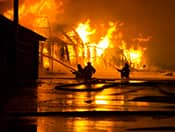



A Complete Guide to Conducting Effective Fire Mock Drills

Fire emergencies can occur without warning, leaving people with very little time to react. A fire mock drill helps people practise their response to a simulated fire emergency in a controlled environment. It familiarises occupants with evacuation routes, emergency alarms, assembly points and safety procedures. More importantly, it helps identify gaps in the emergency plan before an actual incident occurs.

Read more
Back
₹50 Lakh cover starts at ₹283/month+
Protect your business from
burglary
  • Commercial
  • Home
We don't spam
View plans
By clicking on "View plans" you agree to receive assistance and agree to our Privacy Policy and Terms Of Use
Continue
  • Wallet-friendly plans
  • 24/7 claim support
  • IRDAI-certified advisors

Property Type
We don't spam

Property Type
We don't spam

Key Takeaways

  • Fire mock drills prepare employees and residents to respond safely and calmly during a fire emergency.
  • Regular drills help test fire alarms, emergency lighting, evacuation routes and other safety arrangements.
  • A well-planned drill includes preparation, alarm activation, evacuation, headcount, performance evaluation and debriefing.
  • Fire wardens, floor coordinators, security personnel and occupants must understand their respective responsibilities.
  • Applicable fire safety regulations in India may prescribe specific preparedness and drill requirements depending on the building and its occupancy.
  • Fire insurance can provide financial protection against covered property losses, but it does not replace fire prevention or emergency preparedness measures.

What Is a Fire Mock Drill?

A fire mock drill is a planned exercise that simulates a fire emergency to prepare people to respond safely and evacuate a building. It allows occupants to practise emergency procedures without exposing them to an actual fire.


A typical fire mock drill involves activating an alarm, following designated evacuation routes, moving to a safe assembly point and conducting a headcount. It also involves checking whether fire alarms, emergency lighting, public address systems and other safety equipment are functioning properly. The exercise usually ends with a review of the evacuation process. This helps identify delays, communication gaps, blocked exits and other issues that need attention.

Objectives of Conducting Fire Mock Drills

The primary objective of a fire mock drill is to ensure that people know how to respond during a fire emergency. Some key objectives include:

  • Educating occupants: Familiarises employees and residents with evacuation routes, assembly points and emergency procedures.
  • Testing safety equipment: Checks the functioning of fire alarms, smoke detectors, emergency lighting, sprinklers and public address systems.
  • Identifying safety gaps: Helps detect blocked exits, unclear evacuation routes, communication failures and other weaknesses.
  • Reducing panic: Builds confidence so occupants can respond calmly instead of reacting impulsively.
  • Clarifying responsibilities: Ensures that fire wardens, floor coordinators and emergency response teams understand their duties.

Importance of Fire Mock Drills in Workplaces and Residential Buildings

Fire mock drills are important because they turn written safety instructions into practical knowledge. Whether conducted in an office, factory, apartment complex or commercial building, these exercises help people understand what to do when a fire breaks out. Here are some of their key benefits:

  • Protects lives: Familiarity with evacuation routes and emergency procedures helps people move towards safety without unnecessary delays.
  • Minimises property damage: A quicker and more organised response can help limit the spread of a fire and reduce potential losses.
  • Builds a safety-first culture: Regular drills encourage employees and residents to take fire safety seriously.
  • Supports compliance: Helps organisations and building managers follow applicable fire safety requirements and maintain preparedness records.
  • Improves risk management: Identifies vulnerabilities in evacuation plans, safety equipment and emergency communication systems before a real incident.

Key Steps Involved in a Fire Mock Drill

A successful fire mock drill requires proper planning, coordination and evaluation. Simply activating an alarm and asking everyone to leave the building is not enough. Each stage should be organised to ensure that the exercise tests the building's emergency response effectively.


1. Plan and Schedule the Drill

Begin by preparing an evacuation plan based on the building layout, occupancy and potential fire risks. Identify the designated exits, staircases, assembly points and emergency response teams. Set clear objectives for the drill, assign responsibilities and inform the relevant teams about the exercise. Special arrangements should also be made for visitors and people who may need assistance during evacuation.


2. Activate the Fire Alarm

The drill begins with an alarm or an agreed emergency signal. Occupants should recognise the signal and follow the instructions provided by the fire wardens or designated response team. The exercise should also assess whether the alarm can be heard clearly across the building.


3. Evacuate the Building

Occupants should leave through the designated emergency exits and follow the marked evacuation routes. They should avoid lifts and use staircases unless the building's approved emergency plan provides specific instructions otherwise. People should not stop to collect personal belongings or return to their workstations during the evacuation.


4. Assemble and Conduct a Headcount

Once outside, everyone should move to the designated assembly point. Floor coordinators or team leaders should conduct a headcount to check whether all occupants have evacuated safely. Any missing person should be reported to the emergency response team. Participants should not re-enter the building until authorised.


5. Evaluate the Drill

After the evacuation, assess the overall performance of the exercise. Review evacuation time, alarm response, movement through exits, coordination among teams and any difficulties faced by participants. The purpose is to identify what worked and what needs improvement, rather than simply completing the exercise.


6. Conduct a Debriefing

Discuss the observations with participants and response teams. Explain any mistakes, clarify safety procedures and assign corrective actions to address the gaps identified during the drill.

Common Mistakes to Avoid During Fire Mock Drills

A fire mock drill is useful only when participants take it seriously, and the exercise reflects the building's actual emergency conditions. Certain mistakes can reduce its effectiveness and leave occupants unprepared. Avoid the following:

  • Poor communication: Failing to explain the alarm signals and evacuation instructions can create confusion.
  • Ignoring people who need assistance: Evacuation plans should account for people with disabilities, mobility limitations and other specific needs.
  • Using lifts: Lifts should generally not be used during a fire evacuation. Occupants should follow the designated stairway routes.
  • Blocking emergency exits: Storing materials near staircases, corridors and exit doors can delay evacuation.
  • Skipping the debriefing: Without reviewing the exercise, organisations may fail to identify and correct recurring problems.
  • Treating drills as a formality: Participants may not learn how to respond effectively if the exercise is rushed or taken lightly.

Roles and Responsibilities During a Fire Drill

A coordinated response requires clearly assigned responsibilities. Everyone in the building should know their role before a fire emergency occurs.

  • Fire wardens: Coordinate evacuation activities, guide occupants and communicate with the emergency response team.
  • Floor coordinators: Direct people towards designated exits and check assigned areas as per the evacuation plan.
  • First-aid teams: Provide initial assistance to anyone who is injured or requires medical attention after reaching a safe area.
  • Communication team: Share emergency instructions and coordinate updates between fire wardens, floor coordinators and building management.
  • Security personnel: Help manage access points, support evacuation coordination and assist emergency services when they arrive.
  • Occupants: Respond promptly to alarms, follow instructions, use designated escape routes and assemble at the assigned location.

Legal and Safety Regulations Related to Fire Drills in India

Fire safety requirements in India are guided by building regulations, occupational safety laws and state-specific fire service rules. The exact requirements may vary depending on the type of premises, its occupancy, location and applicable local regulations. Some important frameworks include:


National Building Code of India, 2016

The National Building Code (NBC) 2016, particularly Part 4 on Fire and Life Safety, provides guidelines for fire prevention, evacuation planning and emergency preparedness. Annex D includes guidelines for fire drills in high-rise buildings. It specifies that drills should be conducted at least once every three months during the first two years and at least once every six months thereafter. It also provides for maintaining written drill records for three years.


However, the NBC is a model code. Its requirements become enforceable through adoption in applicable state or local building regulations and bye-laws. Building owners and management teams should therefore check the rules applicable to their premises.


Occupational Safety, Health and Working Conditions Code, 2020

The Occupational Safety, Health and Working Conditions (OSHWC) Code, 2020 came into force on 21 November 2025 and consolidated several central labour laws, including the earlier Factories Act, 1948.


The Code forms part of India's occupational safety framework. Employers and establishments must follow the applicable safety, health and welfare requirements, along with relevant rules and directions. Organisations should check the provisions applicable to their establishment and the requirements of the relevant state or central authority.


State and Local Fire Safety Regulations

State fire services, municipal authorities and local building bye-laws may prescribe additional fire safety requirements. These can include obtaining or renewing fire approvals, maintaining firefighting equipment, preparing evacuation plans and conducting periodic drills. For this reason, organisations should review the fire safety conditions applicable to their building rather than relying on a single nationwide drill schedule.

How Do Regular Fire Mock Drills Improve Emergency Preparedness?

An emergency plan is useful only when people know how to put it into practice. Regular fire mock drills help occupants become familiar with evacuation procedures and reduce confusion during an actual emergency. They improve preparedness in several ways:

  • Builds familiarity: Repeated practice helps occupants remember evacuation routes, assembly points and emergency instructions.
  • Improves response time: Identifying delays during drills helps building management make evacuation more efficient.
  • Strengthens coordination: Teams learn how to communicate and work together during an emergency.
  • Tests emergency arrangements: Drills help identify problems with alarms, exit routes, emergency lighting and other safety systems.
  • Builds confidence: Participants become more comfortable with the steps they need to follow, helping them respond more calmly.

The effectiveness of a drill depends on what happens after it. Observations should be documented, identified gaps should be addressed, and the evacuation plan should be updated whenever necessary.

The Role of Fire Safety Insurance in Protecting Life and Property

Fire safety measures and insurance serve different but complementary purposes. While mock drills and preventive measures help reduce the risk of injury and property damage, fire insurance can provide financial protection against covered losses when an insured event occurs.


A Fire Insurance or Fire and Special Perils policy can help protect insured property against specified risks, subject to the policy's terms, conditions, exclusions and limits. It is important to remember that fire insurance does not replace fire prevention measures or emergency preparedness. It also does not automatically cover every third-party injury or liability claim. Such protection depends on the policy wording and any relevant liability cover or extension.

Conclusion


Fire safety preparedness is not just about installing alarms and firefighting equipment. People must also know how to respond when an emergency occurs. Fire mock drills help turn evacuation plans into practical actions by familiarising occupants with safety procedures, clarifying responsibilities and identifying gaps in emergency arrangements.


For organisations and residential building managers, regular drills, proper documentation and timely corrective action are essential to building a safer environment. Combining these measures with suitable fire insurance can also help reduce the financial impact of unexpected property losses.
Frequently Asked Questions
  • What are the five steps of a fire mock drill?

    The five key steps are planning the drill, activating the alarm, evacuating occupants, conducting a headcount and reviewing the drill to identify improvements.
  • What are the 5S in fire safety?

    The 5S methodology stands for Sort, Set in Order, Shine, Standardise and Sustain. It helps maintain organised, clean and safer workplaces.
  • How often should fire mock drills be conducted in India?

    For high-rise buildings covered by the NBC guidelines, drills are recommended at least quarterly during the first two years and once every six months thereafter. Applicable local regulations may prescribe additional requirements.
  • Why are fire mock drills important in workplaces?

    They help employees understand evacuation procedures, identify emergency exits, recognise alarm signals and respond more confidently during an actual fire.
  • What should be included in a fire mock drill report?

    A report should include the drill date, duration, participants, evacuation time, observations, issues identified and corrective actions taken.
  • Should lifts be used during a fire evacuation?

    No. Occupants should generally use designated staircases and emergency exits rather than lifts during a fire evacuation.
Explore Fire Insurance

Fire Insurance News

Arpora, Goa: The tragic fire at a nightclub in Goa has claimed...Read more
09 Dec 2025 by Policybazaar 1382 Views
A large fire broke out on Monday night at a storage facility...Read more
22 Apr 2025 by Policybazaar 1719 Views
A massive fire broke out in an industrial area of Greater...Read more
03 Apr 2025 by Policybazaar 2435 Views
Fire Insurance Articles
A fire extinguisher is a first-response safety tool used to...Read more
27 Nov 2025 by Policybazaar 1526 Views
Fire extinguishers are special devices used to control or put...Read more
04 Sep 2025 by Policybazaar 2181 Views
Parametric insurance provides a pre-agreed payout when a...Read more
28 Apr 2025 by Policybazaar 4342 Views
A fire alarm system is a group of devices integral to the fire...Read more
02 Apr 2025 by Policybazaar 2967 Views
The catastrophic LA Fires are a stark reminder of businesses'...Read more
06 Feb 2025 by Policybazaar 2264 Views
The catastrophic LA Fires are a stark reminder of businesses'...Read more
06 Feb 2025 by Policybazaar 0 Views
A Floating Fire Insurance Policy is a type of fire insurance...Read more
23 Oct 2024 by Policybazaar 3989 Views
The Doctrine of Approximation in fire insurance is a fundamental...Read more
12 Jun 2024 by Policybazaar 3080 Views
Fire insurance protects businesses against financial losses...Read more
19 Mar 2024 by Policybazaar 3651 Views
Fire insurance covers losses or damages caused by fires...Read more
11 Jan 2024 by Policybazaar 9921 Views
In the labyrinth of industrial operations, there exists a subset...Read more
27 Dec 2023 by Policybazaar 4113 Views
Fire insurance plays a pivotal role in safeguarding factories...Read more
15 Dec 2023 by Policybazaar 4594 Views
In the domain of Factory Fire Insurance, the protection of stock...Read more
11 Dec 2023 by Policybazaar 7895 Views
The importance of fire safety measures required for factory...Read more
11 Dec 2023 by Policybazaar 3664 Views
In the unpredictable world of business, where unforeseen...Read more
23 Nov 2023 by Policybazaar 3355 Views
Policybazaar for Business - Fire Special Perils Insurance - Customer Reviews
View all
4.6/5
Based on 126 reviews
4.6
out of 5
Based on 126 reviews
60 users
62 users
4 users
0 users
0 users
5 November 03, 2026
Aarti Yadav
Great For Businesses
Found suitable coverage for my commercial property.
Guwahati
5 November 02, 2026
Manish Tiwari
Convenient Experience
Didn't have to visit any office. The entire process was completed online.
Lucknow
5 October 03, 2026
Meenakshi Iyer
Convenient Comparison
Saved a lot of time by comparing insurers in one place.
Raipur
5 October 02, 2026
Abhishek Jain
Transparent Information
Everything from coverage to exclusions was explained clearly. No hidden surprises.
Jaipur
5 September 03, 2026
Shreya Gupta
Quick Support
Received immediate assistance whenever I had doubts.
Aurangabad
5 September 02, 2026
Sandeep Mishra
Quick Issuance
Purchased fire insurance for my retail shop. The policy was issued much faster than expected.
Ahmedabad
5 August 03, 2026
Kavita Mishra
Trustworthy Service
Felt confident throughout the purchase process.
Nashik
5 August 02, 2026
Rohit Agarwal
Professional Support
The advisor answered all my questions patiently and helped me understand the policy terms.
Pune
5 July 03, 2026
Sneha Kapoor
Easy To Understand
Policy features were explained in simple language.
Vijayawada
5 July 02, 2026
Ankit Gupta
Value For Money
Happy with the premium and coverage offered. It gives me confidence that my property is protected.
Chennai
  • Disclaimers+

    +Premium varies on the basis of Occupancy, Business Activity & Coverage Type . The premium of Rs 3400/year (Rs 283.33 / month) is for a pucca building with sum insured of Rs 50 lakh at selected locations, for property age less than 25 years and policy term of 1 year, rounded off to nearest 10. Additional premium is payable for the optional covers including contents opted. STANDARD TERMS AND CONDITIONS APPLY. For more details on risk factors, terms and conditions, please read the sales brochure carefully before concluding a sale.
    By clicking on "View Plans" you agree to receive assistance and agree to our Privacy Policy and Terms Of Use and also provide us a formal mandate to represent you to the insurer and communicate to you the grant of a cover.
    The details of insurance coverage, inclusions and exclusions are subject to change as per solutions offered by insurance providers. The content has been curated based on the general practices in the industry. Policybazaar is not responsible for the factual correctness of these details.

Your call has been scheduled successfully.

icon Expert advice made easy icon
  • Date
  • Time

When do you want a call back?

  • Today
  • Tomorrow
  • 21 Nov
  • 22 Nov
  • 23 Nov
  • 24 Nov
  • 25 Nov

What will be the suitable time?

  • 11:00am - 12:00pm
  • 12:00pm - 01:00pm
  • 01:00pm - 02:00pm
  • 02:00pm - 03:00pm
  • 03:00pm - 04:00pm
  • 04:00pm - 05:00pm
  • 05:00pm - 06:00pm

Tell us the number you want us to call on

Your privacy matters. We wont spam you

Call scheduled successfully!

Our experts will reach out to you on Today between 2:00 PM - 3:00 PM

Claude
top
Close
Download the Policybazaar app
to manage all your insurance needs.
INSTALL