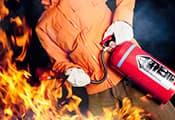
Fire extinguishers are special devices used to control or put out small fires early, preventing major disasters. They are essential tools of fire safety appliances in residencesbusinesses, industries and public facilities. Knowledge of the types of fire extinguishers and their respective applications is important, not just for effective firefighting, but also for adherence to IS 2190:2010 compliance. Understanding the proper extinguisher type can greatly minimise hazards, save lives and property and provide safety in any environment.
Thank you for showing your interest in fire-insurance. Our relationship manager will call you to discuss the details and share the best quotes from various insurers. In case you have any query or comments, please contact us at corporateinsurance@policybazaar.com
Fires burn differently depending on the fuel. Solid fuels like wood burn very differently from flammable liquids like gasoline, and electrical fires behave in unique ways. The improper use of a fire extinguisher could worsen fires, spreading them or even seriously injuring those involved.
For instance, water extinguishers are hazardous if applied to electrical fires or burning liquids since they can spread fires or electrocute. Many fire extinguishers use monoammonium phosphate to fight different types of fires effectively while minimising damage.
Overview of Fire Classes
Understanding fire classes is crucial in choosing the right extinguisher. The following outlines the fire classes when selecting an extinguisher:
Class A: Fires resulting from everyday solid combustibles such as wood, paper, fabric, rubber and certain plastics. These will produce ash upon burning.
Class B: Fires involving inflammable liquids like petrol, oil, paint and solvents.
Class C: Fires resulting from inflammable gases like propane, methane, butane and natural gas.
Class D: Metal fires involving combustible metals such as magnesium, sodium, potassium and titanium, which may ignite with water.
Class K: Cooking oil or fat fires, which are prevalent in kitchens and food processing environments where oils may burn at above 300°C and need specialised extinguishing agents.
Different fire extinguishers are designed to effectively combat specific types of fires, adhering to standards such as IS 15683:2018 and IS 2190:2010. The following outlines the types and their relevance:
1. Water Extinguishers
Purpose: Mainly for Class A fires with wood and paper.
How They Work: Water lowers the temperature of the burning material below the ignition point and cools it below the ignition point.
Design: A standard pressurised cylinder with a hose, either filled with plain or deionised water.
Limitations: Never used for flammable liquids, electric fires or combustible metals, since water can cause the fire to propagate or result in electrocution.
Typical Usage: Used in schools, offices and homes.
2. Foam Extinguishers
Purpose: Sufficient for Class A and B fires.
How They Work: Foam covers the burning fuel, preventing oxygen and stifling vapour emission.
Design: Usually employs Aqueous Film Forming Foam (AFFF) or Fluoroprotein Foams.
Limitations: Foam tends to make surfaces slippery and is not applicable for electrical or Class K/F fires (kitchen oils).
Typical Usage: Effective in petrol stations, workshops and factories that deal with flammable liquids.
3. Carbon Dioxide (CO₂) Extinguishers
Purpose: Suitable for electrical Class C and flammable liquid, which is Class B fires.
How They Work: CO₂ displaces oxygen and cools the fire zone, leaving no residue behind, making them suitable for servers and PCs.
Design: Cylinders release CO₂ at high pressure via a horn-shaped nozzle to avoid frostbite when the device is in use.
Limitations: Does not work on solid fuels or Class K/F fires.
Typical Usage: Often found in IT offices, hospitals, telecommunication facilities and laboratories where electrical fires are a major issue.
4. Dry Powder Extinguishers
Purpose: Multi-purpose, effective on Class A, B and C fires, specific models available for use on Class D (metal) fires.
How They Work: Dry powder inhibits the chemistry of the fire, blocks oxygen supply and stops re-ignition.
Design: Powdered agents such as monoammonium phosphate or sodium bicarbonate fill the device and are kept under pressure.
Limitations: Causes visibility obstruction, creates respiratory irritation and is hard to clean up.
Typical Usage: Suitable for workshops, chemical plants and metalworking shops handling combustible metal fires.
5. Wet Chemical Extinguishers
Purpose: Specifically for Class K/F fires, which are typical in commercial kitchens.
How They Work: They use a potassium-based agent that reacts with cooking oils to produce foam, which forms a barrier and cools the fire by a chemical process called saponification.
Design: Usually fitted with a nozzle spreading the agent as a fine mist.
Limitations: For use only in kitchen oils and fats; should be treated with care to prevent splashing.
Typical Usage: Found vital in commercial kitchens, street stalls and canteens.
Choosing the right fire extinguisher is very important for managing fire risks in places like homes, offices, and factories in India. The choice depends on aligning the extinguisher type with specific fire hazards, environmental needs, and regulatory requirements as follows:
Identify Fire Hazards: Recognise electrical wiring risks, office areas with electrical equipment, kitchens with frying oils or industrial areas with flammable liquids.
Match the type of Extinguisher with the Risks: e.g., use water extinguishers for Class A (solid fuels), foam or CO₂ for Class B (flammable liquids), dry powder for all-around needs and wet chemicals for kitchens.
Size and Accessibility: Choose an extinguisher that weighs less than 15 kg (up to 17 kg as per Indian rules) and place it where it is easy to reach in an emergency.
Regulatory Compliance: Comply with local standards like IS 2190:2010 for installation and maintenance.
Maintenance and Inspection Tips
Regular maintenance ensures that fire extinguishers function effectively when needed. The following outlines the importance of consistent checks and servicing:
Monthly Checks: Check that there are no nozzle cracks or corrosion, and the pressure gauge is not damaged. Make sure the safety pins and seals are tight.
Annual Servicing: Organise professional servicing for refilling or pressure testing according to Indian Bureau of Standards (BIS) guidelines.
Training: Provide training twice a year to residents or employees on using extinguishers, including the PASS method (Pull, Aim, Squeeze, Sweep).
Proper Placement: The extinguishers must be kept within 20 meters of the kitchen, server rooms and be BIS-compliant with signs for easy access.
Role of Fire Insurance
Even with fire extinguishers in place, accidents can still lead to serious losses, from property damage to business interruptions. That’s where Fire Insurance becomes critical:
Financial Protection: Covers loss or damage to your building, machinery, and equipment caused by fire, along with compensation for business interruption.
Compliance Support: Many industries and regulatory bodies mandate fire insurance; having the right policy ensures your business stays compliant.
Holistic Risk Management: Complements physical fire safety measures by safeguarding against financial fallout that extinguishers alone cannot prevent.
Repair & Replacement: Helps fund the restoration or replacement of damaged assets, minimising downtime and ensuring business continuity.
Conclusion
Fire extinguishers are essential in safeguarding life and property against fire danger. Familiarity with the five major classes, like water, foam, CO₂, dry powder and wet chemical, guarantees an appropriate response to fire threats. Proper maintenance, strategic installation and training are imperative to ensure maximum effectiveness. Coupled with fire insurance, these measures ensure complete protection against the disastrous effects of fire. By staying informed and prepared, individuals and businesses can build resilience against fire hazards, ensuring safer environments for all.
+Premium varies on the basis of Occupancy, Business Activity & Coverage Type
. The premium of Rs 3400/year (Rs 283.33 / month) is for a pucca building with sum insured of Rs 50 lakh at selected locations, for property age less than 25 years and policy term of 1 year, rounded off to nearest 10. Additional premium is payable for the optional covers including contents opted. STANDARD TERMS AND CONDITIONS APPLY. For more details on risk factors, terms and conditions, please read the sales brochure carefully before concluding a sale. By clicking on "View Plans" you agree to receive assistance and agree to our Privacy Policy and Terms Of Use and also provide us a formal mandate to represent you to the insurer and communicate to you the grant of a cover. The details of insurance coverage, inclusions and exclusions are subject to change as per solutions offered by insurance providers. The content has been curated based on the general practices in the industry. Policybazaar is not responsible for the factual correctness of these details.
Your call has been scheduled successfully.
Expert advice made easy
Date
Time
When do you want a call back?
Today
Tomorrow
24 Sep
25 Sep
26 Sep
27 Sep
28 Sep
What will be the suitable time?
11:00am - 12:00pm
12:00pm - 01:00pm
01:00pm - 02:00pm
02:00pm - 03:00pm
03:00pm - 04:00pm
04:00pm - 05:00pm
05:00pm - 06:00pm
Tell us the number you want us to call on
Your privacy matters. We wont spam you
Call scheduled successfully!
Our experts will reach out to you on Today between
2:00 PM - 3:00 PM


 We don't spam

@2x.png)


 Expert advice made easy