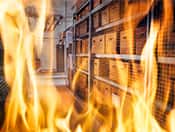
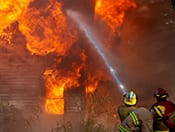
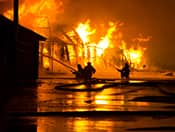
How Short Circuits Lead to Major Property Damage

Electrical short circuits are one of the most common triggers of fire losses in commercial and industrial properties. What often begins as a minor wiring defect can escalate into large-scale fire damage, machinery breakdown, and business interruption. For risk managers, factory owners, compliance heads, and fire insurance policyholders, understanding how short circuits occur, and how insurers assess this risk, is critical to preventing major property loss.

Read more
Back
₹50 Lakh cover starts at ₹283/month+
Protect your business from
burglary
  • Commercial
  • Home
We don't spam
View plans
By clicking on "View plans" you agree to receive assistance and agree to our Privacy Policy and Terms Of Use
Continue
  • Wallet-friendly plans
  • 24/7 claim support
  • IRDAI-certified advisors

Property Type
We don't spam

Property Type
We don't spam

What Is a Short Circuit?

A short circuit occurs when electrical current flows through an unintended path with little or no resistance. Instead of passing safely through equipment, the current bypasses the normal circuit and generates excessive heat.


This sudden surge can:

  • Melt insulatio
  • Ignite nearby combustible material
  • Damage switchboards and panels
  • Trigger arc flashes or sparks

If not interrupted quickly by protective devices, a short circuit can escalate into a full-scale fire.

How Short Circuits Cause Major Property Damage

Electrical systems in factories, warehouses, and commercial buildings carry significant loads. When faults occur, the damage can multiply quickly.


1. Heat Generation and Ignition

When conductors touch due to insulation failure or loose connections:

  • Resistance drops sharply
  • Current increases instantly
  • Temperature rises within seconds

If combustible materials such as packaging, chemicals, wooden pallets, or insulation are nearby, ignition may occur.


2. Arc Flash and Arc Tracking

Short circuits may produce:

  • High-energy arc flashes
  • Molten metal splatter
  • Carbonized tracking across panels

Arc temperatures can exceed several thousand degrees, enough to ignite structural elements and adjacent inventory.


3. Equipment Destruction

Short circuits can destroy:

  • Motors
  • Transformers
  • Control panels
  • Production machinery

Damage may extend beyond the initial fault location due to cascading electrical failure.


4. Secondary Fire Spread

Once a fire starts:

  • Heat rises into cable trays
  • Smoke spreads through ducts
  • Fire can travel across interconnected production lines

In high-load facilities, damage may affect multiple operational zones.


Common Causes of Electrical Short Circuits

For underwriting and compliance purposes, insurers typically evaluate root causes. The most common include:

  • Aging or degraded insulation
  • Improper wiring or substandard installation
  • Overloading of circuits
  • Loose electrical connections
  • Moisture ingress into panels
  • Rodent damage to cables
  • Lack of preventive maintenance
  • Temporary wiring used permanently

Regulatory fire safety frameworks generally require electrical installations to comply with prescribed electrical codes and periodic inspection standards. Non-compliance increases both risk exposure and underwriting scrutiny.

Regulatory and Compliance Considerations

Under fire safety laws and building safety codes applicable in regulated jurisdictions:

  • Electrical systems must be installed as per approved technical standards.
  • High-tension and low-tension panels require routine inspection.
  • Earthing systems must be tested periodically.
  • Overcurrent protection devices must be functional and correctly rated.
  • Emergency shutdown mechanisms should be accessible.

Insurance contracts governed under regulatory authorities such as the Insurance Regulatory and Development Authority of India (IRDAI) require disclosure of material facts. Electrical system condition qualifies as a material risk factor.


Failure to disclose known defects or non-compliance may impact claim admissibility under standard fire and special perils policies.

Fire Insurance Perspective: How Insurers View Short Circuit Risks

Under standard fire insurance policies regulated by IRDAI-governed frameworks:

  • Fire caused by electrical short circuits is generally covered.
  • However, damage limited to the electrical equipment due to internal fault may be treated differently depending on policy wording.
  • Consequential losses require appropriate extensions such as business interruption cover.

Insurers evaluate:

  • Electrical load versus sanctioned capacity
  • Age of installation
  • Maintenance logs
  • Past loss history
  • Type of occupancy
  • Presence of automatic fire detection and suppression systems

Electrical risk is considered a high-frequency, high-severity exposure in industrial underwriting.


Risk Exposure vs Mitigation vs Insurance Impact

Risk Exposure Practical Mitigation Insurance Impact
Overloaded circuits Load assessment and redistribution Favourable underwriting evaluation
Aging wiring Scheduled replacement program Reduced claim frequency risk
Loose connections Thermal imaging inspections Better risk grading
Lack of documentation Maintenance logs and inspection reports Smooth claim processing
Absence of protection devices Properly rated MCBs, MCCBs, relays Lower probability of catastrophic loss
Combustibles near panels Fire-resistant enclosures and clearance zones Improved risk profile

This structured approach aligns operational control with insurance expectations.

How Major Property Damage Escalates

Short circuits rarely remain minor in industrial settings due to:


High Electrical Loads

Manufacturing equipment operates continuously. Faults under load generate extreme heat rapidly.


Dense Asset Concentration

Modern facilities house:

  • Automated systems
  • Sensitive electronics
  • High-value inventory

Damage to one panel can interrupt entire production lines.

Delayed Detection

In facilities without automatic detection:

  • Fire spreads before manual intervention
  • Smoke damage extends beyond flame damage

Property damage often includes structural elements, stock, and machinery.


Financial Impact Beyond Physical Damage

From an insurance standpoint, property damage includes:

  • Building structure loss
  • Plant and machinery damage
  • Stock destruction

However, operational impact may extend to:

  • Production downtime
  • Contractual penalties
  • Supply chain disruption

Business interruption coverage, when opted for, responds to loss of gross profit following insured fire damage, subject to policy terms and indemnity periods.

Preventive Controls That Reduce Electrical Fire Risk

Risk managers and safety officers should implement documented electrical risk management systems.


1. Preventive Maintenance

  • Periodic tightening of connections
  • Insulation resistance testing
  • Earth continuity testing

2. Thermal Scanning

Infrared thermography identifies:

  • Overheating joints
  • Imbalanced loads
  • Failing breakers

This is widely accepted by insurers as a proactive risk control measure.

3. Proper Circuit Protection

Ensure installation of:

  • Miniature Circuit Breakers (MCBs)
  • Molded Case Circuit Breakers (MCCBs)
  • Earth Leakage Protection

Protective devices must match system load ratings.

4. Housekeeping Controls

  • Maintain clearance around panels
  • Avoid storage near switchboards
  • Use fire-resistant panel rooms where required

5. Documentation and Audit Trails

Maintain:

  • Inspection reports
  • Electrical layout drawings
  • Load calculations
  • Compliance certificates

Proper documentation supports both underwriting assessments and claims processing.


Claim Considerations in Short Circuit Fire Losses

When a short circuit leads to fire damage, insurers typically assess:

  • Cause of loss investigation
  • Compliance with safety norms
  • Condition of electrical installations
  • Evidence of maintenance

Policies regulated under IRDAI frameworks require:

  • Prompt intimation of loss
  • Cooperation with surveyors
  • Submission of supporting documents

If the proximate cause is fire resulting from a short circuit, the claim may be admissible under standard fire and special perils coverage, subject to policy terms, exclusions, and deductibles.


However, purely electrical or mechanical breakdown without fire may require separate coverage under machinery breakdown policies.


Understanding the distinction is important for policyholders.


Underwriting Factors That Influence Premium

Insurers may adjust premiums based on:

  • Age of wiring
  • Industrial activity type
  • Fire load in premises
  • Automatic sprinkler systems
  • Compliance certifications
  • Past electrical loss record

Facilities demonstrating strong preventive maintenance practices often receive more favourable underwriting consideration.

Strategic Takeaways for Industrial Leaders

For factory owners, compliance heads, and industrial operations leaders, short circuits represent a controllable risk category.


Key actions include:

  • Treat electrical risk as a board-level safety priority
  • Integrate fire safety with insurance strategy
  • Ensure transparent disclosure during policy placement
  • Invest in preventive inspection programs
  • Align operational controls with insurer expectations

Electrical faults are technical events, but their consequences are financial, operational, and reputational.

Conclusion


Short circuits are not minor technical glitches, they are potential ignition sources capable of causing extensive property damage. The transition from electrical fault to major fire can occur within minutes, particularly in high-load industrial environments.


For risk managers and fire insurance policyholders, the solution lies in combining:

  • Regulatory compliance
  • Engineering controls
  • Preventive maintenance
  • Accurate insurance structuring

A well-maintained electrical system not only reduces fire risk but also strengthens underwriting confidence and claim defensibility under IRDAI-regulated fire insurance frameworks.


Managing electrical integrity is therefore not just a technical responsibility, it is a strategic risk management priority.
Explore Fire Insurance
Select property type
  • Commercial
  • Home
We don't spam
Check your premium now
By clicking on "" you agree to receive assistance and agree to our Privacy Policy and Terms Of Use
What do you want to
insure?
Continue
Get quick help

Fire Insurance News

Arpora, Goa: The tragic fire at a nightclub in Goa has claimed...Read more
09 Dec 2025 by Policybazaar 1352 Views
A large fire broke out on Monday night at a storage facility...Read more
22 Apr 2025 by Policybazaar 1696 Views
A massive fire broke out in an industrial area of Greater...Read more
03 Apr 2025 by Policybazaar 2397 Views
Faridabad: A major fire caused extensive damage to a liquor...Read more
25 Oct 2024 by Policybazaar 1940 Views
Fire Insurance Articles
A fire can spread within minutes and leave behind extensive damage to buildings, machinery, inventory and other...Read more
20 Feb 2019 by Policybazaar 50922 Views
Fire insurance is essential for protecting property owners from financial loss due to fire damage. It covers the...Read more
06 Mar 2019 by Policybazaar 43148 Views
The fire insurance claim process doesn't have to be stressful. However, understanding each step can make it much...Read more
04 Mar 2019 by Policybazaar 41255 Views
The reinstatement value is a method of claim settlement in a fire insurance policy. With the reinstatement value...Read more
27 Jul 2020 by Policybazaar 27392 Views
A Standard Fire and Special Perils Policy is a comprehensive insurance policy that protects property against fire...Read more
21 Dec 2020 by Policybazaar 16394 Views
They say fire insurance is essential! But why? A fire can’t only involve huge damage, but the outcome is very...Read more
27 Feb 2019 by Policybazaar 15061 Views
STFI refers to Storm, Tempest, Flood, and Inundation, which are natural calamities that can affect anyone...Read more
09 Jan 2023 by Policybazaar 14420 Views
One of the most popular property insurances in India is fire insurance. Although it is called as fire insurance, a...Read more
13 Feb 2023 by Policybazaar 13861 Views
When purchasing a fire insurance policy, many businesses focus on the sum insured but overlook an important...Read more
13 Feb 2023 by Policybazaar 13630 Views
Most of the insurers until recently offered only Standard Fire and Special Perils (SFSP) fire policy to their...Read more
26 Dec 2022 by Policybazaar 13042 Views
Fire incidents can be disastrous to companies, leading to financial, physical, and mental impact on the business...Read more
08 Aug 2022 by Policybazaar 12907 Views
RSMD (Riots, Strikes, and Malicious Damage) is a multitude of risks that can be compensated by fire insurance....Read more
26 Dec 2022 by Policybazaar 12739 Views
FLEXA in fire insurance refers to Fire, Lighting, Explosion, and Aircraft Damage. These are some types of risks...Read more
06 Jan 2023 by Policybazaar 12473 Views
Bharat Laghu Udyam Suraksha Policy (BLUS) insurance covers your business property. With this policy, the insurer...Read more
10 Jan 2023 by Policybazaar 11350 Views
Fire insurance covers losses or damages caused by fires, providing essential protection for property. However...Read more
11 Jan 2024 by Policybazaar 9921 Views
A fire extinguisher is a first-response safety tool used to...Read more
27 Nov 2025 by Policybazaar 1526 Views
Fire extinguishers are special devices used to control or put...Read more
04 Sep 2025 by Policybazaar 2181 Views
Parametric insurance provides a pre-agreed payout when a...Read more
28 Apr 2025 by Policybazaar 4342 Views
A fire alarm system is a group of devices integral to the fire...Read more
02 Apr 2025 by Policybazaar 2967 Views
The catastrophic LA Fires are a stark reminder of businesses'...Read more
06 Feb 2025 by Policybazaar 2264 Views
The catastrophic LA Fires are a stark reminder of businesses'...Read more
06 Feb 2025 by Policybazaar 0 Views
A Floating Fire Insurance Policy is a type of fire insurance...Read more
23 Oct 2024 by Policybazaar 3989 Views
The Doctrine of Approximation in fire insurance is a fundamental...Read more
12 Jun 2024 by Policybazaar 3080 Views
Fire insurance protects businesses against financial losses...Read more
19 Mar 2024 by Policybazaar 3651 Views
Fire insurance covers losses or damages caused by fires...Read more
11 Jan 2024 by Policybazaar 9921 Views
In the labyrinth of industrial operations, there exists a subset...Read more
27 Dec 2023 by Policybazaar 4113 Views
Fire insurance plays a pivotal role in safeguarding factories...Read more
15 Dec 2023 by Policybazaar 4594 Views
In the domain of Factory Fire Insurance, the protection of stock...Read more
11 Dec 2023 by Policybazaar 7895 Views
The importance of fire safety measures required for factory...Read more
11 Dec 2023 by Policybazaar 3664 Views
In the unpredictable world of business, where unforeseen...Read more
23 Nov 2023 by Policybazaar 3355 Views
Policybazaar for Business - Fire Special Perils Insurance - Customer Reviews
View all
4.6/5
Based on 123 reviews
4.6
out of 5
Based on 123 reviews
56 users
63 users
4 users
0 users
0 users
5 September 03, 2026
Shreya Gupta
Quick Support
Received immediate assistance whenever I had doubts.
Aurangabad
5 September 02, 2026
Sandeep Mishra
Quick Issuance
Purchased fire insurance for my retail shop. The policy was issued much faster than expected.
Ahmedabad
5 August 03, 2026
Kavita Mishra
Trustworthy Service
Felt confident throughout the purchase process.
Nashik
5 August 02, 2026
Rohit Agarwal
Professional Support
The advisor answered all my questions patiently and helped me understand the policy terms.
Pune
5 July 03, 2026
Sneha Kapoor
Easy To Understand
Policy features were explained in simple language.
Vijayawada
5 July 02, 2026
Ankit Gupta
Value For Money
Happy with the premium and coverage offered. It gives me confidence that my property is protected.
Chennai
5 June 08, 2026
Vaishali Desai
Satisfied Customer
Happy with the policy and service. The process was simple and easy to follow.
Siliguri
5 June 08, 2026
Sanjay Patil
Helpful Comparison Tool
The comparison feature made choosing a policy much easier.
Patna
5 June 08, 2026
Pradeep Reddy
Detailed Explanation
The advisor clearly explained the risks covered under the policy.
Coimbatore
5 June 08, 2026
Ajay Deshmukh
Friendly Support Team
The representatives were polite, knowledgeable, and helpful.
Ranchi
  • Disclaimers+

    +Premium varies on the basis of Occupancy, Business Activity & Coverage Type . The premium of Rs 3400/year (Rs 283.33 / month) is for a pucca building with sum insured of Rs 50 lakh at selected locations, for property age less than 25 years and policy term of 1 year, rounded off to nearest 10. Additional premium is payable for the optional covers including contents opted. STANDARD TERMS AND CONDITIONS APPLY. For more details on risk factors, terms and conditions, please read the sales brochure carefully before concluding a sale.
    By clicking on "View Plans" you agree to receive assistance and agree to our Privacy Policy and Terms Of Use and also provide us a formal mandate to represent you to the insurer and communicate to you the grant of a cover.
    The details of insurance coverage, inclusions and exclusions are subject to change as per solutions offered by insurance providers. The content has been curated based on the general practices in the industry. Policybazaar is not responsible for the factual correctness of these details.

Your call has been scheduled successfully.

icon Expert advice made easy icon
  • Date
  • Time

When do you want a call back?

  • Today
  • Tomorrow
  • 27 Sep
  • 28 Sep
  • 29 Sep
  • 30 Sep
  • 01 Oct

What will be the suitable time?

  • 11:00am - 12:00pm
  • 12:00pm - 01:00pm
  • 01:00pm - 02:00pm
  • 02:00pm - 03:00pm
  • 03:00pm - 04:00pm
  • 04:00pm - 05:00pm
  • 05:00pm - 06:00pm

Tell us the number you want us to call on

Your privacy matters. We wont spam you

Call scheduled successfully!

Our experts will reach out to you on Today between 2:00 PM - 3:00 PM

Claude
top
Close
Download the Policybazaar app
to manage all your insurance needs.
INSTALL