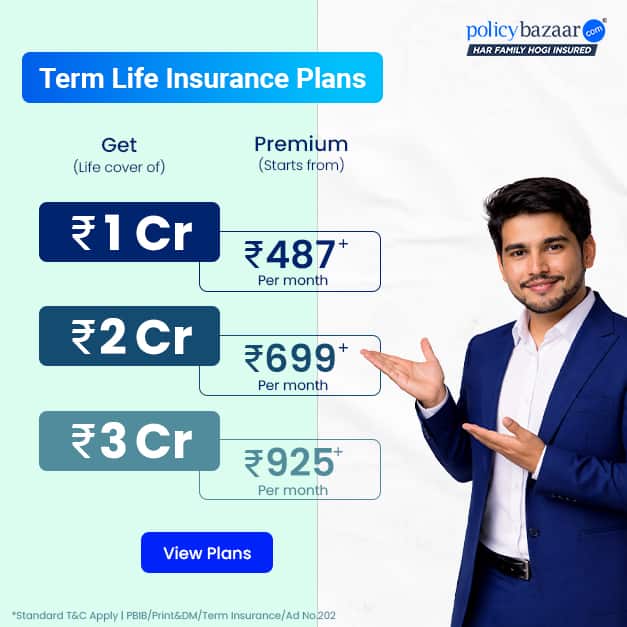
Term insurance is the simplest, most affordable form of life insurance. You pay a set premium for a specified number of years (the ‘term’), and in return, the insurance company pays a lump sum death benefit to your beneficiaries if you pass away during that policy term.
Term insurance is a life insurance policy that provides a fixed sum assured to beneficiaries if the policyholder dies during the policy term, typically ranging from 10 to 40 years. If the policyholder survives the term, no payout is made, unless a return of premium option is selected. It offers high coverage at low premiums, making it an affordable financial safety net for families. Term insurance is purely protective, with no investment component or maturity benefits. It is essential for individuals with dependents, helping them manage expenses, debts, and future financial needs in the event of an untimely death.
Written By:Varun Agarwal
Varun Agarwal IRDAI Certified Term Insurance Expert with 10+ Years of Experience
Varun Agarwal as the Head of the Term Insurance business, is transforming the way people understand and adopt term insurance. His work centres on demystifying insurance and positioning it as a smart, essential step in financial planning that brings real peace of mind. Watch his recent webinar for simple, practical insights to help you make informed decisions for your family’s future.
Reviewed By:Vivek Jain
Vivek JainChief Business Officer
Mr. Vivek Jain, Chief Business Officer – Life Insurance at Policybazaar, is reshaping the way Indians understand term insurance. With a focus on innovation and impact, he’s driving initiatives that make protection plans more transparent, relatable, and aligned with today’s financial realities. His leadership is helping term insurance evolve from a passive product to an active pillar in every family’s financial roadmap.
"The objective is to simplify insurance buying and make protection products more accessible to Indian consumers." — Sarbvir Singh, CEO Policybazaar Sarbvir Singh emphasises term insurance as one of the simplest and most affordable ways to secure a family's financial future. By making protection products easier to understand and access, more Indians and NRIs can take meaningful steps toward safeguarding their loved ones and ensuring long-term financial security.
What is Term Insurance Meaning and Definition?
Term insurance is a type of life insurance product that provides financial protection for a specific "term". If the policyholder dies within that term, the insurer pays the full sum assured to the nominee. If the policyholder outlives the term, the policy expires with no payout (unless a Return of Premium option was chosen).
Understand Why, When, and How of Term Insurance…
‘Why’ is Term Insurance Important?
Now that you have understood what is term insurance, you also need to understand why is it important. Term insurance is important to ensure that your family remains financially stable even in your absence. It helps your loved ones manage daily expenses, repay outstanding debts, and achieve future financial goals without stress.
‘When' Should You Buy Term Insurance?
The best time to buy term insurance is when you are young. Younger individuals generally receive lower premium rates because insurers consider them lower risk. Buying a term plan in your 20s or early 30s can help you lock in affordable premiums for the entire policy duration.
How' much Term Insurance do you need?
A general rule of thumb is to aim for 15 to 20 times your annual income to secure your family's future and clear any outstanding debts.
What is Term Insurance? - Let’s Understand with a Simple Example
Let’s understand term insurance with a simple example:
Suppose Ravi, a 30-year-old salaried professional, buys a ₹1 crore term insurance plan for 30 years by paying just ₹635 per month. If Ravi passes away during the policy term, say in the 14th year, his family receives the full ₹1 crore death benefit to manage household expenses, loans, and future financial needs.
However, if Ravi survives the entire 30-year policy term, no payout is made, and the policy simply expires. This does not mean the money was wasted. Throughout those 30 years, Ravi and his family stayed financially protected against life's biggest uncertainty.
How It Works:
The policyholder pays premiums regularly for a chosen term, such as 10, 20, or 30 years. If death occurs during the active policy period, the nominee receives the sum assured. If the policyholder survives the term, the coverage ends unless it is a Return of Premium (TROP) plan.
Why People Buy It:
People buy term insurance to secure their family's financial future, replace lost income, and protect loved ones from liabilities like loans or mortgages. It is also one of the most affordable ways to get a large life cover.
Key Variants
Level term: The premium and death benefit remain constant throughout the entire policy term.
Return of Premium (TROP): It refunds all the premiums you paid if you outlive the policy term, though it comes with high costs.
Riders: Optional add-ons can be bought to enhance the base policy, such as critical illness cover, disability support, or accidental death benefits.
How Does a Term Insurance Plan Work?
Now that we have understood the term insurance meaning, let us take a look at how term insurance works in India. You choose three things when you buy a term insurance plan:
How much cover amount do you need? - the sum assured, for e.g., ₹1 crore, ₹2 crore ₹5 crore)
How long do you want to be covered? - the policy term - generally 20-40 years, or up to a chosen age like 65 or 70 years.
How do you want to pay? (monthly, quarterly, half-yearly, or annually).
In exchange, the insurance company promises: if you die during the policy term, your nominee gets the full amount of sum assured as a lump sum, monthly income, or a mix of both, depending on what you chose.
That payout can cover your family's rent or EMIs, your children’s education, outstanding home or car loans, and everyday living expenses without your family having to sell assets or borrow money.
What happens if the policyholder dies within the Policy Term?
If the policyholder dies within the policy term, the life insurance provider pays the predetermined sum assured to the registered nominee or beneficiary. This provides immediate financial support to the family, provided the policy is active and premiums are up to date.
What happens if the Policyholder survives the Policy Term?
In such a scenario, where the policyholder survives the policy term under a standard term insurance plan:
No maturity amount is paid
The policy coverage ends
This is because term insurance is a pure protection plan and not an investment product. However, some insurers offer Term Insurance with Return of Premium (TROP). Under TROP plans, the insurer returns the premiums paid if the policyholder survives the policy term. These plans usually have higher premiums than regular term insurance.
Term Life Insurance kya hota hai? Aur iske kya fayde hain?
Term insurance ek pure protection plan hota hai. Isme aap ek fixed time period ke liye apni life cover karte ho. Agar us period me aapki death ho jaaye, toh nominee ko lump sum amount (Sum Assured) milta hai.
Fayde:
Sabse sasta life insurance hota hai
Bade cover milte hain kam premium me (e.g. ₹1 Cr cover sirf ₹400/month se start)
Premium depend karta hai age, gender, health, smoker/non-smoker, aur policy term pe.
PolicyBazaar kya hota hai?
PolicyBazaar ek online insurance comparison platform hai. Yahan aap alag-alag insurance companies ke plans compare kar sakte ho — price, features, claim settlement ratio sab ek jagah milta hai. Yeh khud insurance company nahi hai, balki ek aggregator/marketplace hai jahan se aap best term plan choose karke directly buy kar sakte ho.
Term Insurance kitne saal ka lena chahiye?
Ideal rule: Cover tab tak rakhein jab tak aapki financial responsibilities hain.
Situation
Recommended Term
25 saal ke ho
30–35 saal ka term lo (age 60 tak)
30 saal ke ho
25–30 saal ka term lo
Home loan hai
Loan tenure se 5 saal zyada
Bachche chhote hain
Unke independent hone tak
Minimum recommendation: 60–65 saal ki age tak cover zaroor rakhein.
Term Insurance kitni age me lena chahiye?
Best age: 25–30 saal — premium sabse kam hota hai
Latest: 35 saal se pehle le lena accha hai
Maximum entry age: Zyaadatar companies 65 saal tak deti hain
Jitna jaldi utna accha — kyunki age badhne pe premium badhta hai aur health issues bhi aa sakte hain
Term Insurance ka paisa kab milta hai?
Policyholder ki death hone par nominee ko sum assured milta hai
Nominee ko claim form + death certificate + policy documents submit karne hote hain
IRDAI ke rules ke according insurer ko 30 days me claim settle karna hota hai
Maturity pe paisa NAHI milta — term plan me koi survival benefit nahi hota (sirf Return of Premium plan me jitna premium pay kiya tha utna wapis mil jata hai maturity par)
Term Insurance kis company ka accha hai?
Top 5 term insurance companies by Claim Settlement Ratio (CSR):
Aap earning member ho aur family aap par depend karti hai
Aapke upar loan/EMI pending hai
Aapke chhote bachche hain
Aap abhi young aur healthy hain
Nahi lena agar:
Aap par koi dependent nahi hai
Aapke paas pehle se bahut zyada savings/assets hain
Short answer: Haan, lena chahiye — yeh sabse zaroori financial protection hai.
Term Insurance kaise lein?
Income calculate karo — cover kam se kam 10–15x annual income hona chahiye
Compare karo — PolicyBazaar ya direct company website pe
CSR aur features check karo
Riders add karo agar zaroorat ho (critical illness, accidental death/disability)
Online apply karo — medical test ho sakta hai age/sum assured ke hisaab se
Documents: Aadhaar, PAN, income proof, medical records
Sabse Sasta Insurance kaun sa hai?
Term insurance hi sabse sasta insurance hota hai. Online term plans offline se saste hote hain kyunki agent commission nahi hoti. Ye kuch term plan hai jo sabse affordable hai:
LIC Tech Term
Max Life Smart Secure Plus
Tata AIA Sampoorna Raksha Supreme
HDFC Click 2 Protect
What is Term Life Insurance? And what are its benefits?
Term insurance is a pure protection plan. You cover your life for a fixed time period. If you pass away during that period, your nominee receives a lump sum amount (Sum Assured).
Benefits:
Cheapest form of life insurance
Large cover at low premium (e.g. ₹1 Cr cover starting from just ₹400/month)
Premium depends on age, gender, health, smoker/non-smoker status, and policy term.
What is PolicyBazaar?
PolicyBazaar is an online insurance comparison platform. You can compare plans from multiple insurance companies — price, features, and claim settlement ratio — all in one place. It is not an insurance company itself, but an aggregator/marketplace where you can choose the best term plan and buy it directly.
For how many years should you take Term Insurance?
Ideal rule: Keep cover as long as you have financial responsibilities.
Situation
Recommended Term
Age 25
30–35 year term (till age 60)
Age 30
25–30 year term
Have a home loan
Loan tenure + 5 years
Young children
Till they become independent
Minimum recommendation: Keep cover at least till age 60–65.
What is the right age to buy Term Insurance?
Best age: 25–30 years — lowest premium
Do not delay beyond: 35 years
Maximum entry age: Most companies allow up to 65 years
The earlier the better — premium increases with age and health risks rise
When do you receive the Term Insurance payout?
Nominee receives the Sum Assured upon the policyholder's death
Nominee must submit: claim form + death certificate + policy documents
As per IRDAI rules, the insurer must settle claims within 30 days
No payout on maturity — term plans have no survival benefit (only in Return of Premium plan, the total premium paid is returned on maturity)
Which company's Term Insurance is best?
Top 5 term insurance companies by Claim Settlement Ratio (CSR):
Company
CSR (approx)
PNB Met Life
~99.81%
Axis Max Life Insurance
~99.70%
HDFC Life
~99.68%
Tata AIA
~99.41%
ICICI Prudential
~99.30%
Don't just check CSR — also evaluate solvency ratio, premium, riders, and customer service.
Should you buy a Term Plan or not?
You should buy if:
You are the earning member and your family depends on you
You have loans/EMIs pending
You have young children
You are currently young and healthy
You may skip if:
You have no financial dependents
You already have significant savings/assets
Short answer: Yes, you should — it is the most essential financial protection tool.
How to buy Term Insurance?
Calculate your need — cover should be at least 10–15x your annual income
Compare on PolicyBazaar or the company's website directly
Check CSR and plan features
Add riders if needed (critical illness, accidental death/disability)
Apply online — medical test may be required based on age/sum assured
Documents needed: Aadhaar, PAN, income proof, medical records
Which is the cheapest insurance?
Term insurance is the cheapest insurance available. Online term plans are cheaper than offline ones as there is no agent commission. Here are some of the most affordable term plans:
LIC Tech Term
Max Life Smart Secure Plus
Tata AIA Sampoorna Raksha Supreme
HDFC Click 2 Protect
टर्म लाइफ इंश्योरेंस क्या होता है? और इसके क्या फायदे हैं?
टर्म इंश्योरेंस एक शुद्ध सुरक्षा योजना है। इसमें आप एक निश्चित अवधि के लिए अपनी जीवन सुरक्षा करते हैं। यदि उस अवधि में आपकी मृत्यु हो जाए, तो नॉमिनी को एकमुश्त राशि (सम एश्योर्ड) मिलती है।
फायदे:
सबसे सस्ता जीवन बीमा होता है
कम प्रीमियम में बड़ा कवर (जैसे ₹1 करोड़ का कवर सिर्फ ₹400/माह से शुरू)
सरल और पारदर्शी उत्पाद
प्रीमियम वापसी (Return of Premium) का विकल्प मिलता है
धारा 80C और 10(10D) के तहत टैक्स लाभ
टर्म इंश्योरेंस में क्या-क्या कवर होता है?
मूल कवर:
स्वाभाविक मृत्यु ✅
दुर्घटना मृत्यु ✅
टर्मिनल बीमारी (अधिकांश पॉलिसियों में) ✅
ऐड-ऑन राइडर (अतिरिक्त प्रीमियम पर):
एक्सीडेंटल डेथ बेनिफिट राइडर
क्रिटिकल इलनेस राइडर (कैंसर, हार्ट अटैक आदि)
प्रीमियम माफी राइडर
एक्सीडेंटल डिसेबिलिटी राइडर
क्या कवर नहीं होता (by default):
आत्महत्या (पहले वर्ष में नहीं)
टर्म इंश्योरेंस कितने का होता है?
आयु
सम एश्योर्ड
अनुमानित मासिक प्रीमियम
25 वर्ष
₹1 करोड़
₹400 – ₹600
30 वर्ष
₹1 करोड़
₹600 – ₹900
35 वर्ष
₹1 करोड़
₹900 – ₹1,400
40 वर्ष
₹1 करोड़
₹1,500 – ₹2,500
प्रीमियम आयु, लिंग, स्वास्थ्य, धूम्रपान की आदत और पॉलिसी अवधि पर निर्भर करता है।
पॉलिसीबज़ार क्या होता है?
पॉलिसीबज़ार एक ऑनलाइन बीमा तुलना मंच है। यहाँ आप विभिन्न बीमा कंपनियों की योजनाओं की तुलना कर सकते हैं — कीमत, विशेषताएं और क्लेम सेटलमेंट अनुपात — सब एक ही जगह मिलता है। यह स्वयं बीमा कंपनी नहीं है, बल्कि एक एग्रीगेटर/मार्केटप्लेस है जहाँ से आप सर्वश्रेष्ठ टर्म प्लान चुनकर सीधे खरीद सकते हैं।
टर्म इंश्योरेंस कितने साल का लेना चाहिए?
आदर्श नियम: कवर तब तक रखें जब तक आपकी वित्तीय जिम्मेदारियाँ हैं।
स्थिति
अनुशंसित अवधि
25 वर्ष के हैं
30–35 साल का टर्म (60 वर्ष तक)
30 वर्ष के हैं
25–30 साल का टर्म
होम लोन है
लोन अवधि से 5 साल अधिक
छोटे बच्चे हैं
उनके स्वतंत्र होने तक
न्यूनतम अनुशंसा: कम से कम 60–65 वर्ष की आयु तक कवर अवश्य रखें।
टर्म इंश्योरेंस किस उम्र में लेना चाहिए?
सर्वोत्तम आयु: 25–30 वर्ष — प्रीमियम सबसे कम होता है
देरी न करें: 35 वर्ष से पहले लेना अच्छा है
अधिकतम प्रवेश आयु: अधिकांश कंपनियाँ 65 वर्ष तक देती हैं
जितनी जल्दी उतना अच्छा — उम्र बढ़ने पर प्रीमियम बढ़ता है और स्वास्थ्य समस्याएं भी आ सकती हैं
टर्म इंश्योरेंस का पैसा कब मिलता है?
पॉलिसीधारक की मृत्यु होने पर नॉमिनी को सम एश्योर्ड मिलता है
नॉमिनी को क्लेम फॉर्म + मृत्यु प्रमाण पत्र + पॉलिसी दस्तावेज़ जमा करने होते हैं
IRDAI के नियमों के अनुसार बीमाकर्ता को 30 दिनों में क्लेम निपटाना अनिवार्य है
परिपक्वता पर पैसा नहीं मिलता — टर्म प्लान में कोई सर्वाइवल बेनिफिट नहीं होता (केवल Return of Premium प्लान में जितना प्रीमियम भरा गया, वह परिपक्वता पर वापस मिलता है)
टर्म इंश्योरेंस किस कंपनी का अच्छा है?
क्लेम सेटलमेंट अनुपात (CSR) के आधार पर शीर्ष 5 कंपनियाँ:
कंपनी
CSR (लगभग)
PNB Met Life
~99.81%
Axis Max Life Insurance
~99.70%
HDFC Life
~99.68%
Tata AIA
~99.41%
ICICI Prudential
~99.30%
केवल CSR नहीं, सॉल्वेंसी रेशियो, प्रीमियम, राइडर और ग्राहक सेवा भी देखनी चाहिए।
टर्म प्लान लेना चाहिए या नहीं?
लेना चाहिए यदि:
आप कमाने वाले सदस्य हैं और परिवार आप पर निर्भर है
आप पर लोन/EMI बकाया है
आपके छोटे बच्चे हैं
आप अभी युवा और स्वस्थ हैं
नहीं लेना यदि:
आप पर कोई निर्भर नहीं है
आपके पास पहले से पर्याप्त बचत/संपत्ति है
संक्षिप्त उत्तर: हाँ, लेना चाहिए — यह सबसे ज़रूरी वित्तीय सुरक्षा है।
टर्म इंश्योरेंस कैसे लें?
आय की गणना करें — कवर कम से कम 10–15 गुना वार्षिक आय होना चाहिए
ऑनलाइन आवेदन करें — आयु/सम एश्योर्ड के अनुसार मेडिकल टेस्ट हो सकता है
दस्तावेज़: आधार, PAN, आय प्रमाण, चिकित्सा रिकॉर्ड
सबसे सस्ता इंश्योरेंस कौन सा है?
टर्म इंश्योरेंस ही सबसे सस्ता बीमा है। ऑनलाइन टर्म प्लान ऑफलाइन से सस्ते होते हैं क्योंकि एजेंट कमीशन नहीं लगता। ये कुछ सबसे किफायती टर्म प्लान हैं:
LIC Tech Term
Max Life Smart Secure Plus
Tata AIA Sampoorna Raksha Supreme
HDFC Click 2 Protect
Key Features of Term Insurance
Term insurance is a pure life cover plan that pays a death benefit to your family if you pass away during the policy tenure, with no maturity or savings component, which keeps premiums low and coverage high. It is designed to replace lost income, repay outstanding debts, and protect your family's financial future at an affordable cost. Below are the corefeatures of term insurance that will help you understand what is term insurance better.
Affordability: Term insurance offers high life cover at an affordable premium, making it ideal for individuals who want strong financial protection without putting pressure on their monthly finances.
Pure protection: To understand what is term insurance, it is a pure life cover plan focused only on providing a death benefit, ensuring your family gets financial support in your absence.
Flexibility: You can choose the policy tenure based on your life stage, such as till retirement, till your home loan ends, or until your children become financially independent.
High coverage amounts: Term plans allow you to secure a large sum assured, helping your family manage daily expenses, future goals, and large liabilities with ease.
Supplementary coverage: It works well alongside your savings, investments, and health insurance to build a more complete financial safety net.
Lifestyle-related risks: In 2026, rising lifestyle diseases make riders like critical illness cover increasingly important, helping protect your finances against major health conditions during your lifetime.
Protect your assets: A term plan helps your family repay outstanding loans on your home, car, or business, reducing the risk of losing hard-earned assets during difficult times.
No Maturity Benefits: Unlike other life insurance products, such as endowment or ULIP policies, term insurance does not provide any maturity or survival benefits if the policyholder outlives the term. This is why term insurance is more affordable: the premiums cover only the death benefit.
What is Term Insurance Quora
In quora, term insurance meaning is defined as a pure, high life cover life insurance plan that financially protects your dependents if you pass away during the policy term. Quora financial experts highly recommend it because it is affordable, offers no investment distractions, and keeps premiums low.
Some common Questions asked by Quora users:
What are the Pros and cons of term life insurance?
Pros: Affordable premiums, high coverage, and financial protection for your family.
Cons: No maturity benefit (unless it's a return-of-premium plan) and coverage ends after the policy term.
What exactly is the definition of term insurance?
Term insurance is a type of life insurance that provides financial protection for a specific period and pays a death benefit to the nominee if the policyholder passes away during the policy term.
Is it good to take term insurance?
Yes, term insurance is considered one of the most cost-effective ways to secure your family's financial future with substantial life cover at affordable premiums.
What is the difference between life insurance and term insurance?
Life insurance is a broad category that may include savings or investment benefits, whereas term insurance offers pure life coverage for a fixed period without any investment component.
What is your experience in claiming term life insurance?
The claim experience generally depends on the insurer, but timely claim settlement is usually smoother when policy details are accurate and all required documents are submitted properly.
You can also search What is Term Insurance as:
Term Insurance Basics
Hindi Queries
Related Variations
Plan-Specific Searches
Term insurance kya hota hai
टर्म इंश्योरेंस क्या होता है
Term insurance kya hai
Term plan kya hota hai
Insurance kya hota hai
टर्म प्लान क्या होता है
Term life insurance kya hota hai
Term life insurance kya hai
What is term insurance in Hindi
टर्म लाइफ इंश्योरेंस क्या होता है
Term insurance plan in Hindi
Term insurance in Hindi
Why Should You Buy Term Insurance in 2026?
Purchasing term insurance in 2026 is essential to protect your family from mounting debts and income loss. It guarantees financial stability for your dependents by covering major future costs like children's education and lifestyle maintenance, all while remaining the most affordable way to secure a high-value life cover
Lifestyle diseases are rising. Heart attack deaths in India increased by 12.5% between 2021 and 2022. Road accidents claimed 474 lives daily in 2023.
Premiums only go up with age. A 25-year-old non-smoker pays ₹616/month for ₹1 crore cover. By 45, that rises to ₹1,199/month. Buying early locks at low rates forever.
Most Indians are underinsured. According to IRDAI's Annual Report 2024–25, life insurance penetration declined from 2.8% to 2.7%. This highlights the country's large financial protection gap among families.
0% GST on term insurance makes 2026 one of the most affordable times to buy.
Education inflation is real. School fees have risen 50–80% between 2022 and 2025. Your family needs a financial backup in your absence.
What are the Benefits of Term Insurance?
Term life insurance provides pure financial protection for a specific period. In exchange for affordable premiums, it offers a high sum assured. If the policyholder passes away during the term, the insurer pays a tax-free death benefit to nominated beneficiaries to secure their future. After understanding the term life insurance meaning, let us take a look at the term insurance benefits you can avail in India 2026:
Financial Protection to Family In case of the policyholder's unfortunate demise during the policy term, the nominee receives the sum assured. This amount can help the family manage daily expenses, repay loans, or support long-term financial goals, and help your family pay off debts (like home or car loans) and maintain their lifestyle by replacing lost income
Multiple Death Benefit Payout Options for Nominees Some term insurance plans allow the nominee to receive the claim amount in different ways, such as a lump sum, regular monthly income, or a combination of both.
High Coverage at Affordable Premiums Term insurance allows you to get a large life cover amount at a relatively low premium. This makes it easier to secure your family’s financial future without straining your budget too much.
Flexible Policy Terms Term insurance plans usually offer multiple policy term options, allowing you to choose coverage that aligns with your age, responsibilities, and future plans.
Return of Premium Benefit Many term plans comes with a Return of Premium (ROP) option that refunds the total premiums paid during the policy term if the policyholder survives until maturity, providing both life insurance protection and maturity benefits.
Additional Riders for Enhanced Protection Many term insurance plans offer optional riders to enhance coverage. A critical illness rider provides a lump sum payout on diagnosis of specified serious illnesses, while accidental death and disability riders offer additional financial protection in case of accidents or permanent disability.
Tax Benefits Premiums paid qualify for tax deduction under Section 80C (up to ₹1.5 lakh), and the death benefit received by the nominee is tax-free under Section 10(10D) of the Income Tax Act.
Term Insurance vs Other Life Insurance Plans
Let us now take a look at what is the difference between term insurance and life insurance:
Feature
Term Insurance
Other Life Insurance Plans
Premium
Lower premiums for higher coverage
Higher premiums due to the savings component
Investment
No investment component
Includes savings or investment element
Purpose
Pure financial protection
Protection along with savings or wealth creation
Payout
Death benefit is paid if the insured passes away during the term
Death benefit or maturity benefit, depending on the plan
Policy Term
Fixed coverage period such as 10, 20, or 30 years
Often long term or whole life coverage
Maturity Benefit
Usually not available
Available in many traditional plans
Flexibility
Focused on life cover with optional riders
May include bonuses, savings, or guaranteed returns
Understanding what is term life insurance and how it is different from other types of life insurance is important to make an informed decision about the right insurance for you.
Why Is Sum Assured Important in Term Insurance?
The sum assured is the amount your nominee receives if the policyholder passes away during the policy term. It is the core financial protection offered by a term insurance plan. Choosing the right sum assured is important because it helps ensure that your family can manage essential expenses such as daily living costs, loan repayments, children’s education, and other long term financial needs even in your absence. A well-chosen sum assured can help maintain your family’s financial stability and support their future goals
AI Prompts user's are searching for
Created with AI. Errors are possible
What is Term Insurance?
Term insurance is a pure life insurance plan that provides financial protection for a fixed period. If the policyholder dies during the policy term, the insurer pays a death benefit to the nominee. It offers high coverage at affordable premiums and is primarily designed to secure your family's financial future.
What is Term Insurance and How Does It Work?
Term insurance is a life insurance policy that provides coverage for a specific period. You pay regular premiums, and if you pass away during the policy term, your nominee receives the sum assured. If you survive the term, no maturity benefit is paid in standard term plans.
What is Term Insurance Quora?
Term Insurance Quora refers to the collective knowledge, expert advice, and personal discussions found on the Quora platform regarding term life insurance. It is a community-driven knowledge base where financial experts break down complex insurance concepts, offer buying advice, and compare various life insurance products.
What is a Term Insurance Policy?
A term insurance policy is an agreement between the policyholder and the insurance company where the insurer provides life cover for a fixed term in exchange for regular premium payments. The nominee receives the death benefit if the insured dies during the policy period.
What is the Difference Between Term Insurance and Life Insurance?
Life insurance is a broad category that includes different types of policies offering protection and savings benefits, while term insurance is a specific type of life insurance focused purely on life cover. Term insurance is more affordable and usually does not provide maturity benefits, unlike some traditional life insurance plans.
How To Calculate Term Insurance Premium?
To estimate how much you may need to pay for a policy, you can use a term insurance calculator. By entering basic details such as your age, income, coverage amount, policy term, and lifestyle habits, the calculator provides an approximate premium amount within seconds. This helps you compare options and choose a plan that fits your financial needs.
Who Should Buy Term Insurance?
The following individuals should consider buying a term insurance plan:
Life Stage
Why They Should Buy Term Insurance
Young Professionals (in 20s and 30s)
This is the best time to buy term insurance because the premiums are lowest, and you lock in those rates for the chosen policy terms.
Married Couples
Term insurance ensures the financial protection of your spouse and family members in case of unpredictable events
Caring for Elderly Parents
Parents often have long-term expenses for their children’s future. A term insurance plan helps secure these needs if the earning member is no longer around.
Self-Employed Individuals and Business Owners
Self-employed individuals and business owners may lack employer-backed financial protection. Term insurance helps secure their family and cover liabilities.
Non-Resident Indians (NRIs)
NRIs can buy term insurance plans in India to secure their dear ones. Term plans can provide NRIs with additional protection and protect their family members financially. NRIs can also claim tax benefits in India, which increases their overall financial security.
Anyone with a home loan or major liability
Anyone with significant liabilities such as home loans, personal loans, or other long term commitments may benefit from term insurance so that their family is not burdened with repayments. You can also consider a home loan insurance to protect your family from home loan repayment burden.
What are the Different Types of Term Insurance Plans Available in India 2026?
Level term insurance: This is the most common type where the sum assured stays fixed throughout the policy term. Premiums do not change, making costs predictable and easy to plan.
Increasing term insurance: The sum assured increases gradually over the policy term to help beat inflation and rising living costs, though premiums can be slightly higher.This is good for younger buyers with growing financial responsibilities.
Decreasing term insurance: The sum assured reduces over time, typically in line with a loan balance. Designed for home loan or business loan protection.
Term insurance with return of premium (TROP): If the policyholder survives the term, the total premiums paid are returned, combining life cover with a savings element, though at a higher premium.
Convertible term insurance: Allows the policyholder to convert the term life insurance policy into an endowment or whole life policy later, offering flexibility as financial needs change over time.
NRI Term Insurance: These plans are designed especially for the NRI customers and allow them to buy a term insurance for NRI, which helps them financially secure their loved ones residing in India.
Group Term Life Insurance: This type of term insurance is usually provided by employers and covers multiple individuals under the same plan with lower premiums.
How Much Term Insurance Coverage Do I Need?
You can easily determine how much life cover you need by calculating your Human Life Value (HLV). HLV is a simple numerical method that helps estimate the ideal amount of life insurance coverage based on your income and age.
A widely used rule for calculating term insurance coverage is to choose a sum assured that is 15-20 times your annual income. The recommended coverage generally varies by age, as shown below:
Age (in years)
Multiple of Income
18 -35 years
25 times of your annual income
36-45 years
20 times of your annual income
46-50 years
15 times of your annual income
50-60 years
10 times of your annual income
For instance, if a 32-year-old individual earns ₹5 lakh annually, the recommended life cover would be 25 times the income, i.e., ₹5 lakh × 25 = ₹1.25 crore
A more precise approach accounts for: Outstanding loans, your family’s monthly expenses, inflation, and the number of years until your youngest dependent becomes financially independent. Policybazaar online HLV calculators will walk you through this in under 2 minutes.
How To Choose the Best Term Insurance Plan in India 2026?
Choosing the best term insurance plan in India requires calculating adequate coverage, verifying the insurer’s Claim Settlement Ratio (CSR) and Solvency Ratio, and evaluating riders like Critical Illness and Accidental Disability. A comprehensive strategy ensures your family's financial security.
Determine the right coverage amount:
The most common mistake buyers make is underestimating the amount of cover they actually need. A widely used benchmark is 15 to 20 times your annual income, but that figure alone is incomplete. Your calculation should also factor in outstanding liabilities (home loan, car loan, personal debt), the number of financial dependents, and your family's projected monthly expenses over the next 20–25 years.
Pro-Tip: Account for future inflation and a conservative 6% to 7% return rate when calculating your family's future living expenses.
Verify the insurer's claim settlement ratio and amount settled ratio
The claim settlement ratio (CSR) shows the percentage of claims an insurer settles. For 2026, prefer insurers with a CSR of 98% or higher consistently for at least 3 years. Also, check the Amount Settled Ratio, which reflects the actual claim value paid out. Ideally, choose insurers with both ratios above 95% for better reliability. These details are available in the IRDAI Annual Report.
Add only the riders that cover your actual risk profile
Riders are add-on benefits that enhance your base term plan for a modest additional premium, but buying all available riders unnecessarily inflates the cost. Assess your personal risk exposure before selecting. You can enhance your term plan with optional riders such as:
Insurers can reject death claims if you withheld medical history. Always disclose pre-existing conditions, smoking/tobacco use, and occupational hazards at the time of purchase. Equally important, read the policy's exclusion list. Common exclusions include death by suicide (within the first year), hazardous activities, and certain undisclosed illnesses.
Pick the Right Policy Term
Select a policy term that covers your major financial responsibilities. Ideally, the plan should continue until your retirement age or until your dependents become financially independent.
How to Buy Term Insurance Online on Policybazaar?
Here is how you can buy term insurance online on Policybazaar:
Step 1: Visit the term insurance page of Policybazaar
Step 2: Fill in your name, gender, and contact information
Step 3: Select the right annual income, occupation type, educational qualifications, and smoking habits
Step 4: Choose the best term insurance for your needs and proceed to pay the premiums
You should always first understand what is term life insurance, and then buy the best term insurance for your needs.
What are Term Insurance Exclusions?
Term insurance exclusions are specific conditions or circumstances under which an insurance provider will not pay the death benefit to your nominee. Common exclusions of term insurance include:
Suicide within the first 12 months of the policy (most insurers follow IRDAI guidelines here)
Death due to substance abuse (alcohol or drugs)
Death due to HIV/AIDS
Self-inflicted injuries
Certain high-risk activities or undisclosed pre-existing conditions, depending on the policy terms
Important: Always read the policy document before signing. If something is unclear, ask your insurer or broker directly.
Summary- What You Need to Remember
Term insurance is the simplest, most affordable way to ensure your family's financial future is protected if you die prematurely. It pays a lump sum to your nominee, no investment component, no maturity benefit in the standard version, just protection.
Buy it young. Buy enough cover. Choose an insurer with a high CSR. And review your cover every 5–7 years as your income, loans, and family responsibilities change.
FAQ's
Q1. What does term insurance mean?
Term insurance is a type of life insurance that provides financial protection to your family for a fixed period. If the policyholder dies during this period, the insurer pays the sum assured to the nominee. It is the simplest and most affordable form of life insurance, designed solely for protection, and does not include a savings component.
Q2. How does term insurance work?
When you buy a term insurance plan, you pay a fixed premium for a chosen policy term (e.g., 20 or 30 years). If you pass away during this term, your nominee receives the full sum assured as a death benefit. If you survive the term, the policy expires without a payout unless you have opted for a Return of Premium (TROP) plan.
Q3. What is the difference between term insurance and life insurance?
Term insurance covers only death during the policy term with no survival benefit, making it the most affordable life cover. Life insurance (such as endowment or whole life plans) offers both a death benefit and a maturity payout if you survive the term. Term insurance is best for pure protection; traditional life insurance combines protection with savings.
Q4. What is the difference between term insurance and health insurance?
Term insurance pays a lump sum to your nominee if you die during the policy term. It secures your family's financial future. Health insurance covers your hospitalisation bills, medical treatments, and illness-related expenses while you are alive. Both cover different risks and are recommended together as part of a complete financial safety net.
Q5. Is term insurance worth buying in India?
Yes, term insurance is worth buying in India because it offers the highest life coverage at the lowest premium. Indian term plans are up to 50% more affordable than equivalent plans abroad, making them especially beneficial for NRIs or those planning to move overseas. It is the most cost-effective way to ensure your family's financial security.
Q6. Is term insurance good or bad?
Term insurance is good for anyone who wants maximum life coverage at a low cost. It is the most efficient tool for income replacement and protecting your family from financial hardship. It is not ideal for wealth creation since it offers no returns if you outlive the policy
Q7. Can I get my money back from term insurance?
A standard term insurance plan does not return premiums if you survive the policy term. However, a Term Return of Premium (TROP) plan refunds all premiums paid at maturity, provided no claims were made during the policy period. TROP plans carry a higher premium than standard term plans but offer the reassurance of a guaranteed refund.
Q8. What are the disadvantages of term insurance?
Term insurance has no maturity or survival benefit. It means that you receive nothing if you outlive the policy term. It does not build cash value or generate investment returns. Premiums may increase upon renewal, and certain causes of death (such as suicide in the first year or drug-related deaths) are excluded from coverage.
Q9. Which is better- term insurance or SIP?
Term insurance and SIP are not alternatives; they serve completely different purposes. A SIP (Systematic Investment Plan) builds wealth over time through mutual fund investments, while term insurance protects your family financially if you are no longer there. Financial experts recommend both together: term insurance for protection, SIP for wealth creation.
Q10. How much term insurance cover do I need?
You need a term insurance cover of at least 10 times your annual income; 15–20 times is considered ideal. For example, if you earn ₹10 lakh per year, a cover of ₹1–2 crore is recommended. Use a Human Life Value (HLV) calculator to factor in your income, liabilities, dependents, and financial goals for a more precise figure.
Q11. What is covered under a term insurance plan?
A term insurance plan covers death due to natural causes, illness, and accidents during the policy term. Optional riders can extend coverage to include terminal illness, critical illness, accidental disability, and waiver of future premiums. The sum assured is paid to the nominee as a lump sum or in monthly instalments, depending on the plan chosen.
Q12. What is not covered under a term insurance plan?
Term insurance does not cover:
Suicidal death within the first year of the policy
Death due to self-inflicted injuries
Death caused by HIV/AIDS
Death from drug overdose or alcohol intoxication. Review the policy document carefully for the complete list of exclusions before purchasing.
Q13. What is a rider in term insurance?
A rider in term insurance is an optional add-on that enhances your base policy's coverage at a small additional premium. Popular riders include critical illness cover, accidental death benefit, waiver of premium, and permanent or partial disability benefit. Riders let you personalise your term plan to match your specific protection needs.
Q14. What is the terminal illness benefit in term insurance?
A terminal illness benefit is a rider that pays out the sum assured (or a portion of it) if the policyholder is diagnosed with a terminal illness and has a life expectancy of 12 months or less. This advance payout helps manage medical costs and financial needs without waiting for the death claim. Most leading term plans offer this as an in-built or optional feature.
Q16. What is the right age to buy term insurance?
The minimum age to buy a term insurance plan is 18 years. Buying early, typically in your 20s or early 30s, locks in the lowest possible premiums for the entire policy duration. The maximum entry age varies by insurer but is typically between 60 and 65 years.
Q 17. What are the tax benefits of term insurance?
Term insurance offers tax benefits under three sections of the Income Tax Act, 1961:
Section 80C: Deduction on premiums paid, up to ₹1.5 lakh per year
Section 80D: Deduction up to ₹25,000 on critical illness rider premiums
Section 10(10D): The death benefit received by the nominee is completely tax-free
Q18. What documents are required to buy term insurance?
To purchase a term insurance plan, you need:
Identity Proof: PAN Card, Aadhaar Card, or Voter ID
Address Proof: Aadhaar Card, Passport, or Driving License
Income Proof: Salary slips, Income Tax Returns (ITR), or bank statements
Age Proof: Aadhaar Card, Passport, or Driving License
Q19. Can I add a rider to my existing term insurance plan?
Yes, most insurers allow you to add riders to your term insurance policy at renewal. The availability of specific riders and the conditions for adding them vary by insurer. Always confirm rider eligibility, coverage terms, and the impact on your premium before making any changes at renewal.
Q20. Can I buy term insurance for my spouse?
Yes, you can buy term insurance for your spouse either as a separate policy or as a joint term insurance plan. A joint term plan covers both partners under one policy with a single premium, making it a simpler and often more economical option. The death benefit is paid to the surviving partner or nominated beneficiary.
Varun AgarwalIRDAI Certified Term Insurance Expert with 10+ Years of Experience
Varun has spent years in the insurance space, but what drives him isn't policies or premiums — it's the conversations he's had with real people. A young father in Pune wondering if his salary is enough. A newly married couple in Jaipur putting off "the insurance talk" for later. A mother in Chennai who never knew her husband was underinsured until it was too late.
These stories stay with him.
As Head of Term Insurance at Policybazaar, Varun knows the numbers well — 52.4% of Indians are aware of term insurance, yet only 9.6% own it. And 87% of families don't realise they're leaving their loved ones with far less protection than they actually need. But behind every statistic, he sees a family that just needed someone to sit with them, explain it simply, and help them take that one step.
That's exactly what Policybazaar's term insurance is built to do.
In his words, "Most people aren't avoiding protection — they're just waiting for someone to make it easy. That's what we're here for."