Why Medical Evacuation Insurance is a Non-Negotiable for International Travel
Medical evacuation insurance is one of those things you don't think about until you really need it. And when you do, it can be the difference between swift help and serious trouble abroad. It covers the cost of transporting you to the nearest medical facility in case of an emergency.

- Home

- Travel Insurance
- Articles - TI
- Why Medical Evacuation Insurance is a Non-Negotiable for International Travel
Let us understand the significance of medical evacuation with an example.
Imagine you are standing on a cliffside trail in Austria, and suddenly your foot slips. You tumble down, your ankle twisted, your phone hanging by a thread of signal.
A local hiker finds you and calls for help. The only option? A helicopter rescue to the nearest hospital in Innsbruck. You're airlifted, treated, and stabilised.
Weeks later, you're home.
And then, the bill arrives: ₹12.6 lakh for the evacuation alone!!
Here comes the help of medical evacuation insurance.
What is Medical Evacuation Insurance?
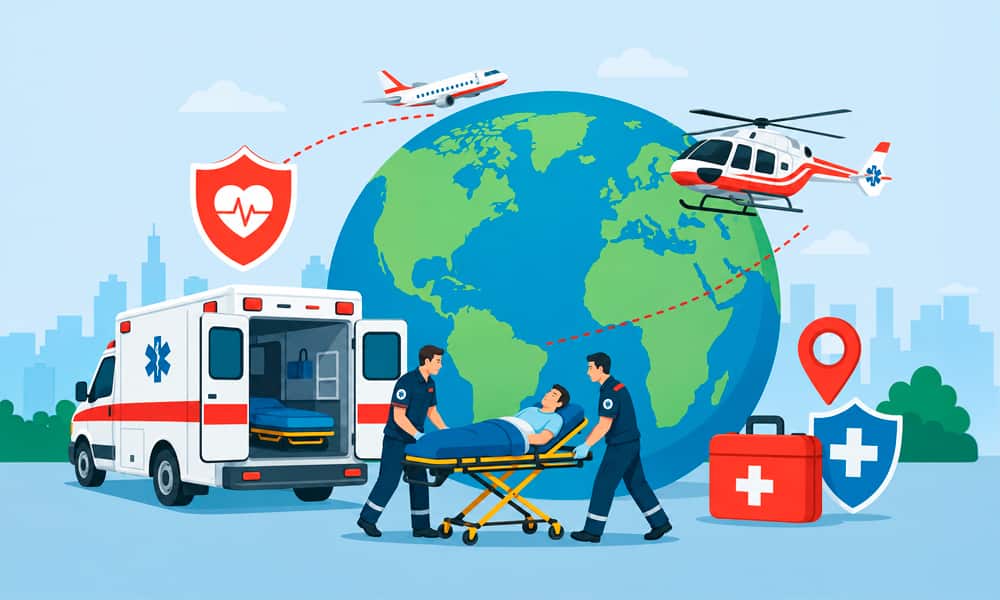
At its core, medical evacuation insurance or medevac, is an emergency support system built into international travel insurance policies. It covers the cost of moving you, by land or air, to the nearest medical facility capable of treating you adequately.
It also covers:
- Air ambulances.
- Ground transport.
- Medical escorts (nurses or doctors).
- Repatriation back to India, if needed.
- Transportation of mortal remains (if it comes to that).
Without it, you will have to pay the bill in full. And those bills can easily hit six digits in rupees—or worse, six digits in foreign currency.
Why It Matters More Than You Think
Medical evacuation isn't a luxury. It's not just for adventurers on snow-capped peaks or seaside surfers. It's for anyone travelling to a country where:
- Public healthcare is limited.
- Private hospitals charge foreign patients heavily.
- Remote locations have no quick access to emergency care.
- Political unrest or natural disasters could disrupt treatment access.
It helps in worse situations where evacuation is your only bridge to survival. And that bridge comes at a cost unless your travel insurance covers it.
What Does the Medical Evacuation Policy Cover?
If your international travel insurance includes this component, you are generally covered for:
- Emergency transportation to the nearest adequate hospital.
- Air ambulance when local transport isn't medically sufficient.
- Medical repatriation if long-term care is needed in India.
- Return of mortal remains (in the event of death abroad).
- Expenses for one companion, including return airfare and, in some cases, accommodation.
- Medical escort (doctor or nurse) during transport.
Some policies even offer:
- Hospital of choice transport (after stabilisation).
- Evacuation due to political unrest or disaster (depending on the policy).
The key is that this coverage is doctor-certified and insurer-approved. It's not for convenience. It's for a crisis.
What Does Medical Evacuation Insurance Exclude?
Even the best policy has rules. Some common things it won't cover include:
- You leave without a medical recommendation.
- The insurer wasn't informed or pre-authorised.
- You got injured doing adventure sports but didn't opt for the relevant add-on.
- Alcohol or drug use was involved in the incident.
- You travelled against medical advice.
- You're getting non-emergency or elective treatment abroad.
So yes, if you sprain your ankle in Barcelona but still go zip-lining the next day and end up in trouble—your claim might fall through.
Who Needs Medevac The Most?
The truth is, medical evacuation insurance is a must for foreign travel for everyone -- anyone travelling abroad should consider it. But some groups need it more than others. These are as follows:
-
Travellers Going to Remote or Hilly Areas
A regular ambulance won't reach you in a Scandinavian village or Icelandic tundra. Helicopter rescue? That's where this insurance shines.
-
Adventure Tourists
Planning a ski trip to Japan or scuba diving in Thailand? Most base policies don't cover accidents from adventure sports. You need an add-on, plus a solid evacuation clause.
-
Senior Citizens and People with Existing Health Conditions
Even a minor complication abroad could require urgent movement. Getting covered for medical transport across countries could mean everything.
-
Students and Business Travellers
A semester abroad? A long work assignment in Europe? Don't rely on company covers or university clinics alone.
-
Families with Kids
When travelling with children, emergencies are unpredictable. This gives you the backing to act fast without panicking over money.
How Do You Check If Your Policy Includes Medical Evacuation?
Always look at the following points before you buy travel insurance:
- Is “emergency medical evacuation” clearly written in the policy wording?
- What is the maximum coverage amount? (Preferably ₹50 lakh or more).
- Does it include repatriation to India?
- Can a companion travel with you if you're evacuated?
- Does it allow for air ambulance or medical escort services?
- Are there exclusions tied to location, activity, or age?
- Does it offer cashless assistance during evacuation?
- Is the insurer's global emergency helpline 24/7?
Evacuation vs Repatriation: What's the Difference?
It sounds similar but means very different things.
- Medical Evacuation: Moving you from the accident/illness site to the nearest medical facility that can treat you. It could be a local or international hospital.
- Medical Repatriation: Bringing you back home to India once you're stable enough but need extended treatment or no further care is possible abroad.
In most serious cases, both happen—evacuation to a nearby hospital, followed by repatriation once you're stable.
Is Medical Evacuation Insurance Expensive?
Not really.
For short international trips (under 2 weeks), adding full medical evacuation to your travel policy might cost as follows:
- ₹800-₹1,500 more for basic trips.
- ₹2,000-₹4,000 for policies with high limits and adventure add-ons.
- Student or long-term travel policies (3-6 months) may charge ₹5,000 onwards.
A ₹5,000 policy might sound like a lot when you are already booking hotels and tickets. But compared to a ₹20 lakh hospital+evacuation bill? It is a small charge.
What If You Skip Medical Evacuation Insurance?
Let's say you don't get this cover.
- You will need to coordinate your own evacuation—permissions, clearances, and aircraft hire included.
- You will have to pay full out-of-pocket (often upfront) before treatment begins.
- You may not be allowed on a commercial flight if your condition isn't cleared by a medical board.
- Repatriation might be delayed or denied due to funding or medical fitness issues.
It's Not Just Travel. It's Planning Smart.
You can't predict how your trip will go. But you can prepare for the worst—even while hoping for the best. Medical evacuation insurance isn't about being paranoid. It's about being prepared—quietly, confidently.
When you're booking flights and Airbnbs, choosing SIM cards and sunglasses, take five more minutes to choose a travel insurance policy that includes full medical evacuation. It might just become the most valuable item you packed.

Does any of the traveller have any pre-existing medical condition like BP, diabetes etc? See what it means ›
Now covers COVID-19
- No medical checkup required
- Pre-existing coverage available
- Instant Policy Issuance
- Medical expenses, Trip cancellation/delay, Loss of baggage & Passport etc.
- 24x7 claims support
* Price shown is for a 90 day trip to Thailand with 50,000 dollar coverage for an adult of age 25 years