Travel Insurance Plans on PolicyBazaar#1
- Individuals
- Sr. Citizens
- Students
What Does Medical Expenses Actually Cover?
In simple terms, if you get sick or injured unexpectedly, your travel insurance company pays for your treatment. According to official sources (insurer's policy wording), this generally includes:
-
Hospital StaysYour room rent (usually a standard AC room), ICU charges, and nursing.
-
Procedures/TreatmentsFees for the surgeon, anaesthetist, and specialists.
-
DiagnosticsX-rays, blood tests, and scans are needed to figure out what's wrong.
-
PharmacyThe cost of medicines prescribed while you're abroad.
Pro-Tip: Another important term to keep in mind is the 'Reasonable and Customary' (R&C) charges. This means your policy won't pay for a USD 10,000 procedure if every other hospital in that city charges USD 2,000. They pay the fair local price.
Medical Coverage for Students & Seniors
Students travelling from India to study at international universities need comprehensive coverage due to their extended stays. The risk of falling sick or injured is higher compared to a short trip. Similarly, senior travellers already face age-related health issues, increasing the risk of becoming ill or injured abroad.
Travel insurers understand these and extend coverage despite the high risk. Here is how they offer medical coverage to student and senior travellers:
In addition to medical emergencies, some plans also include mental health coverage if it leads to hospitalisation. Maternity coverage is also offered to students who are abroad for full-time study programs. They also offer compassionate visit cover, which pays for a parent's flight if the student is hospitalised for more than 7 days.
Senior citizen travel insurance plans include additional benefits such as assistance services and medical coverage. However, these come with high sub-limits. For example, even if you have a USD 50,000 policy, the fine print might say they will only pay USD 15,000 for a single illness or USD 3,000 per day for the ICU.
Is there Coverage for Dental Emergencies and Evacuation?
Yes. Dental emergencies are covered by most insurers. Some insurers even offer extensive coverage, such as for student travellers.
Similarly, evacuating you to a required medical facility is also provided by travel insurance medical coverage. Your travel insurance isn't just for hospital beds; it's for many other situations as well. Here are some important details to keep in mind:
-
Dental Pain
You can't get a cleaning or a cosmetic filling. Coverage is strictly for Acute Pain Relief (sudden, unbearable pain) or injury to natural teeth. Limits are usually low, around USD 250 – USD 500.
-
Medical Evacuation
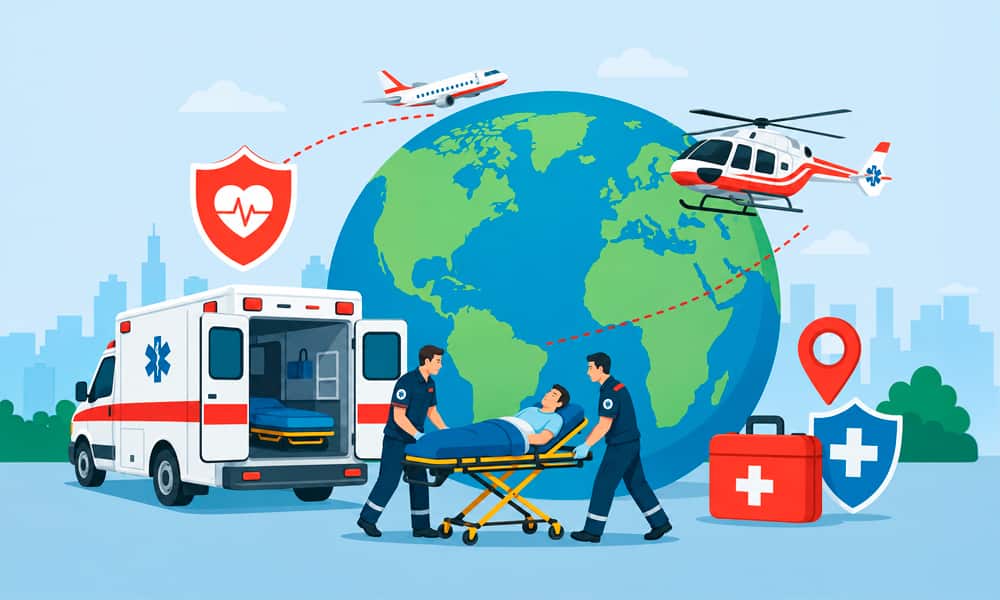
If the local clinic/hospital can't handle your condition, or the required treatment is not available locally, your insurance pays for you to be moved (sometimes via air ambulance) to the nearest capable hospital. However, this must be approved by the insurance company's assistance team first.
What is Covered or Not Covered under Trip Cancellation Benefit
Coverage for Pre-existing Diseases (PED) under Travel Insurance
This is where most people get confused. Most policies generally exclude pre-existing conditions (such as diabetes or high blood pressure). Unless you buy a specific add-on, you won't be covered for any health emergency arising out of these PEDs. However, there are certain scenarios where you will be covered for declared PEDs:
Life-saving Emergency Treatment
Even if they don't cover your PED, they will pay to stabilise you if the condition becomes life-threatening.
The Limit
This emergency stabilisation is usually capped at a small fraction of your total cover (e.g., USD 2,000 to USD 10,000 depending on the total sum insured). Once you are out of danger, the coverage stops.
What is Not Covered under Medical Expenses Benefit?
Reading the exclusions is important to know what will never be covered by your policy. Each insurer has a list of situations that will not be covered, so you must keep these in mind:
Treatment that can wait
If the doctor says you can safely fly back to India for treatment, the insurer will stop paying for your care abroad.
Medical Expenses in case of Intoxication
If you have an accident while under the influence of alcohol or drugs, the claim will be rejected 100% of the time.
Adventure Sports Injuries
Don't assume your policy covers skiing or scuba diving. Most insurers exclude 'High Risk Activities' unless you pay an extra premium for a rider.
Pregnancy & Childbirth
Maternity expenses, including complications or voluntary abortions, are excluded (except for accidental emergencies in specific plans).
Medical Tourism
Travelling specifically to seek medical treatment is never covered.
Alternative Medicine
No coverage for Ayurveda, Homoeopathy, or Naturopathy outside India.
Medical Expenses Nuances at a Glance
| Feature | Things to Keep in Mind |
| Deductible | The first USD 50 or USD 100 of any claim comes out of your pocket. |
| Cashless | Only works if you call the Insurer's assistance number within 24 hours and get an approval. |
| Daily Cash | If you're in the hospital for more than 2 days, they give you a small daily sum for expenses. |
| Home Cover | Many Indian insurers also cover follow-up treatment in India for 30 days. |
Medical Expenses Cover Under Travel Insurance: FAQs
-
Q: Does travel insurance cover my existing health conditions (PED)?
Ans: Most insurers typically exclude Pre-existing Diseases. However, most policies include a ‘Life-Saving’ clause that covers expenses incurred to stabilise the insured in a life-threatening situation (often capped). Some plans also offer specific add-ons for better PED coverage. -
Q: If I am hospitalised on the last day of my trip, will the insurance stop paying?
Ans: No. Most insurers provide an automatic extension clause. For example, some policies extend medical cover for up to 60 days if the insured is hospitalised at the time of policy expiry. Some insurers offer a 7 to 15-day extension for travel-related delays. -
Q: Can I get cashless treatment at any hospital abroad?
Ans: Yes, but for Cashless Treatment, you must contact the insurer’s international TPA (Third-Party Administrator) within 24 to 48 hours. If you visit a non-network hospital, you must pay upfront and file for reimbursement. You will need to provide original bills and the attending physician’s statement. -
Q: Is COVID-19 still covered by travel insurance policies?
Ans: Yes. Most Indian insurers cover COVID-19 hospitalisation and related medical expenses in the standard Accident & Sickness section of the policy wordings. -
Q: What is a deductible in medical claims?
Ans: Deductible is the initial amount of a claim you must pay out of pocket For eg., the first USD 100 for an emergency procedure at the hospital. If a doctor’s visit costs USD 150 and your deductible is USD 100, the insurer will reimburse only USD 50.
Travel Insurance Companies

Aditya Birla

Bajaj General

Care

Cholamandalam MS

Digit

Future Generali

HDFC ERGO

ICICI Lombard

IFFCO Tokio
IndusInd General

National Insurance

New India Assurance

Niva Bupa

Oriental

Royal Sundaram

SBI General

Shriram General

Star

Tata AIG

United India

Universal Sompo

Zurich Kotak